AI in Convenience Stores: 8 Real-World Examples

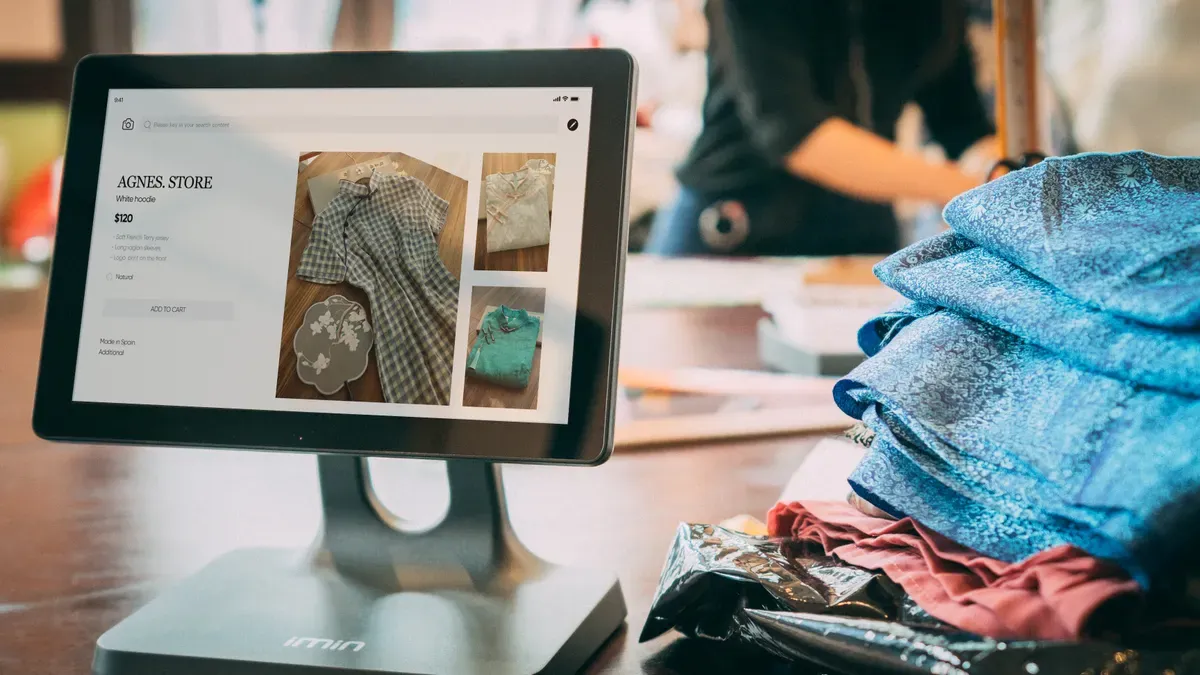
This article gives eight real examples of AI in convenience stores. Each case comes from an operator that put the technology into live service. The examples cover self-checkout, inventory management, customer service, fresh food forecasting, age verification, fuel pricing, shelf scanning, and loss prevention.
Retail workers can compare these deployments with their own operations. The convenience store industry already treats these tools as working systems, not experiments. Operators also apply the same models to an AI convenience store for corporate campuses – scenario [Commercial settings]. Readers will find real results, practical lessons, and a clear starting point for their own convenience store.
Key Takeaways
AI shortens checkout lines and makes service faster.
AI uses data to guess what customers will buy, which helps cut waste and keep shelves full.
AI answers customer questions fast and makes them happier.
AI checks ages and stops theft to make things safer.
Begin with a single AI tool and check the results before you add more.
Checkout-Free Shopping with AI
Computer Vision at the Door
Amazon Go is the main example of checkout-free shopping. The company's Just Walk Out technology mixes computer vision with sensor fusion. Cameras track each item a shopper picks up from a shelf. Weight sensors and shelf sensors check the choice. The system builds a virtual cart as the customer walks through the store. Shoppers scan an app at entry, take what they need, and leave. The technology charges the linked account after they exit. No cashier handles the transaction.
This approach shows how computer vision in real stores goes beyond cameras that only record video. The system reads every pick and return in real time. It also ties each action to a certain shopper. Operators of unmanned, ai-driven c-store chain formats use this same logic to run locations with few staff. The door becomes the checkout, and the shelf becomes the register.
Frictionless Payment Results
Checkout-free systems remove the most common pain point in convenience retail: the line. Customers skip the scan-and-bag step entirely. They spend less time in the store and more time on the road. Operators report that shoppers often add extra items once the wait is gone. A quick grab of a drink or snack feels easy. Throughput rises because the exit never gets jammed.
An ai-native pos system can link these transactions to loyalty data and inventory records. The ai then flags buying patterns and restock needs without manual entry. For stores that still run staffed counters, the lesson is clear. Payment friction shapes basket size and repeat visits. Checkout-free design turns a routine stop into a faster, smoother experience.
AI Inventory Management in Convenience Stores
Machine Learning Demand Forecasting
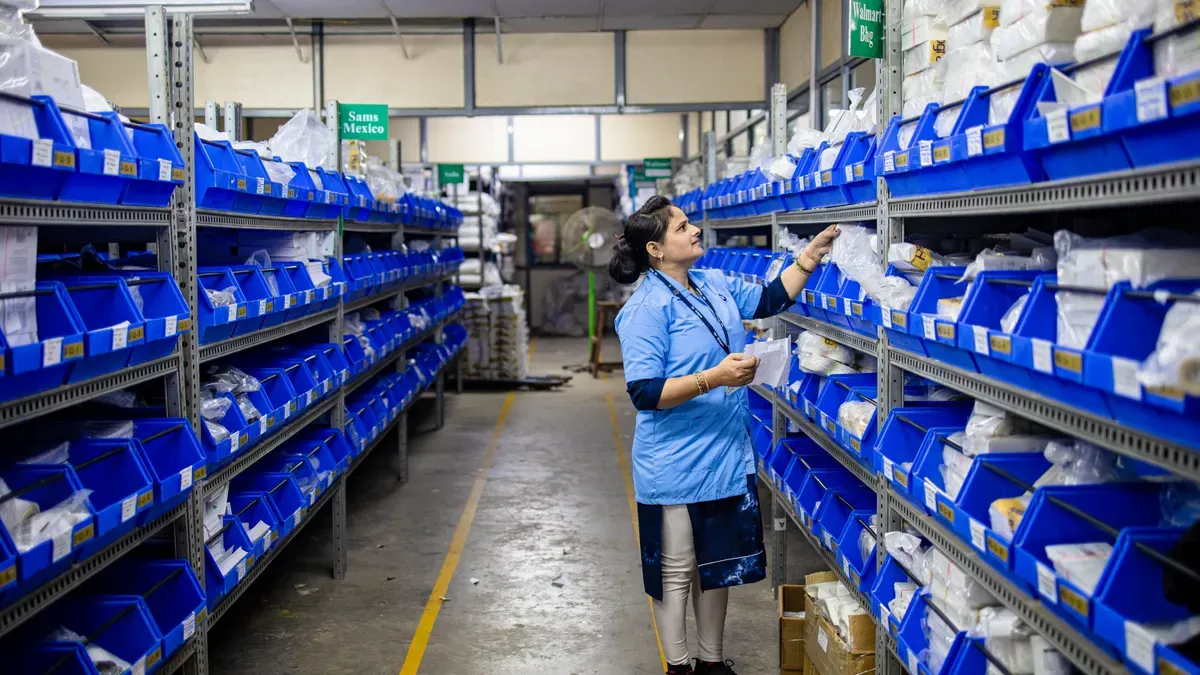
Machine learning models look at large datasets and many inputs to make demand forecasts as accurate as possible. These models consider real-world variables and can greatly reduce forecasting errors that humans might make. Time-series modeling handles repeating patterns like weekday and seasonal changes. Machine learning-based forecasting usually matches or beats it by modeling actual variable-demand relationships instead of just using past patterns. Data pooling gathers data across channels, product types, store locations, time periods, customer behavior, and promotions. This approach gets around low volumes and sparse data at the product-store level. Multilevel modeling gathers information across hierarchical structures like product-store, product-region, and product-chain. Strong algorithms avoid overfitting and handle sparse data points, especially for long-tail products.
7-Eleven and other operators use dynamic inventory management solutions in fuel and convenience retail. These systems connect fuel sales, in-store purchases, and supplier data. The result is a smarter view of what each location needs and when.
Waste and Stockout Reduction
Casey's has expanded ai ordering agents to about 90% of its convenience stores. The company reports agents in operation at 2,600 of 2,900 sites. These agents have handled more than 21 million guest interactions.
Metric | Result |
|---|---|
Share of locations using AI ordering agents | About 90% |
Sites with agents in operation | 2,600 of 2,900 |
Guest interactions handled | More than 21 million |
The agents cut down on missed orders, reduce long hold times, and improve customer service and operational efficiency. They also free team members to focus on preparing food and serving in-store guests.
"Expanding our partnership with SoundHound AI allows us to scale a proven solution that improves the guest ordering experience and helps our team members operate more efficiently across thousands of locations." — Sanjeev Satturu, SVP and CIO, Casey's
For any convenience store, the pattern is clear. Smart inventory management and real-time inventory management cut waste and stockouts at the same time. An ai-powered c-store inventory management system keeps shelves full without overstocking. Operators who adopt ai ordering agents in their c-stores see fewer empty shelves and less spoilage. The same logic applies to inventory across all stores in a chain.
AI Customer Service Assistants
Natural Language Order Tracking
Loop Neighborhood Market used an AI helper to answer guest questions in its stores. The helper uses natural language processing to understand spoken and typed requests. A customer can ask about an order, a product, or a store rule in plain words. The system figures out the intent and finds the right answer in store data. Then it replies in a clear, conversational voice.
This chatbot layer does more than answer simple questions. It follows orders from start to finish and gives the customer a live status update. The helper also learns from each exchange and improves its answers over time. Shoppers get help without waiting for a staff member. Team members get relief from routine questions and focus on food prep and service. The result is a smoother visit and a stronger bond with the brand.
Response Time Improvements
Speed shapes the customer service experience in a convenience store. A shopper who waits on hold or stands at a counter loses patience fast. An AI helper answers in seconds and handles many conversations at once. It never puts a guest on hold and never closes the line at peak hours. Customers report higher satisfaction when answers arrive fast and correct.
The same helper can power personalized c-store customer experiences. It remembers past orders and suggests items a guest might want. Those ai-driven recommendations turn a simple question into an extra sale. The ai also sends complex requests to a human agent with full context attached. Managers see fewer complaints and more repeat visits. For any operator, the lesson is simple. Fast, smart service keeps customers coming back.
Predictive Analytics for Fresh Food
Perishable Demand Forecasting
Fresh food goes bad quickly, so a bad forecast costs money in two ways. The store has to throw away food it did not sell, and the shelf sits empty when demand jumps. Wawa took on this problem with machine learning-based forecasting and replenishment technology from Relex Solutions. The system reads many data streams and takes over manual forecasting work. It balances having products available against cutting waste at every location.
Reported result: 1,100 locations covered at launch.
The chain rolled out the system across 1,100 store locations. Wawa also plans to grow toward 1,800 locations by 2030. Chief Supply Chain Officer Nelson Griffin linked that growth to "high standards of freshness and product availability." His team needs real-time visibility into demand patterns and inventory movement across spread-out locations. The approach shows a trend toward specialized, targeted ai applications. Success depends on clean, normalized data foundations and systematic change management.
Freshness and Waste Metrics
The Wawa case gives other stores a clear lesson. Forecasting accuracy drives two numbers at once: spoilage and availability. A model that reads demand patterns well keeps fresh items on the shelf longer and cuts the amount of discarded product. Operators can track both metrics side by side and treat them as one goal.
The same forecasting logic extends to cold cases and ai-driven coolers. These units can feed sales and temperature data into the model, which sharpens replenishment timing. Teams then restock closer to actual demand instead of a fixed schedule. The result is fresher food, less waste, and a supply chain that scales with new locations. Operators who start with one category, such as bakery or prepared meals, gain proof before expanding the system chain-wide.
AI Age Verification at Self-Checkout
Automated ID Scanning
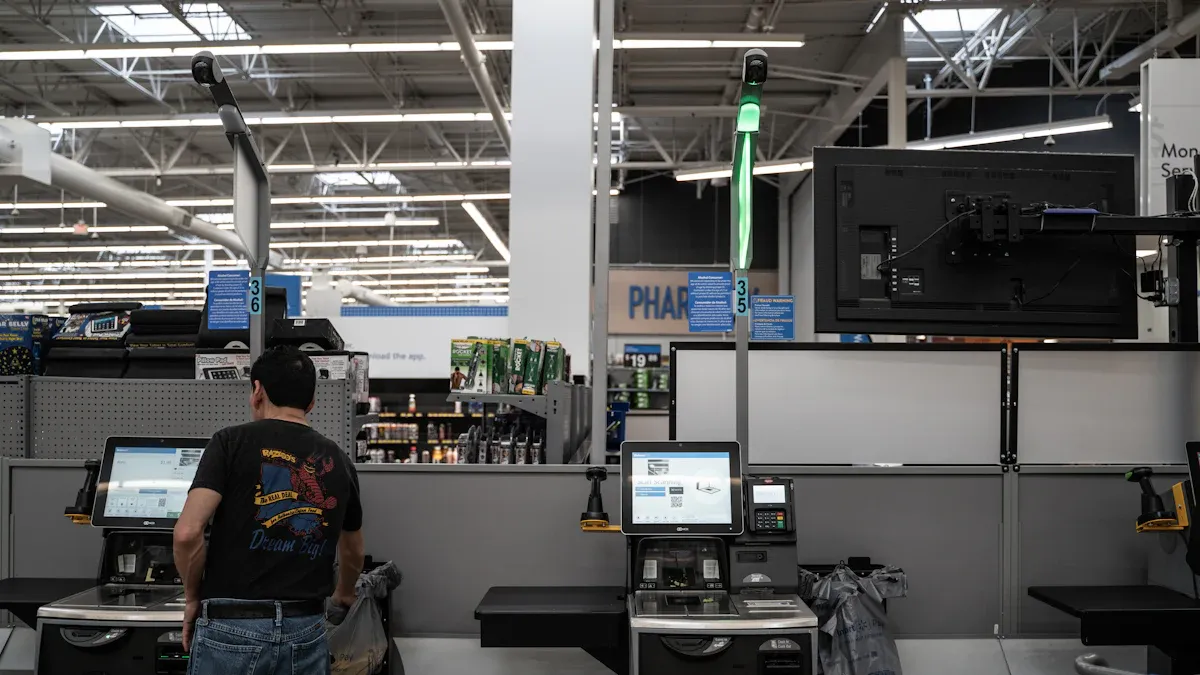
Sheetz uses computer vision ID checks at self-checkout to confirm age for restricted products. The system estimates a customer's age from a selfie taken at the kiosk. A shopper who looks clearly over the limit gets automatic access. If the estimate falls short, the system asks for an ID scan. It reads driver's licenses, passports, and ID cards, then checks the document for signs of forgery. Photo-comparison technology matches the scanned ID against the selfie to catch underage fraud. This in-store computer vision runs on the device itself, so no biometric data leaves the terminal.
Voltox Biometric Age Verification uses AI-powered facial age estimation to automate age-restricted sales across self-checkout, kiosks, POS systems, and vending machines, delivering an age-based Allow/Deny decision in seconds.
This approach gives operators a repeatable check at every lane. Staff no longer judge age by appearance alone, and the system logs each decision digitally.
Compliance and Speed Gains
Age checks that once needed a staff member now finish within seconds. Legitimate customers move through self-checkout without friction, and lines at staffed tills ease as a result. Operators report several compliance benefits from these deployments:
All activity digitally logged for compliance, with no images stored
Support for the UK's Challenge 25 policy
A deterrent effect on potential shoplifters
Less staff confrontation when requesting ID
Trials lasting over four months showed that AI-driven age verification works in live settings, often completing within seconds. That record supports expansion at self-checkout facilities in UK supermarkets and pilot programs such as the EDEKA Jaeger 24/7 store at Stuttgart Airport. For convenience stores, the payoff is twofold. Transactions get faster, and regulatory compliance becomes a logged, auditable process instead of a judgment call at the counter.
Dynamic Pricing and Fuel Optimization
Real-Time Price Algorithms
Casey's uses dynamic pricing for fuel and real-time pricing and incentives as an AI retail application. An AI-powered dynamic fuel pricing model learns from new data. It compares actual results, like how much fuel was sold, against its predictions and adjusts. Neural networks help with this adaptive-predictive approach. Competitor reaction modeling adds another layer. The model considers how the timing of a price change affects whether competitors respond, and how big a price move sets off a market-wide reaction.
The system relies on several connected parts. Real-time fuel pricing feeds watch market inputs all the time. Competitive intelligence studies rival pricing. Centralized cloud price control sends updates to many sites while keeping the brand consistent. POS integration and API connectivity tie the model to existing systems. Time-of-day pricing adjusts rates to demand patterns, and margin protection rules keep profits safe while matching competition. High-quality volume history and point-of-sale data keep the analysis close to real time.
Margin and Competitive Impact
Dynamic fuel pricing changes both margin and market position. The table below sums up the reported effects.
Impact Area | Reported Effect | Underlying Mechanism |
|---|---|---|
Competitive positioning | 2–3 basis point improvement in key competitive price indices | More consistent price perception and faster response to market movements |
Gross margin | 3–5% increase in gross margin | Reducing the delay between cost shifts and price execution |
Margin protection levers | Reduced unnecessary discounting; margin capture in temporarily constrained markets | Prices reflect real market availability, not just visible shelf prices |
Mid-market companies that adopt dynamic, automated pricing are set to boost profits, improve operational efficiency, and keep a competitive edge — with market-based pricing that responds to competitors in real time through smart indexing to stay competitive while protecting margins.
AI-driven revenue growth management, including dynamic pricing, can raise EBIT by 2–5% of sales, according to EY. Using AI demand forecasting and AI-driven dynamic pricing together lifts gross margin through better price points. It also raises average transaction values and cuts food waste through smarter markdowns. A convenience store can make small price changes on snacks, drinks, and grab-and-go meals during peak foot-traffic hours. Pairing demand predictions with footfall patterns makes the most of high-traffic windows.
Predictive maintenance completes the fuel picture. AI-powered dynamic fuel pricing programs work alongside sensor monitoring on dispensers and submersible turbine pumps. Telemetry tracks pump motor amperage, temperature, flow meter pulses, and hose pressure. These signals catch faults days or weeks before failure. AI-driven predictive maintenance for fuel pumps is credited with cutting downtime by up to 40 percent. Planned repairs also cost about 3x less than emergency maintenance. Operators of c-stores and fuel sites gain uptime, protect fuel sales, and avoid compliance violations during downtime.
Robotic Shelf Scanning and Audits
Autonomous Inventory Robots
FamilyMart uses restocking robots to scan and refill shelves of cold drinks. The chain uses Telexistence's TX SCARA robots. These robots run on a track and carry several cameras to scan each shelf. The robots use ai to find drinks that are running low and plan a path to restock them. The system restocks drinks on its own more than 98% of the time.
Several models work together inside the robot. An object-detection model identifies drink types and the correct shelf spot. A motion-detection model helps the arm pick up and place drinks with accuracy. An anomaly-detection model spots drinks that have fallen or been dropped. Another model finds which drinks are running low in each display area. A cloud system keeps a sales database with name, date, time, and number of items stocked. This lets the ai prioritize restocking based on past sales data. When the robot misjudges placement or a drink topples, remote operators take manual control through a VR system.
This setup shows how robotic c-stores handle routine shelf work. FamilyMart reports that the robots cut a branch's workload by about 20%. VR-controlled robots also let staff work across multiple stores or from home, which helps with labor shortages. The Model-T robot is still much slower than humans and can only handle packaged goods. Telexistence's stated goal is full autonomy without human help.
Stock Accuracy and Labor Savings
Robotic shelf scanning turns inventory management into a continuous, measured process. The table below sums up the reported gains.
Metric | Reported Improvement |
|---|---|
Labor cost reduction (annual) | 15–25% of annual expense |
Shelf-check completion rate | ~98% |
Stockout reduction | 20–30% |
On-hand inventory error reduction | 12–18% |
Restock cycle time savings | 8–12 minutes per shift |
Robotic shelf scanning automates shelf checks and price checks. This drives inventory accuracy and faster restocking, so staff can move to higher-value service roles.
The scale data backs these gains. Robots find 10X more out-of-stocks than manual audits. They have scanned 18B price tags, and 132M of them were wrong. They have logged 607M out-of-stock instances, and 42% were controllable. Operators can track yearly metrics such as labor-hours saved to guide expansion.
AI Video Analytics for Loss Prevention
Real-Time Theft Detection
AI video analytics watches store footage and learns to spot suspicious activity tied to shoplifting. The system studies how shoppers move, how long they stay, and how they touch merchandise. It then builds predictive models that flag risky behavior as it happens. Staff get alerts before a theft occurs, which gives them time to step in.
The system triggers on several specific behaviors:
Movements linked to sweep theft
Odd activity at self-checkouts, like an item that was not scanned
A cart pushed toward an exit without payment
A shopper who stays in a high-value area longer than normal
These triggers rely on ai-powered image recognition that reads body movement and shelf interaction in real time. The technology also flags loitering near blind spots and other unusual patterns. Store teams can then approach a guest or review the footage. This proactive layer turns loss prevention from a review of past events into a live response.
Shrinkage Reduction Outcomes
Buc-ee's uses AI-enhanced surveillance across its travel centers. The chain pairs camera coverage with analytics that flag suspicious behavior near high-value items. Operators credit the system with measurable shrinkage reduction. The chain also gets a record of each flagged event, which helps with investigations and staff training.
The lesson for other stores is practical. Cameras that only record video document a loss after the fact. Analytics that interpret the footage help prevent it. Operators can start with one high-risk zone, such as the beer cooler or the electronics shelf, and measure results before expanding. The same ai models scale across multiple stores without adding headcount. Loss prevention then becomes a data-driven process with clear evidence behind each alert.
Real-World Examples of AI in Retail Beyond the Store
Corporate Campus Convenience Scenarios
The eight deployments above apply directly to an ai convenience store for corporate campuses – scenario [commercial]. An ai convenience store for corporate campuses – scenario [commercial] serves badge-holding employees who want speed at lunch and between meetings. Checkout-free entry, shelf sensors, and robotic audits fit that flow. An ai convenience store for corporate campuses – scenario [commercial] also gains from fresh food forecasting, since campus traffic peaks at predictable hours. Operators can run an ai convenience store for corporate campuses – scenario [commercial] with thin staffing and still keep shelves full. The same ai convenience store for corporate campuses – scenario [commercial] model scales to hospitals, airports, and office parks.
Lessons for Commercial Operators
Wider real-world examples of ai in retail back up the pattern. Amazon, Walmart, and Sephora show what ai in retail delivers at scale.
Retailer | AI Application | Reported Outcome | Lesson for Operators |
|---|---|---|---|
Walmart | Hyper-local demand forecasting | Stockouts and overstock commonly cut 20–50% | Tune forecasting to neighborhood demand |
Amazon | Dynamic pricing engine | Revenue lifts up to 20% | Weigh demand, rivals, and local conditions |
Sephora | Conversational chatbot | 62% of consumers prefer chatbots for quick answers | Pair fast answers with human handoff |
Amazon | Recommendation engine | Up to 35% of total sales | Surface add-ons from POS data |
These examples of ai in retail support adoption trends for c-stores. Other examples of ai in retail include H&M, Zara, Best Buy, IKEA, and Warby Parker. Each case shows ai in retail working through ai-enhanced customer segmentation & marketing, inventory control, and ai-driven recommendations. Stores that study examples of ai in retail see where ai in retail pays off first.
The steady theme across Amazon, Walmart, and Sephora is that AI adds to human judgment instead of replacing it. Retailers that succeed pair AI's scale — in forecasting, pricing, personalization, and conversational service — with the empathy and creativity of frontline associates, using human-in-the-loop approval for customer outreach and escalating to staff when situations require it.
Commercial operators should test one use case, measure results, and expand. That approach keeps ai in retail investment tied to proof.
The eight examples all follow one pattern. Each setup connects AI to results you can measure. You see efficiency gains in faster checkout and automated shelf checks. Customer experience gets better with quick service and fresher food. Cost savings come from less waste, lower shrinkage, and smarter fuel pricing.
Operators should start small. A pilot in inventory forecasting or video analytics proves value before a chain-wide rollout. Teams then track results against a baseline and expand only where the numbers hold.
Readers can now evaluate AI solutions for their own convenience store operations. Pick one use case, set a clear metric, and test it in a live store.
FAQ
Which convenience store chains already run AI in live stores?
Several chains use these systems today. Amazon Go uses Just Walk Out checkout-free technology. Casey's runs AI ordering agents at about 90% of its stores. FamilyMart uses robots to scan shelves. Wawa uses machine learning to forecast demand across 1,100 locations. Sheetz uses computer vision to check ages at self-checkout, and Buc-ee's pairs cameras with analytics to prevent loss.
How much does AI inventory management cut waste and stockouts?
The reported results are different for each deployment. Casey's agents handled more than 21 million guest interactions and cut down on missed orders. Robotic shelf scanning cuts stockouts by 20–30% and on-hand inventory errors by 12–18%. Walmart's hyper-local forecasting commonly cuts stockouts and overstock by 20–50%. Operators should measure their own baseline before they scale up.
Does AI age verification slow down self-checkout?
No. The system finishes most checks within seconds. Clear cases pass on their own, and only doubtful ones need an ID scan. Sheetz logs every decision digitally, which helps with compliance audits. Operators also report less staff confrontation and a deterrent effect on shoplifters.
Can a small chain adopt these tools without a large budget?
Yes. Operators can start with one use case, such as inventory forecasting or video analytics. A single-store pilot proves value against a baseline. Teams then expand only where the numbers hold. This approach keeps ai investment tied to measurable returns and limits upfront risk.
What results does AI deliver for fuel pricing and pump maintenance?
Casey's dynamic fuel pricing lifted gross margin by 3–5% and improved competitive price indices by 2–3 basis points. Predictive maintenance on fuel pumps cuts downtime by up to 40%. Planned repairs also cost about three times less than emergency fixes. Together, these gains protect fuel sales and uptime.
See Also
Automated Convenience Retail Worldwide: Comparing Micromarkets And Smart Stores
Creative Vending Machine Locations That Go Beyond Traditional Spots
How Time Out Corner Stores Are Redefining Urban Local Convenience
Essential Corner Store Basics And Why They Are Important
The Rise Of 24-Hour Vending Machine Cafes: Convenience Meets Innovation
