How AI-Enabled Convenience Stores Are Transforming Compact Self-Service Retail

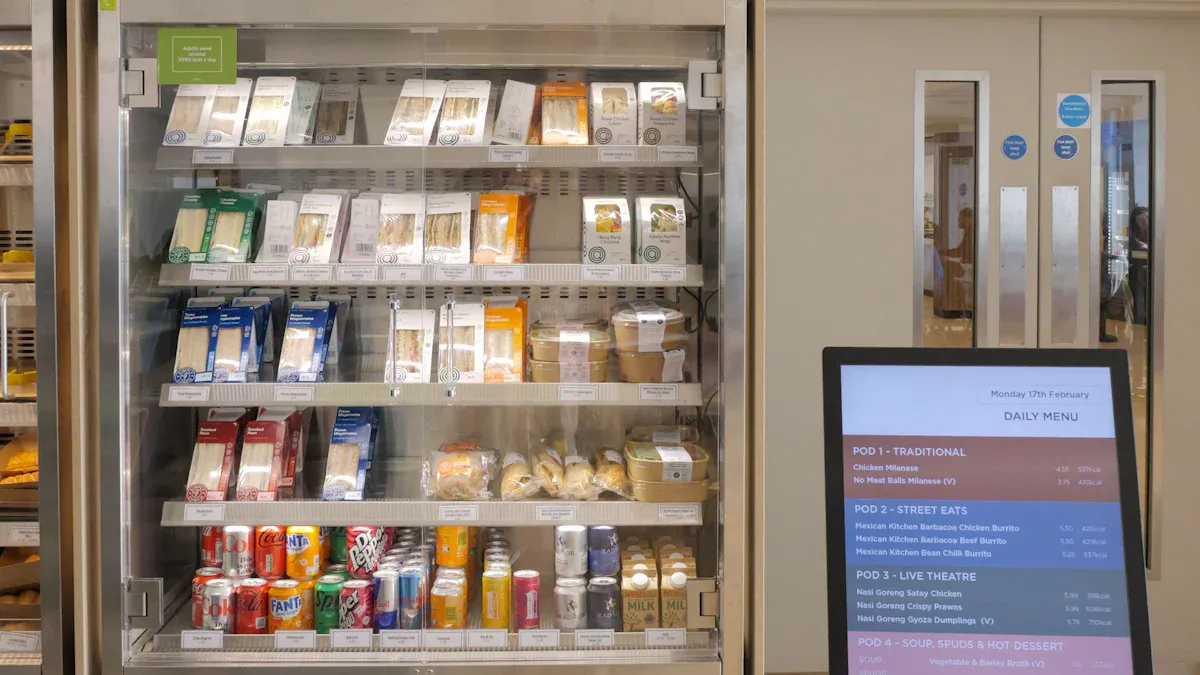
An ai-enabled convenience store changes compact self-service retail in practical ways. It makes small-format shopping faster, more autonomous, and easier to judge through hands-on experience. The real shift lives in your journey as a shopper. Can you walk in, find a drink, and pay without friction? That path matters more than any spec sheet. You move from the entrance to the shelves, then to self-checkout. A smooth checkout keeps you coming back. A recent store visit by a Thai business delegation shows this shift in action. Guests explored ai-enabled retail firsthand, and their visit makes the format concrete.
Key Takeaways
AI-enabled stores make shopping faster and easier. You walk in, pick items, and pay without waiting in line.
A hands-on store visit shows how the technology works. You can see the system track items and handle checkout in real time.
Test the technology yourself before trusting it. Check how well it recognizes products and handles mistakes.
Start with a small pilot to see if the store fits your location and goals. Measure results with real shoppers.
These stores work best in busy places like hotel lobbies or clinics. They offer quick, convenient service for people on the go.
How AI-Enabled Convenience Stores Transform Retail
A Hands-On Store Visit Example
Cloudpick welcomed a Thai business delegation for a hands-on store visit. The group saw the real space, not just a slide show. Video shows visitors looking around, picking drinks, and walking through the aisles. You can watch them stop at shelves, grab a bottle, and keep going. A group photo outside the store shows everyone holding the products they chose. That picture proves the visit happened. Even more, it shows how the format works in real time.
This hands-on convenience store demonstration matters because small retail feels vague until you try it. You need to touch the shelf, pick up a drink, and see the system react. The delegation got that chance. Cloudpick led them from entry gates to shelves, using the real path as a useful guide. Each step answered a question before anyone asked it.
The demonstration became a starting point for assessing the shopper's journey and the business value of a compact self-service retail format.
From Entrance to Product Selection
The journey starts at the entrance. Many ai-enabled convenience store setups let you walk through a turnstile. Cameras, sensors, and AI algorithms track what you pick in a virtual cart. You grab items. The system updates your total without any scanning. The delegation saw this flow up close. They walked through the gates, browsed the drinks, and felt how the space guides you naturally.
Product selection gets faster when technology handles the tracking. Long checkout lines push customers away. AI watches queue lengths and tells managers to open more registers at the right time. Computer vision reads the store in real time. Object detection spots products, customers, and behaviors right away. Managers act at once instead of waiting for a monthly report.
RFID adds another layer of speed. You put items in a cart and walk through a scanner that reads all tags at once. The system creates a total bill instantly. No scanning each item, no waiting. This approach cuts wait times a lot. Long queues cause abandoned purchases worth about $19 billion each year. AI-equipped cameras watch customer mood, shelf stock, and line length with almost no delay. They turn those images into action right away.
Operational gains matter too. Predictive staffing lines up schedules with customer demand and peak hours. AI handles supplier ordering, shift swaps, and compliance tasks. This self-service model frees staff to focus on service, food prep, and customer connection. About half of retail activities can be automated with today's technology. Stores using AI spend 20–70% less on operations. Inventory errors drop by 20–50%. Lost sales from missing products fall by up to 65%. These numbers show why retailers pay attention.
The real transformation is simple. The store understands what you pick. You walk in, choose, and head toward self-checkout. The self-checkout stations use AI theft detection to reduce shrink. Another self-checkout option exists: a frictionless model that charges you automatically as you exit. This self-service checkout needs no manual scanning at all. This model makes a self-checkout kiosk feel optional—you can just walk out.
That is what makes an ai-enabled convenience store feel different from a regular shop. The path from entrance to shelf feels natural. You get help when you need it, and the checkout experience stays quiet and fast. The delegation saw this with their own eyes.
Putting the Shopper Journey First
Self-Checkout and Checkout Experience Clarity
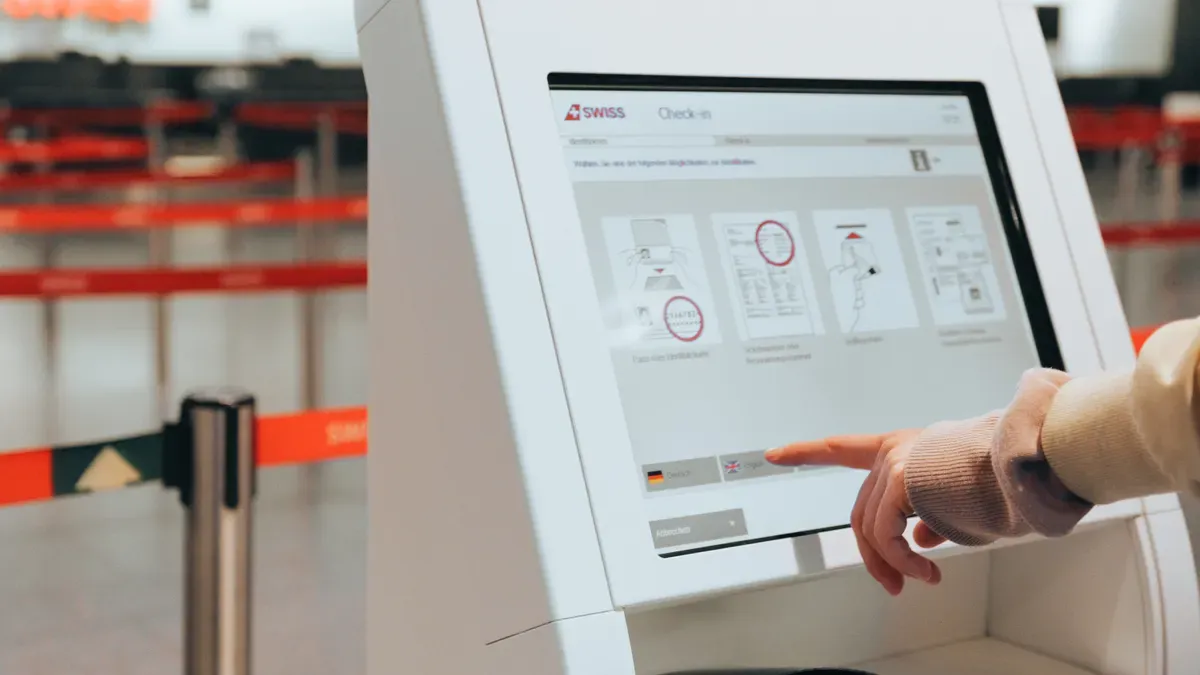
Think about your first time in a store with no staff. Do you know where to enter? Can you find the exit? Does checkout make sense without a guide? These questions matter more than hardware. First-time visitors should get the flow in seconds. If they pause at the gate or stare at screens, the store fails.
Good self-checkout tech solves this with design, not hard steps. A simple, friendly interface looks the same throughout the store. Voice and screen prompts guide each step. Vision Match finds produce and shows five options, so you skip long menus. AmbDex lets you scan and bag two items at once, which feels natural and cuts false weight errors. Speed Tendering lets regulars skip steps but keeps the flow simple for newcomers. Secure OneTouch handles payment, coupons, and rewards with one biometric touch. Walk Away detection shows a countdown before it cancels the sale, so you do not feel lost if you step aside. The self-learning, self-tuning weight system cuts interruptions over time. Assistance Needed email alerts send staff fast when you need help.
RAIN RFID changes the game as well. Products have tags that machines read. You set everything down at once, then pay with a mobile wallet or contactless card. There is no need to scan each item. Ultra-Wideband allows hands-free entry and exit, and it gives indoor directions to items with centimeter-level accuracy. These tools make one smooth self-checkout process feel simple. Whether you face one checkout station or several, the goal stays the same: checkout with no lessons needed.
Assortment, Assistance, and Replenishment
Now ask tougher questions. Does the product mix fit this location? Can you get help when you need it? How will the store restock and keep running? These factors decide if a self-service store lasts past the newness phase.
AI helps here in concrete ways. Predictive machine learning improves inventory control across the supply chain. Local assortment and space planning maximize value for each store. Video and machine vision track shelf stock, spot damaged or mislabeled items, and forecast busy times, sending quick alerts to suppliers. Automated replenishment balances high stock availability against inventory cost. Automated planogram generation uses sales speed, profit, product size, and demand to build shelf layouts faster. Store-specific optimization adjusts those layouts for local buying habits and store size. Real-time demand forecasting changes shelf space early. AI-powered forecasting reduces inventory errors by 20–50% versus traditional methods, and retail productivity grew 4.6% in 2024 as stores produced more with fewer work hours.
The visiting group saw this system in person. They went from entrance gates to shelves and asked how each part would fit their own market. That is the best way to judge a self-service store. You test the experience, not the sales pitch.
Self-Service Technology Evaluation in Real Stores
Purchase Recognition and System Requirements
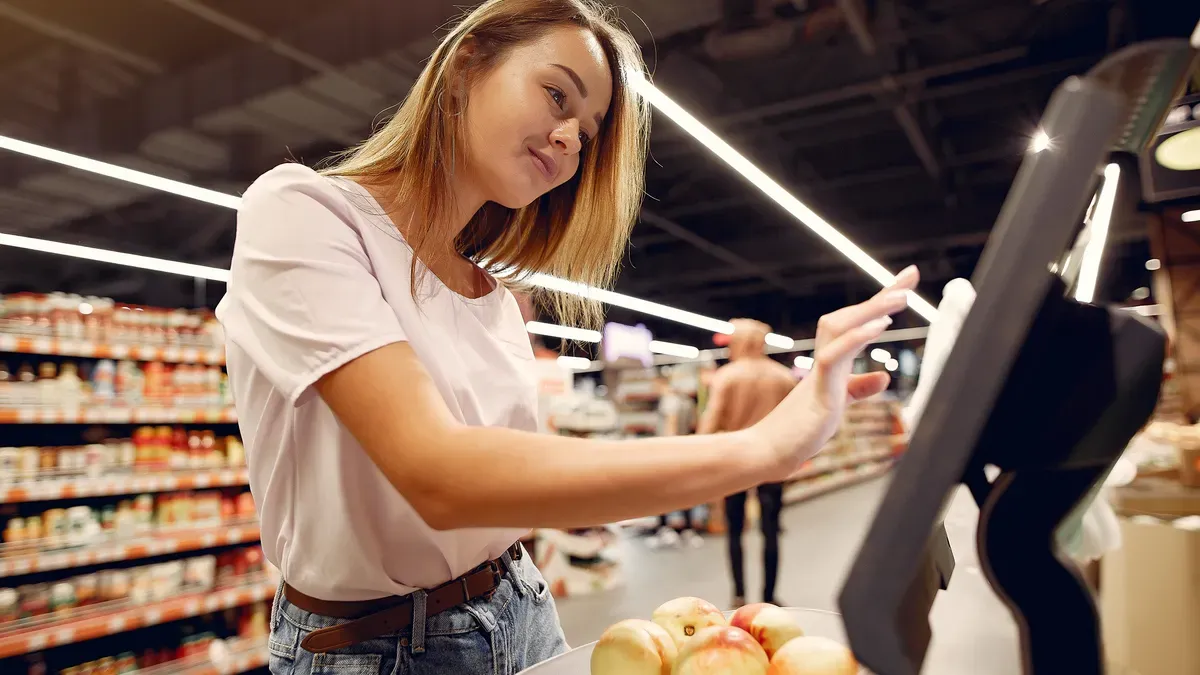
A store visit lets you check the technology in a real setting. You can see how well purchase recognition works in normal conditions. You need enough accuracy to trust the results. If accuracy is too low, workers must check items by hand, which wastes the speed benefit. If accuracy is high enough, workers can trust the results and act on them right away. A system that performs well in a normal grocery area may act differently behind a cooler door with condensation. You must test the stated accuracy in the actual store format.
What hardware and software does a small store need? Here is what you will find.
Category | Requirement |
|---|---|
Hardware | Cashless payment setups; screen, barcode scanner, receipt printer; weight checks and smart scales; RFID tracking; built-in cameras |
Software | Self-service running on the same main POS system as staffed lanes; central updates; shared promotions; ai-assisted item recognition; ai-powered analytics for theft detection |
A small desktop kiosk fits counters in cafés, drink shops, and convenience stores. Modules include barcode scanners, thermal printers, NFC readers, and cameras. Some platforms support AI-ready computing for device-side recognition.
Evidence for Business Value
You need proof before you make a deal. A store visit lets you try the checkout experience yourself. Walk through the entrance. Pick up a product. Watch the system recognize it. Then check the self-checkout flow. Does the self-checkout technology handle your items without trouble? Can you use several self-checkout stations without getting confused?
Collect evidence on shrinkage control. Ask how the system marks mismatches between images and barcodes. Check whether self-service technology shares one interface with staffed lanes. Review the self-checkout technology for speed and accuracy. Test the self-checkout with real products from the shelf. A hands-on trial beats a spec sheet every time.
Relevance for Retail and Wellness Destinations
Think back to your last trip to a big mall or wellness center. You wanted to move from one activity to the next. Convenience services help to shape that trip. Retail design experts at Cushing Terrell see convenience and wellness blending into stores for busy shoppers. Mall of America opened a walk-in health clinic inside the mall. Visitors and employees treat small health problems and travel illnesses there. This adds self-care to shopping.
The Mall Group and BDMS Wellness Clinic Silver are in this same space. They run spots where people expect comfort, speed, and care. A compact self-service store could fit that idea. Imagine a small shop next to a wellness clinic. You drop by for a drink or something you need every day. You don't wait. You pick it up and move on.
Convenience in the Visitor Experience
People pick retail healthcare clinics mostly because they are easy to use. These clinics are open every day, often with extended hours. Nurse practitioners or physician assistants run them. You need no appointment. Most take Medicare, Medicaid, and cash. They treat colds, pinkeye, urinary tract infections, physicals, lab work, screenings, and vaccinations.
A self-checkout works the same way. You pick your items, pay at a self-checkout station, and leave. That speed and ease changes a quick errand into a nice break. As the self-checkout market grows, places have more reasons to add self-service choices. Health and wellness programs build loyalty and trust. Convenience services bring more foot traffic and open cross-selling chances. The same idea works in a wellness-focused place.
Where Compact Retail Creates Value
Where does a new kind of store really earn its spot? Look at places where people pass through but don't want to stop long. Hotel lobbies, office ground floors, clinic waiting rooms, and transit hubs fit this pattern. A compact store can put essentials in your path.
The Mall Group and BDMS Wellness Clinic Silver projects should ask the same question. Where do visitors feel a real gap? Maybe they end a consultation and want tea. Maybe they need a phone charger before an appointment. Those moments show the value of a compact store. You want a clear entry, easy-to-see products, a smooth checkout flow, and a calm checkout process. If a visitor gets it in just seconds, the self-checkout feels natural. If they pause, the location fails. Test that experience with the real audience.
Future Pilots and Practical AI Applications
A pilot only works when the site and your way of running things match the format. You can't judge an ai-enabled convenience store from just one visit. A visit shows a controlled setting, not real retail conditions. A demo can look perfect, then break down under real conditions. Proper testing needs long-running, multi-store production deployments.
Site, Operating Model, and Objectives
The store format decides where AI really helps. Pick one high-frequency workflow first. Measure it against a named KPI inside a limited group of stores. Let the business case rest on results, not guesses. The goal stays narrow and testable. You want to know whether the self-checkout flow feels natural to a first-time visitor. Count how many people pause at the gate. Watch how shoppers approach the self-checkout station.
Take a modular, scalable approach to each pilot. Start small, then expand only after results show the system holds up. Budget for training and process redesign, not just licensing. Teams need coaching until the new way becomes normal. Adoption separates a pilot from a platform. One retailer reached full adoption across its store network and cut product recall time dramatically.
A Starting Point, Not a Substitute
Retailers are seeking AI solutions that function effectively in actual store environments, not merely within demonstration settings.
Don't mistake the demo for the full evaluation. A single visit can't assess alert fatigue. That depends on steady alert volumes and staff response capacity. Small error rates become serious at high volume. Even high accuracy can create many false positives per day at scale. You need evidence from production deployments with similar transaction volumes.
The convenience store demonstration is a starting point for assessment, not a substitute for your own trial. Then walk a visitor through the self-checkout process. Test the self-checkout experience with real shoppers. Use a self-service checkout for a focused group of items. Pair it with ai-powered analytics to track alert handling and business outcomes. These practical ai applications connect commercial spaces with everyday convenience, but they earn trust one proven checkout at a time. Keep the checkout process simple for every visitor. Continue the conversation with Cloudpick by booking a visit at https://lnkd.in/gWsGAewR, emailing jefffeng@cloudpick.me, or visiting www.cloudpick.ai.
AI-enabled convenience stores are changing small self-service retail. They put your trip first and prove the technology works in real store settings.
The Thai delegation’s visit showed why hands-on experience beats reading about it. Guests walked the aisles, picked drinks, and watched the self-checkout flow up close.
Treat that demonstration as a starting point. Judge any future trial by your location, how you run things, and your goals. Try the self-checkout with real shoppers before you commit.
Practical AI tools will keep connecting shops with everyday convenience. A self-service checkout feels new today. Tomorrow, you will expect that checkout everywhere. That shift is already happening.
FAQ
What makes an AI-enabled convenience store different from a regular shop?
You walk in, pick what you want, and leave. Cameras and sensors track your items in a virtual cart. The store knows what you took. Your self-checkout happens fast, often with no scanning at all. That smooth path from door to exit is the real difference.
How does the Thai delegation visit help me judge this format?
You can read about a store all day and still miss how it feels. The delegation walked the aisles, chose drinks, and watched the checkout flow up close. A group photo outside shows their picks. Hands-on time answers questions a brochure cannot.
What should I test during a store visit?
Try the entrance first. Can you find your way in without help? Grab a product and watch the system recognize it. Then run a full self-checkout with real items. Check how the checkout handles mistakes. Ask about restocking and staff alerts too.
Is the demonstration enough to prove business value?
No. A demo shows a controlled setting, not real retail conditions. You need long-running, multi-store production data. Small error rates grow at high volume. Treat the visit as a starting point, then measure results against your own goals.
Where could a compact self-service store fit?
Look at places where people pass through quickly. Hotel lobbies, office ground floors, clinic waiting rooms, and transit hubs all work. The Mall Group and BDMS Wellness Clinic Silver projects face the same question. Find the moment a visitor needs something fast, then serve it.
How do I move forward with Cloudpick?
Book a visit at https://lnkd.in/gWsGAewR. You can also email jefffeng@cloudpick.me or visit www.cloudpick.ai. Share your site, your operating model, and your goals. Then test the checkout experience with real shoppers before you commit.
See Also
Why Stores Powered By Artificial Intelligence Will Dominate Tomorrow
Comparing Micromarkets And Smart Stores In Global Automated Convenience Retail
Benefits And Features Of AI-Powered Combo Vending Machines For Retail
The Growth Of AI-Powered Corner Stores: Essential Knowledge For Retailers
Examining Walgreens Self-Checkout: Convenience And Challenges In Modern Retail
