How autonomous stores enhance convenience for end-users in Hospitals & healthcare facilities

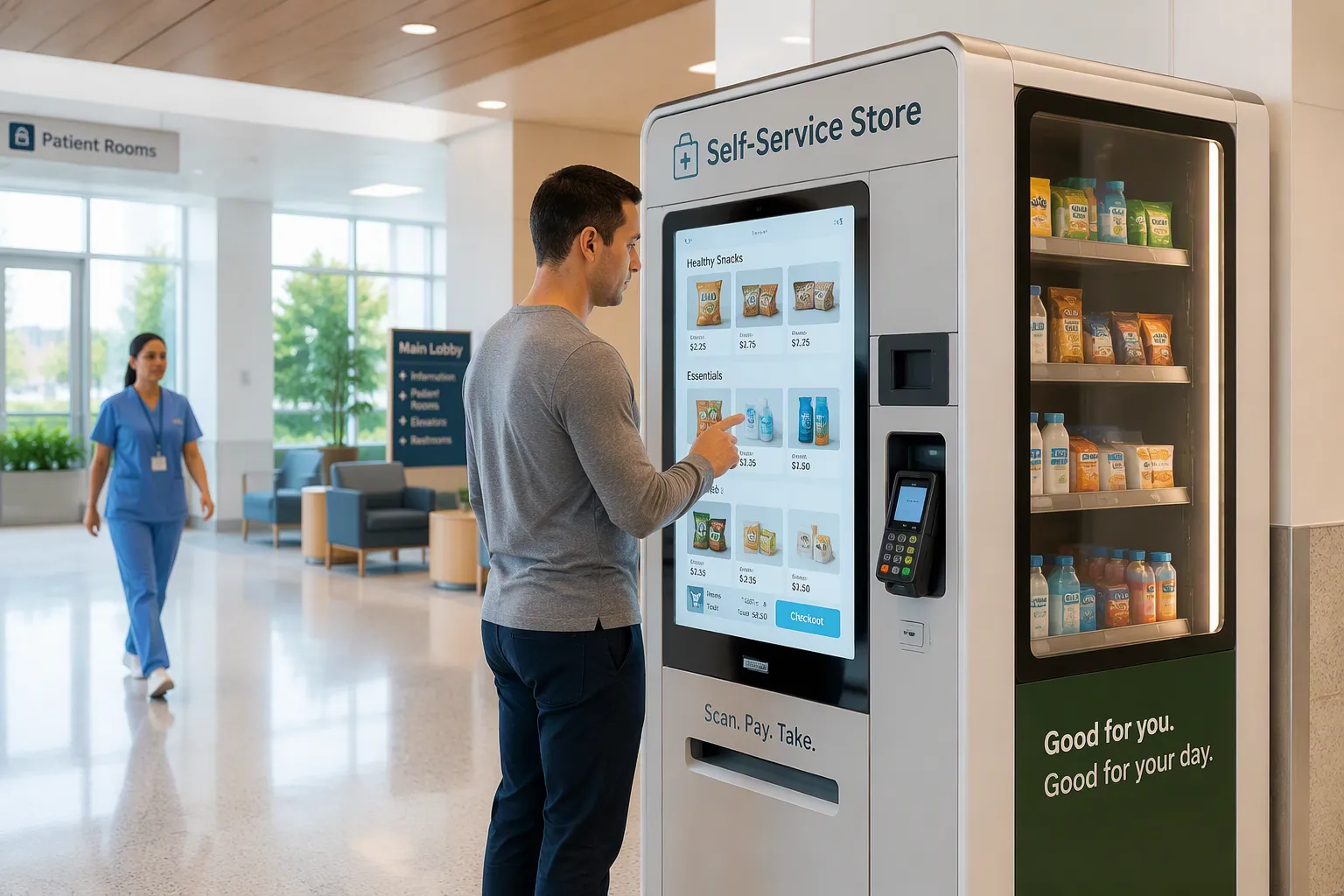
Autonomous stores enhance convenience in healthcare settings by giving people immediate, frictionless shopping access to daily essentials at any hour. You no longer face long checkout lines, closed retail counters after hours, or empty shelves at night. Nurses and doctors stay at the bedside instead of ringing up snacks. These stores remove three common friction points: wait times, limited retail hours, and staff pulled from care duties. Autonomous stores enhance convenience for everyone who walks through the door. This walkthrough shows the end-user benefits and the facility gains that follow.
Key Takeaways
Autonomous stores stay open 24/7. You can buy food and essentials at any hour.
You skip the checkout line. Tap your card, take what you need, and walk out.
Staff stay on the unit. Nurses and doctors focus on patient care instead of retail tasks.
Patients and visitors feel less stress. The store has what they need nearby.
Hospitals can pilot one store. Measure results, then expand across the campus.
24/7 Access: How Autonomous Checkout Expands Foodservice Access 24/7
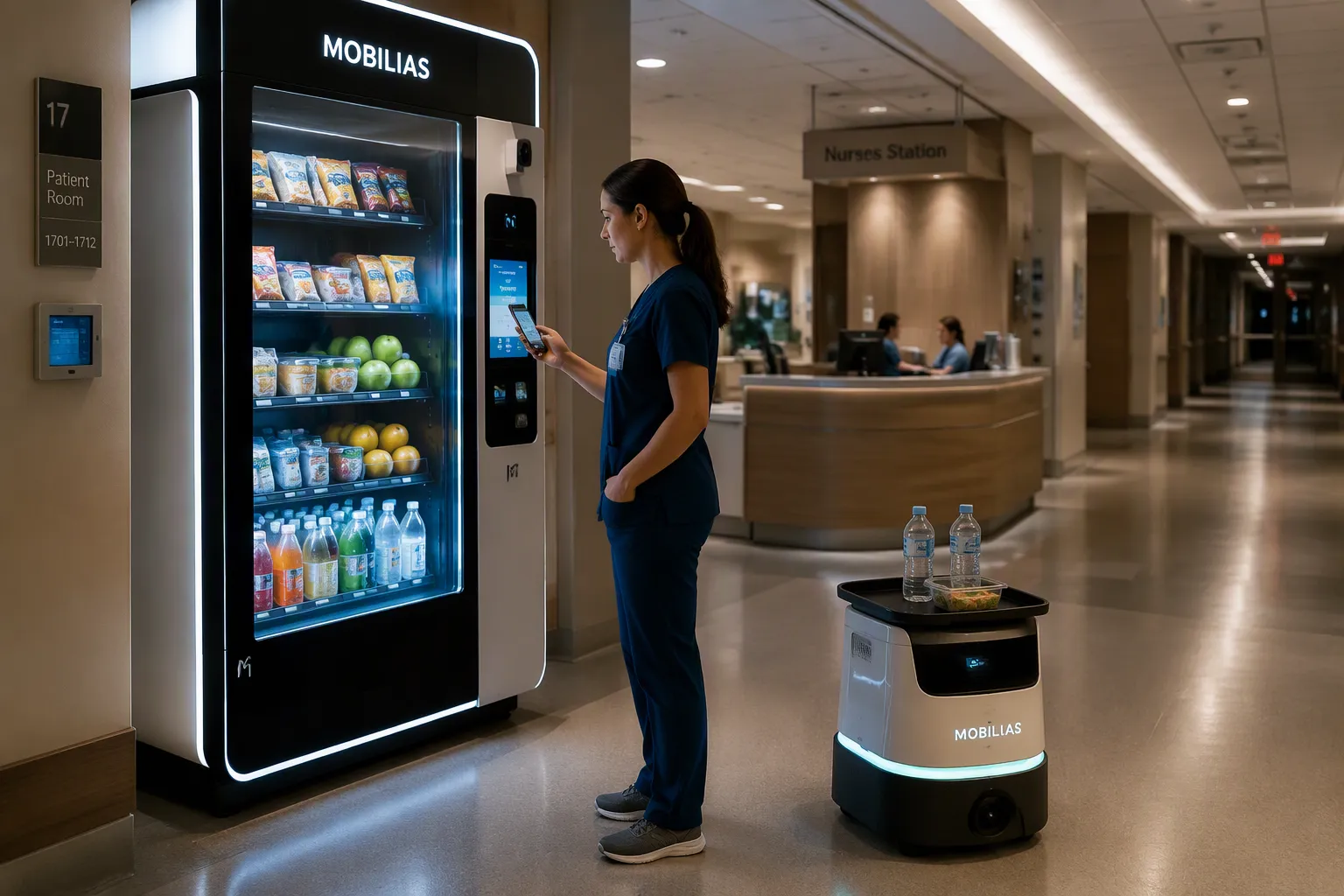
Autonomous stores run without on-site staff. That single design choice lets them stay open at every hour in a hospital. A traditional cafeteria closes in the evening. A staffed gift shop locks its doors at night. An autonomous retail unit keeps working through both. You swipe or tap, take what you need, and walk out. This model is how autonomous checkout expands foodservice access 24/7 for everyone on campus.
Round-of-the-Clock Essentials for Staff and Visitors
Night-shift nurses, physicians, and visitors all face the same problem. Hunger and small needs do not follow cafeteria schedules. Autonomous retail solves this with grab-and-go access to a wide product range. Typical hospital units stock:
Food and beverages: pre-made sandwiches, packaged meals, made-to-order items, salad bars, hot food bars, fountain drinks, and coffee stations
Essentials and over-the-counter items: sundries and OTC products
Campus-branded merchandise
Temperature-controlled selections: ambient, cooler, and freezer options
This range covers a quick snack at 3 a.m. and a forgotten toiletry after hours. Round-the-clock availability removes the time-of-day restrictions that traditional retail imposes. You no longer plan your break around store hours. The store fits your schedule instead.
Nutritious Meals Anytime for Patients
Good nutrition should not stop when the kitchen closes. Autonomous checkout expands foodservice access 24/7 with healthy options at every hour. Operators stock protein bars, fresh fruit, sandwiches, salads, and caffeine-free beverages. Labeled choices include sugar-free and low-sodium snacks plus fortified drinks for specific patient needs. Markets placed near nursing stations let staff grab healthy items during short, time-sensitive breaks without leaving the unit. Autonomous delivery robots extend this reach by carrying food and water directly to units on every floor.
Mechanism | How it ensures nutritious meals at all hours |
|---|---|
Round-the-clock operation | Micro markets stay open when cafeterias close, serving night-shift nurses, physicians, and visitors who need food at 3 a.m. |
Healthy stocking | Operators stock protein bars, fresh fruit, sandwiches, salads, and caffeine-free beverages to meet dietary needs. |
Dietary accommodations | Labeled options include sugar-free, low-sodium snacks and fortified drinks for specific patient/resident requirements. |
Overnight staff support | Markets near nursing stations or break rooms let staff grab healthy items during short breaks without leaving the unit. |
Multi-floor access | Autonomous delivery robots carry food and water directly to units, extending 24/7 access across every floor. |
BayCare shows the model in practice. The health system used autonomous retail technology to expand its cafeteria inventory by hundreds of items. Staff and visitors can now shop for those items around the clock. This addresses a common struggle: overnight workers want healthy food, yet short breaks and long checkout lines cut into the little time they have to eat. Extended hours and easy after hours shopping change that equation. Foodservice access 24/7 becomes a real benefit, not a promise.
How Autonomous Stores Enhance Convenience with Checkout-Free Shopping
Faster Transactions, Shorter Waits
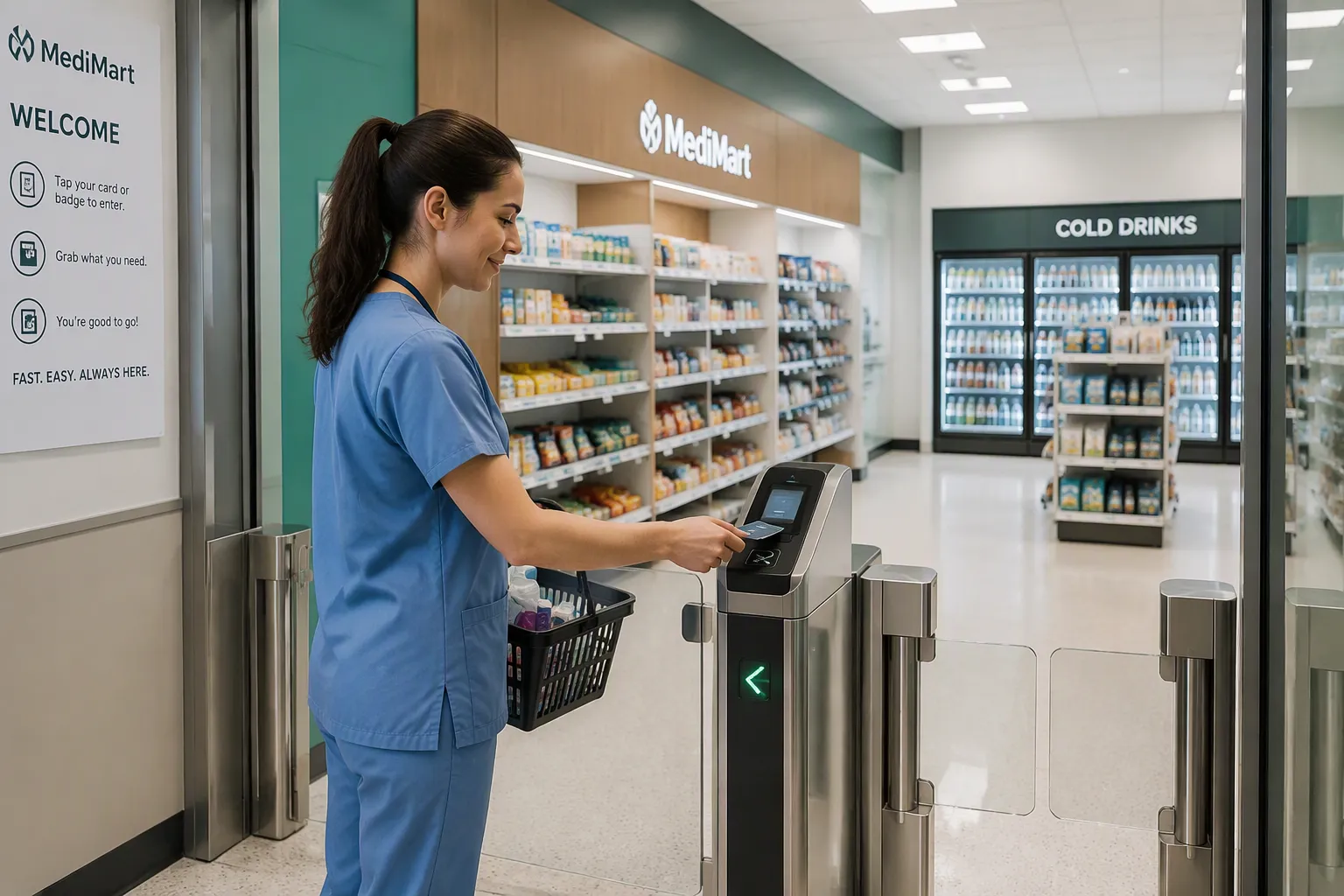
You tap a credit card at the store entrance to gain access. Then you shop freely without scanning items or talking to a cashier. The AI system detects and tracks each item you select. On exit, your card is charged automatically, and you walk out without waiting in any line. This is the full checkout-free process, and it turns a routine purchase into a quick stop.
Tap your credit card at the entrance to unlock the store.
Shop freely without scanning items or visiting a cashier.
Let the AI system detect and track your selections.
Exit and let your card charge automatically.
Walk out without standing in any line.
Autonomous checkout drives speed at every step. Computer vision and shelf sensors identify products as you pick them up. The system builds your basket in the background. You never stop to scan a barcode or bag an item. This cashierless setup removes queues and shortens wait times for hospital staff and visitors. A nurse on a short break can finish a purchase in minutes. A visitor buying a gift can return to the ward fast. Autonomous stores enhance convenience by eliminating checkout lines from the busiest hallways on campus.
Simple Payments for Every User
Payment happens without a register, a receipt printer, or a card swipe at a counter. You link a card once, and every later visit charges that card automatically. This friction-free checkout suits people who cannot stand for long periods. A patient with limited mobility can roll through the aisle and leave. A parent pushing a stroller keeps both hands free. Staff under time pressure skip the queue entirely.
Self-checkout kiosks offer a second path for anyone who prefers a visible screen. You scan, pay, and confirm at your own pace. Both options support card and mobile payment, so you never need cash. Autonomous retail works best when payment choices match the user. Some shoppers trust a tap-and-go card. Others want to see the total before they pay. Offering both builds trust and keeps the enhanced, streamlined shopping experience open to everyone.
The seamless store entry and exit flow matters most in a hospital. Corridors are narrow, elevators are slow, and every minute counts. A frictionless shopping trip respects those limits. You enter, take what you need, and leave. No clerk hands you change. No line blocks the doorway. This streamlined shopping experience fits the pace of clinical life.
Self-checkout also reduces contact, which matters in infection-conscious facilities. You touch only the products you buy. The shopping experience stays quick and clean. Autonomous retail pairs this hygiene benefit with genuine speed. Together, they make frictionless shopping a practical standard rather than a luxury.
Autonomous Retail That Frees Staff for Patient Care
Less Retail Work, More Care Time
Traditional retail operations pull clinical and support staff away from the bedside. Someone must open the gift shop, stock the shelves, ring up sales, and reconcile the cash drawer. Autonomous retail removes those duties from your team entirely. The technology tracks every item on the shelf and charges each shopper automatically. No clerk stands behind a register. No one counts change at the end of a shift.
This shift matters most during a staffing shortage. Every hour a nurse spends restocking snacks is an hour lost to patient monitoring, medication rounds, or family communication. Autonomous retail gives that hour back. Your clinical team stays on the unit. Support staff focus on cleaning, transport, and food preparation instead of retail chores. The store runs itself, and your people run the care.
Lower Administrative Burden
Managing a staffed store carries hidden overhead. You handle scheduling, cash handling, shrinkage, and vendor coordination. Each task adds paperwork and management attention. Autonomous retail cuts most of that load. The system logs every transaction, so reconciliation happens without manual counting. Inventory data updates in real time, which reduces waste and emergency reorders.
Hospitals and other business and industry locations face the same pressure to trim non-clinical costs. Leaders in these settings want lower labor costs without losing service quality. An unattended store delivers both. You redirect saved hours toward patient-centered activities: discharge planning, bedside support, and care coordination. Administrators see a leaner cost structure. Staff see fewer distractions. Patients see more attentive care. That combination makes autonomous retail a practical fit for any facility that treats time as a scarce resource.
Shopper Convenience and Satisfaction for Patients and Visitors
Less Stress, Better Visits
A hospital visit already carries enough pressure. You should not add a hunt for a snack or a missing toothbrush to that load. Autonomous stores place food, drinks, and personal care products within easy reach. That ready access minimizes stress for people in high-pressure situations and lifts overall satisfaction. Toiletry items stocked in the units bring relief during unexpected overnight stays or long visiting hours. You also find medical necessities such as masks, gloves, first-aid kits, and OTC medications without asking a supply closet, front desk, or closed pharmacy.
Mechanism of access | How it reduces stress for patients and visitors |
|---|---|
Readily available amenities (food, drinks, personal care products) | Minimizes stress for people already in high-pressure situations and improves overall satisfaction |
Personal hygiene and toiletry items stocked in machines | Provides relief during unexpected overnight stays or extended visiting hours when basic necessities are missing |
24/7 snack and drink availability | Removes misalignment with cafeteria hours and eliminates the need to leave the premises to find sustenance |
Medical necessities (masks, gloves, first-aid kits, OTC medications) | Gives staff and visitors quick access to essential items without requesting them from a supply closet, front desk, or closed pharmacy |
These small wins compound. A visitor who finds a phone charger at midnight stays calm. A parent who grabs a snack without leaving the ward returns to the bedside faster. Each solved need protects the visit from a preventable disruption.
A Human-Centered Store Experience
Smart technology alone does not create a good store. Human-centered design pairs that technology with thoughtful experience design. The layout guides you to high-demand items first. Clear signage answers questions before you ask them. Lighting and shelf height suit people who use wheelchairs or walkers. This approach turns autonomous retail into a genuinely welcoming autonomous retail experience.
Convenient access and faster delivery from medical e-stores also support patient satisfaction and better health outcomes. A patient who receives supplies without a long trip off the floor rests more and worries less. Hospital gift shops often close early, so an unattended unit becomes a convenient alternative for a last-minute gift. Every detail of the shopping experience should serve the person standing in the aisle. That focus is how autonomous stores enhance convenience and build real shopper convenience and satisfaction. A streamlined shopping experience, fair payment options, and a calm environment all reinforce one idea: the store exists for the user, not the other way around.
Operational Benefits That Amplify Convenience
Smarter Inventory and Stock Availability
Behind every easy purchase sits an inventory system that keeps shelves full. Autonomous retail uses fixed cameras and computer vision to watch shelves and bins in supply rooms and PAR locations. The system detects each item removed or restocked in real time. On-hand levels stay accurate, and a replenishment alert fires automatically when stock falls below PAR or min/max thresholds. No barcode scanning, RFID tagging, or manual counting is required. Barcode and RFID methods depend on clinical staff scanning or tagging items, and care priorities often interrupt that work. That reliability is why autonomous retail fits a hospital's constrained footprint.
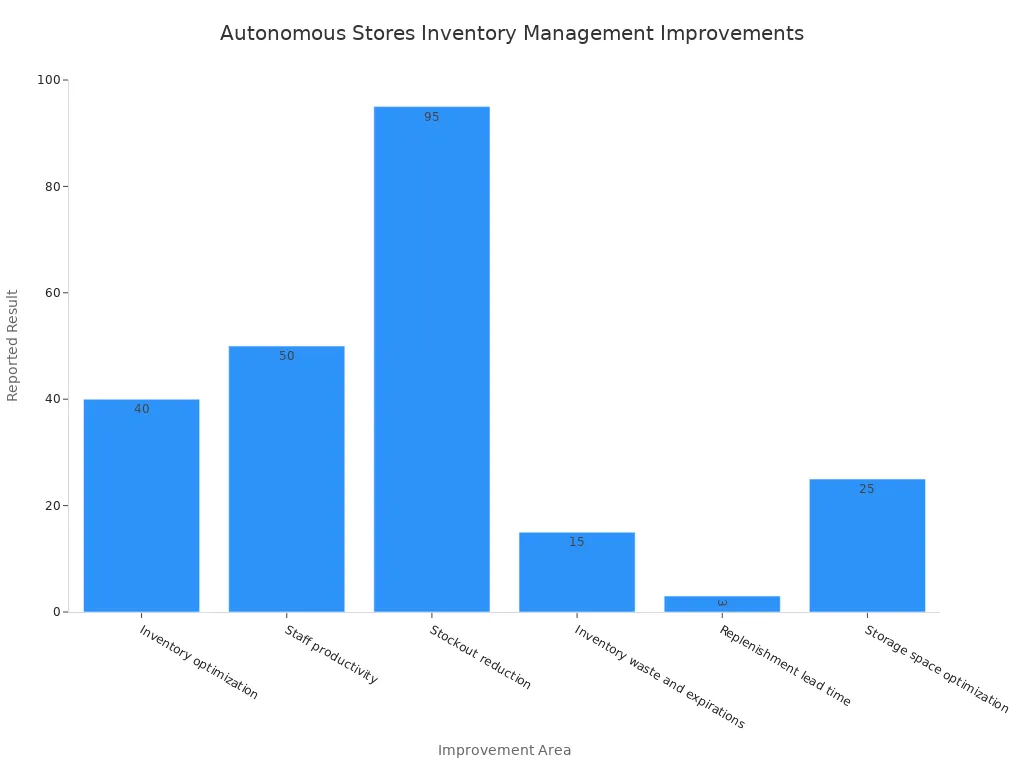
The results show up in what you find on the shelf. Reported improvements include up to 95% fewer stockouts, roughly 15% less inventory waste and expiration, and replenishment lead time falling from 7 days to as little as 3 days. Staff productivity rises by up to 50% because cycle counts disappear. Inventory optimization reaches up to 40%, and storage space optimization reaches up to 25%.
Data Insights for Better Product Mix
Every transaction feeds a data stream. An autonomous checkout solution records what sells, when it sells, and which items sit unsold. You use that record to adjust the product mix toward real demand. Stock more sandwiches before the night shift. Pull slow sellers and free the shelf for items visitors actually buy. This is how autonomous checkout raises operational revenue while improving the user experience.
Payment data adds another layer. A smooth payment flow at the entrance keeps repeat visits quick. Self-checkout kiosks give shoppers a visible screen when they want one. Both self-checkout and tap-and-go options support card and mobile wallet taps, so no one needs cash.
Treat the data with care. Best-practice guidance warns against incomplete or poor-quality data, and it recommends validating AI predictions and monitoring transaction accuracy continuously. Keep human oversight in place. A 30-day pilot in one or two stores lets you connect POS and sensors, set KPIs, and confirm recognition accuracy before you scale.
Successful autonomous store locations keep staff on hand to help first-time shoppers get familiar with the scan-to-enter, skip-the-checkout experience; transaction and sales increases show customers adapt quickly.
Autonomous stores enhance convenience in four clear ways. You get 24/7 access to food, drinks, and essentials at any hour. You skip the checkout line and finish a purchase in minutes. Your clinical staff stay on the unit instead of running a register. Patients and visitors leave with less stress and more trust in the facility.
These stores fit naturally into constrained healthcare environments. They need little floor space, no cashier, and minimal oversight. They turn an unused corner into a reliable service point.
Hospital administrators should act now. Pilot one autonomous store in a high-traffic hallway. Measure the results. Then scale the model across your campus.
FAQ
How do autonomous stores work in a hospital?
You tap a card at the entrance to unlock the store. Cameras and shelf sensors track each item you pick up. The system builds your basket in the background. You exit, and your card charges automatically. No cashier and no register sit between you and the door.
Do autonomous stores accept cash?
Most units run cashless. You pay with a linked card or a mobile wallet. Self-checkout kiosks give you a visible screen when you want to confirm the total first. Both paths support card and mobile payment, so you never need to carry cash.
What products do hospital autonomous stores stock?
Units carry pre-made meals, sandwiches, salads, fruit, and coffee. You also find sundries, toiletries, OTC medications, and campus-branded merchandise. Temperature-controlled shelves hold cooler and freezer items. Stocking follows real demand data, so shelves reflect what staff and visitors actually buy.
How much staff time does an autonomous store save?
The store runs itself. No one opens a register, counts a cash drawer, or scans shelves for inventory. Your clinical team stays on the unit. Support staff return to cleaning, transport, and food preparation. Administrators see lower labor costs and fewer non-clinical tasks.
How should a hospital start with autonomous retail?
Pilot one store in a high-traffic hallway. Connect the point-of-sale system and sensors, then set your KPIs. Confirm recognition accuracy before you scale. Keep staff nearby to help first-time shoppers learn the scan-to-enter, skip-the-checkout flow. Measure the results, then expand across campus.
See Also
Why Stores Powered By Artificial Intelligence Will Dominate Future Retail
Micromarkets Versus Smart Stores: How Automated Convenience Retail Operates Globally
Exploring Walgreens Self-Checkout: Convenience And Challenges In Modern Retail
AI-Powered Combo Vending Machines: Key Features And Benefits For Modern Retail
Walmart Self-Checkout Access: What Changes Are Coming In 2025?
