Best practices for launching a pilot autonomous store in Hospitals & healthcare facilities

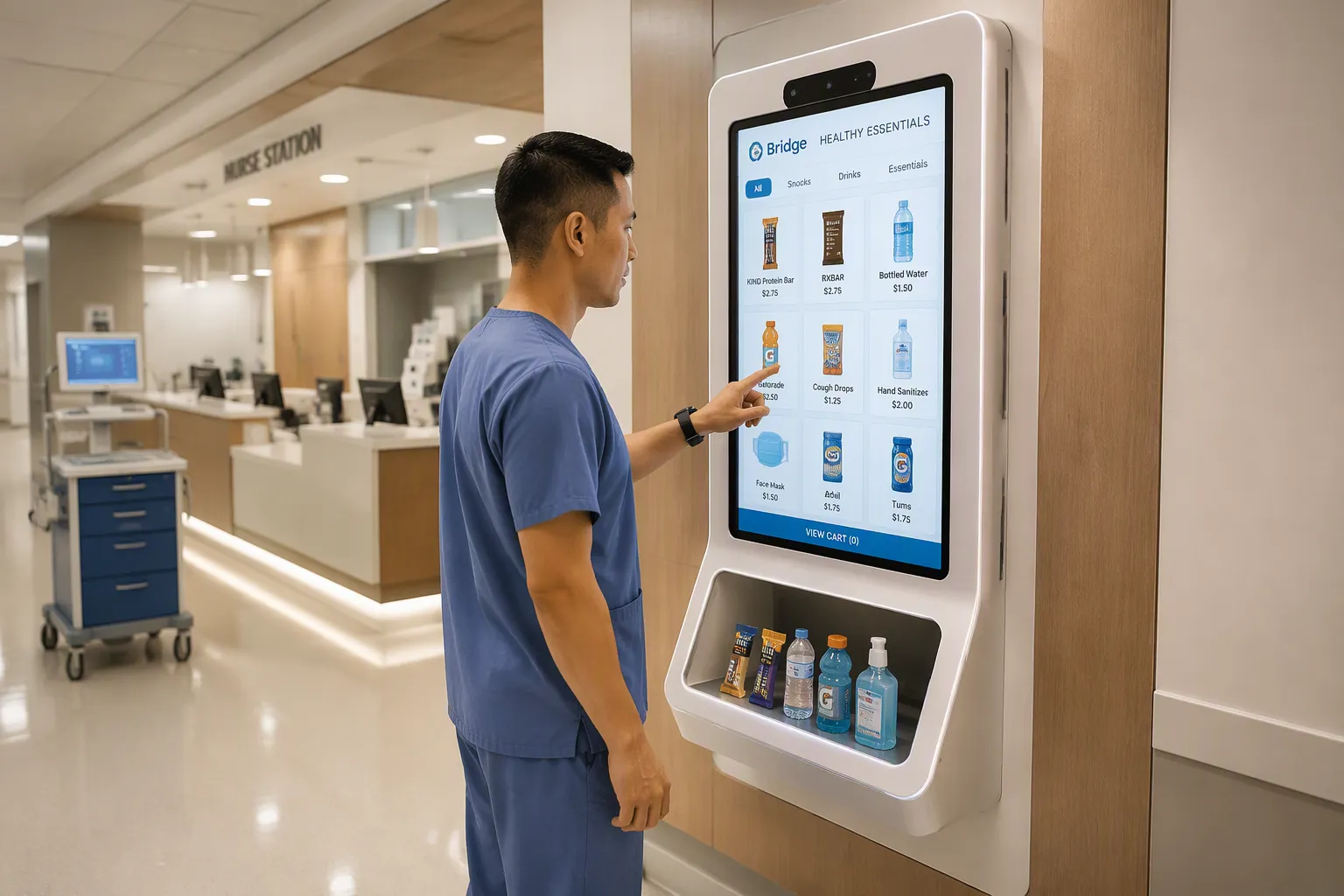
Opening a retail concept within hospitals presents a complex challenge. It requires careful preparation. Best practices for launching a pilot autonomous store call for a strategic, phased approach built around healthcare's unique demands, not technology alone. Teams should tackle feasibility, logistics, compliance, engagement, and evaluation in order. Each step must align clearly with stakeholders. Automation and implementation choices carry real weight; disciplined integration guards against early failure. A well-executed pilot reduces risk and provides the evidence needed for broader integration. These best practices for launching a pilot autonomous store treat the pilot as a blueprint for long-term success. Thoughtful healthcare integration during this phase decides whether the concept scales across the hospital system.
Key Takeaways
Start with a needs assessment to understand who will use the store and what they need.
Set SMART goals to measure success and keep the pilot focused.
Choose technology and partners that fit healthcare compliance and retail operations.
Design the store for high-traffic areas and offer healthy, convenient products.
Engage staff early and track key metrics to ensure the pilot succeeds and scales.
Assessing Feasibility and Objectives for Hospitals
Conducting a Needs Assessment
Leaders at hospitals and health systems must first understand who will use the autonomous store. A needs assessment gathers input from staff, patients, and visitors. This step reveals demand patterns and product preferences. For example, night-shift nurses may need quick meals, while visitors may want snacks and personal supplies. Surveys, focus groups, and interviews with stakeholders provide direct evidence. Hospital operations and management teams should also review foot traffic data and existing retail options. Many hospitals face space constraints, so this step matters.
The assessment must cover the unique rhythms of healthcare. Staff work long shifts, and they often have little time to leave the floor. A successful integration plan accounts for these realities. They should also check compliance rules early. This early integration of feedback prevents costly redesigns later. A thorough assessment builds the foundation for every later decision. It also supports logistics planning for restocking and delivery. Health systems that skip this step regret it.
Setting SMART Goals for Your Pilot
Vague goals lead to pilot purgatory. Teams must set Specific, Measurable, Achievable, Relevant, and Time-bound goals. A SMART goal might state: "Achieve 200 transactions per week within 90 days." Another example: "Reach 80 percent user satisfaction among staff within 60 days." These targets give the pilot a clear finish line. They also help hospital operation and management compare results against expectations. Each goal should tie to a broader objective within healthcare. Hospital operations and management should review these goals monthly.
Does the pilot aim to reduce staff time away from patients? Does it aim to improve nutrition access? The answers shape the metrics. Leaders should assign owners for each goal. They should also set review dates. This discipline supports integration across hospital systems. It also creates evidence for scaling. Clear goals turn a pilot into a strategic project, not just a technology test. They also guide implementation choices and keep stakeholders aligned. A second integration point involves compliance reviews. Regular check-ins ensure the pilot meets healthcare standards. Strong goals drive successful implementation and long-term integration. Every hospital has its own culture.
Selecting Technology for Hospital Logistics
Evaluating Hardware and Software
Technology choices shape every later stage of the pilot. Teams should evaluate hardware for durability, footprint, and ease of cleaning. Software must support real-time tracking and secure data flows. AI for hospital logistics and resource management plays a central role here. These systems analyze purchase patterns and predict demand. They help staff avoid stockouts and reduce waste. Strong inventory management keeps shelves full without overstocking. The right tools also support hospital logistics across multiple floors and units.
Leaders should test hardware in the actual care environment before committing. A device that works in a retail store may fail near imaging equipment or in sterile zones. Software integration with existing hospital systems matters just as much. The platform must connect to procurement, scheduling, and security tools. This integration reduces manual work and supports operational efficiency. Teams should also confirm that automation handles peak periods, such as shift changes. Reliable automation protects the patient experience and keeps hospital operations and management informed.
Choosing the Right Partner
The vendor selection process deserves careful attention. Partners must understand both healthcare compliance and retail operations. Techmetics Robotics offers autonomous mobile robot solutions for healthcare and retail settings. The company builds autonomous technology that operates safely in public spaces with little supervision. This kind of experience supports smooth integration into busy hospitals.
Sodexo brings a different strength. Its Protecta program addresses infection prevention and helps hospitals reduce healthcare-associated infections. Sodexo also runs retail solutions in healthcare settings. At Sharp Chula Vista Medical Center, its eat> café concept achieved a 23% sales lift and a 22% increase in guest count within 90 days. These results show what strong retail operations can deliver. However, Sodexo does not offer autonomous retail technology itself. Buyers should therefore weigh partners on compliance history, retail results, and technical capability. The best partner supports integration at every stage, from the healthcare supply chain to daily logistics. A proven track record in healthcare and automation reduces implementation risk. Careful partner selection also eases the second implementation phase and supports long-term integration across the system.
Designing the Store Layout and Product Mix
Optimizing for High-Traffic Locations
Hospital lobbies, cafeteria entrances, and staff break rooms generate the most foot traffic. Planners should place the autonomous store near these zones. A compact footprint works best in healthcare settings. The layout must allow quick entry and exit for busy clinicians. Wide aisles support wheelchair access and comply with ADA requirements. Clear signage helps first-time users understand the grab-and-go process.
Designers should test traffic flow during shift changes and visiting hours. These peak periods reveal bottlenecks. Shelving height must allow visibility across the store. This design choice improves security and helps staff monitor the space. Integration with existing wayfinding systems guides users to the store. A smooth layout also supports restocking efficiency. Integration of delivery routes with hospital logistics reduces disruption to patient care areas.
Curating a Health-Focused Assortment
Product selection must serve three distinct groups: staff, patients, and visitors. Shift workers need quick, energy-dense meals and beverages. Healthy options such as fresh fruit, yogurt, and granola bars support wellness goals. Patients and visitors often seek convenience items like phone chargers and personal care products. The store should also carry basic medical supplies such as bandages and pain relievers.
Healthcare facilities benefit from a curated mix that reflects their wellness mission. Planners should avoid high-sugar impulse items near clinical areas. Instead, they can highlight nutritious snacks and hydration products. Inventory planning must account for 24-hour demand patterns. Night shifts require different stock than daytime hours. Integration with AI forecasting tools helps predict these cycles. This integration reduces waste and keeps popular items available. A thoughtful assortment builds trust with healthcare consumers and drives repeat visits.
Ensuring Compliance and Patient Privacy
Navigating Healthcare Regulations
Regulatory review must begin before the first sensor goes live. Hospitals operate under strict rules that shape every technology decision. HIPAA tops the list. Infection control standards follow close behind. ADA accessibility requirements round out the core obligations. Each rule affects store design, hardware placement, and daily operations.
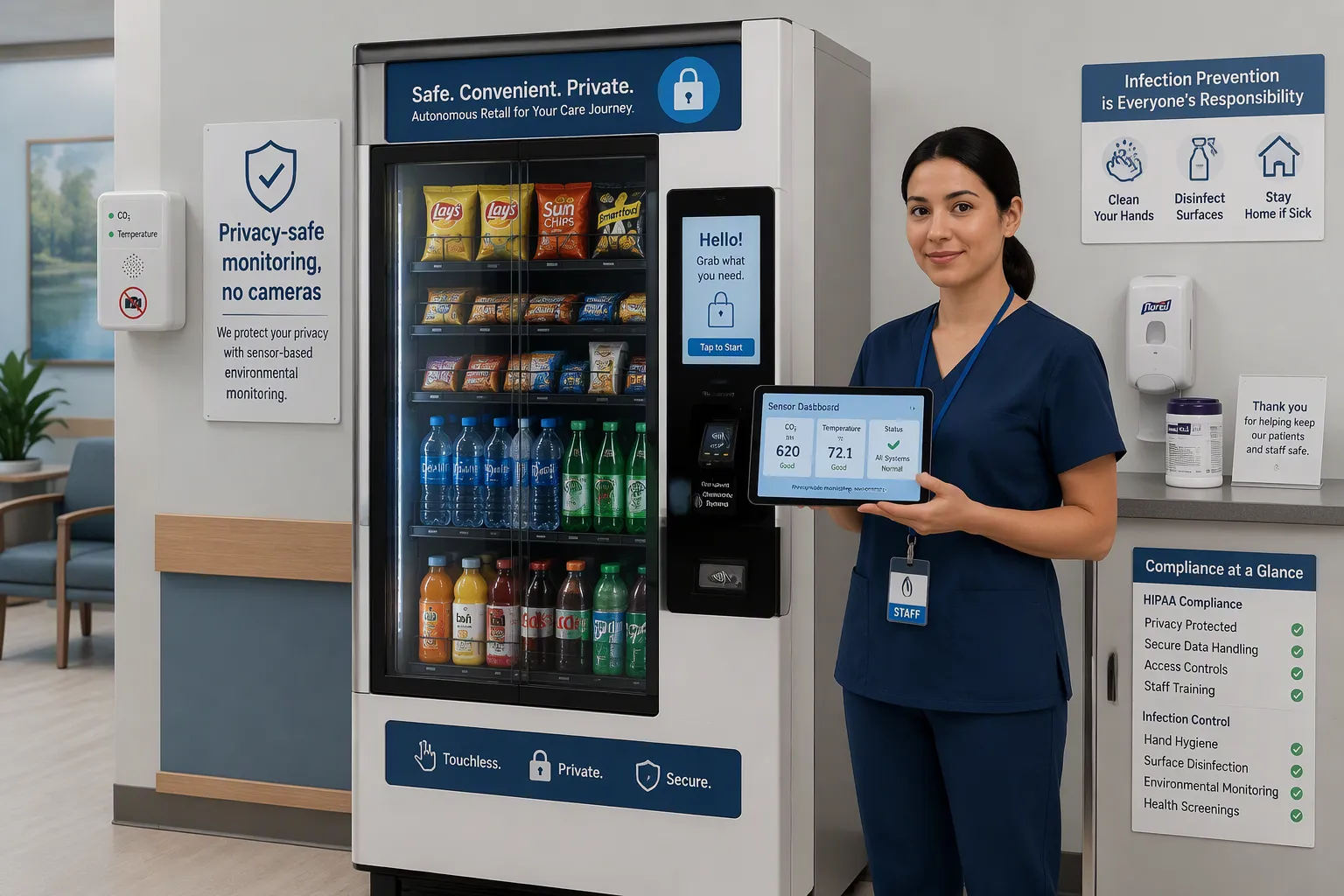
HIPAA creates unique challenges for autonomous retail. Cameras and sensors in common areas can capture protected health information. Visual data may include patient faces, conversations, charts, or behavior patterns. Improper camera placement, even unintentional, can lead to lawsuits or compliance fines. Patients and staff may feel watched or policed, which undermines the healing environment. Privacy-safe sensors offer a strong alternative. These devices measure only environmental data such as CO₂ or temperature. They capture no visual or audio information. This approach avoids PHI collection entirely.
Compliant-by-design principles guide the safest path. Teams should collect no PHI, use passive technology, and encrypt data limited to environmental metrics. Waiting rooms and hallways can track crowding and air quality without surveillance. When cameras are necessary, the HIPAA Security Rule governs all captured data. Access controls must restrict physical and remote viewing. Audit logging must track who accesses captured data. Retention and disposal policies are required. Transmission via Bluetooth, Wi-Fi, or the Internet triggers additional safeguards. Cloud or third-party providers require a Business Associate Agreement. If a captured image relates to an individual's health condition or treatment, it becomes a designated record set. That status triggers patient access rights. Other federal and state laws may also apply, including Fourth Amendment privacy expectations and state prohibitions on recording in disrobing areas.
Infection control standards demand easy-to-clean surfaces and touchless entry. ADA rules require wheelchair access, clear signage, and compliant aisle widths. These requirements shape layout and hardware choices from day one.
Implementing Data Security Protocols
Strong data security and compliance programs protect patients and staff alike. Teams should implement robust cybersecurity measures across every layer of the system. Encryption protects data at rest and in transit. Role-based access limits who can view operational data. Automatic logout after inactivity prevents unauthorized access. A formal process must prevent, detect, contain, and resolve security violations.
Data security and compliance extend to vendor relationships. Partners must document their cybersecurity practices. They should sign Business Associate Agreements when handling any data tied to healthcare operations. Regular audits keep the program honest. Staff training reinforces patient safety and privacy expectations.
Integration of security tools with existing hospital systems reduces gaps. Integration with procurement, scheduling, and security platforms streamlines oversight. Integration of audit logs with hospital compliance teams speeds incident response. Integration of privacy reviews into every pilot phase builds trust. These steps support compliance without slowing operations.
Leaders should treat data security and compliance as ongoing duties, not one-time tasks. Compliance reviews should occur monthly. Compliance owners should report to hospital leadership. Compliance findings should feed back into store design and vendor contracts. This discipline protects the pilot and prepares the ground for expansion.
Engaging Staff and Patients
Building Internal Support
A pilot store succeeds only when hospital staff become its champions. Leaders should train a core group of employees to mentor their colleagues. These mentors demonstrate the store's benefits during routine shifts. Employees need hands-on training before the store opens. Evidence from healthcare implementation studies supports this approach. The table below shows proven strategies.
Strategy | How It Builds Internal Champions |
|---|---|
Mentorship by trained staff | Trained staff mentor junior colleagues during ward rounds, demonstrating protocols and building confidence. |
Accountability mechanisms | Senior staff lead by example; compliance ties to performance evaluations. |
Collaborative problem-solving | Hesitant staff identify barriers and propose solutions, fostering ownership. |
Public recognition | Leaders recognize contributions during team huddles, reinforcing positive behavior. |
Hesitant employees often become advocates after seeing results. One clinician noted, "I was skeptical, but after seeing the results, I now understand why it's worth the effort." Regular peer discussions normalize the change. Incremental steps prevent overwhelm and ease integration. The integration of these strategies into daily operations requires commitment from all stakeholders. Weekly huddles review progress and celebrate small wins. Staff who raise concerns deserve a voice in problem-solving sessions.
Communicating Benefits to Users
Patients and visitors need clear reasons to try the store. Digital signage near the entrance highlights convenience and healthy choices. Simple graphics show the checkout process. Wayfinding signs direct users from waiting areas and elevators.
Messages should frame the store as an amenity that supports the hospital experience. Visitors often need essentials during long stays. Patients may want snacks between meals. Clear labeling of nutritious options reinforces the facility's wellness mission. Integration of store information into patient education materials extends reach. Flyers in waiting rooms introduce the store. A nurse's brief recommendation carries more weight than any sign.
Leaders should track adoption through weekly surveys. Feedback informs adjustments to signage and product mix. Strong communication drives repeat visits. Successful integration into the care experience depends on engaged users. Consistent messaging keeps stakeholders informed and supportive. Healthcare leaders who communicate openly build lasting trust.
Executing and Monitoring the Logistics Pilot
Phasing the Launch
A soft opening reduces risk. Leaders invite a small group of staff members before the public launch. These users test the store and offer direct feedback. A controlled start uncovers technical failures early. It also builds familiarity with the checkout process. The pilot remains hidden from visitors until core systems prove stable.
The first 90 days need clear milestones. Early checks test core transactions and basic stock flow. Later steps expand access to evening and night shifts, then visitors. Hospital operations and management teams monitor progress weekly. They adjust delivery schedules based on observed queues.
Each phase of implementation requires distinct focus. Employees need coaching on resolving errors. Maintenance schedules align with low-traffic hours. Restocking routines avoid patient care peaks. Best practices for launching a pilot autonomous store emphasize disciplined timing. Every change should match one clear goal. Avoid simultaneous changes. This approach isolates causes and simplifies troubleshooting. Integration with hospital logistics occurs during the soft opening. Delivery teams test service elevators and back hallways. They learn which times create congestion. Early integration with facility teams smooths restocking logistics. It also protects healthcare areas from disruption.
Team huddles create a feedback loop. Each huddle reports one issue from the previous shift. A named owner resolves that issue quickly. Urgent safety concerns trigger immediate escalation. This cadence keeps morale high. It also strengthens implementation quality.
Tracking Key Performance Indicators
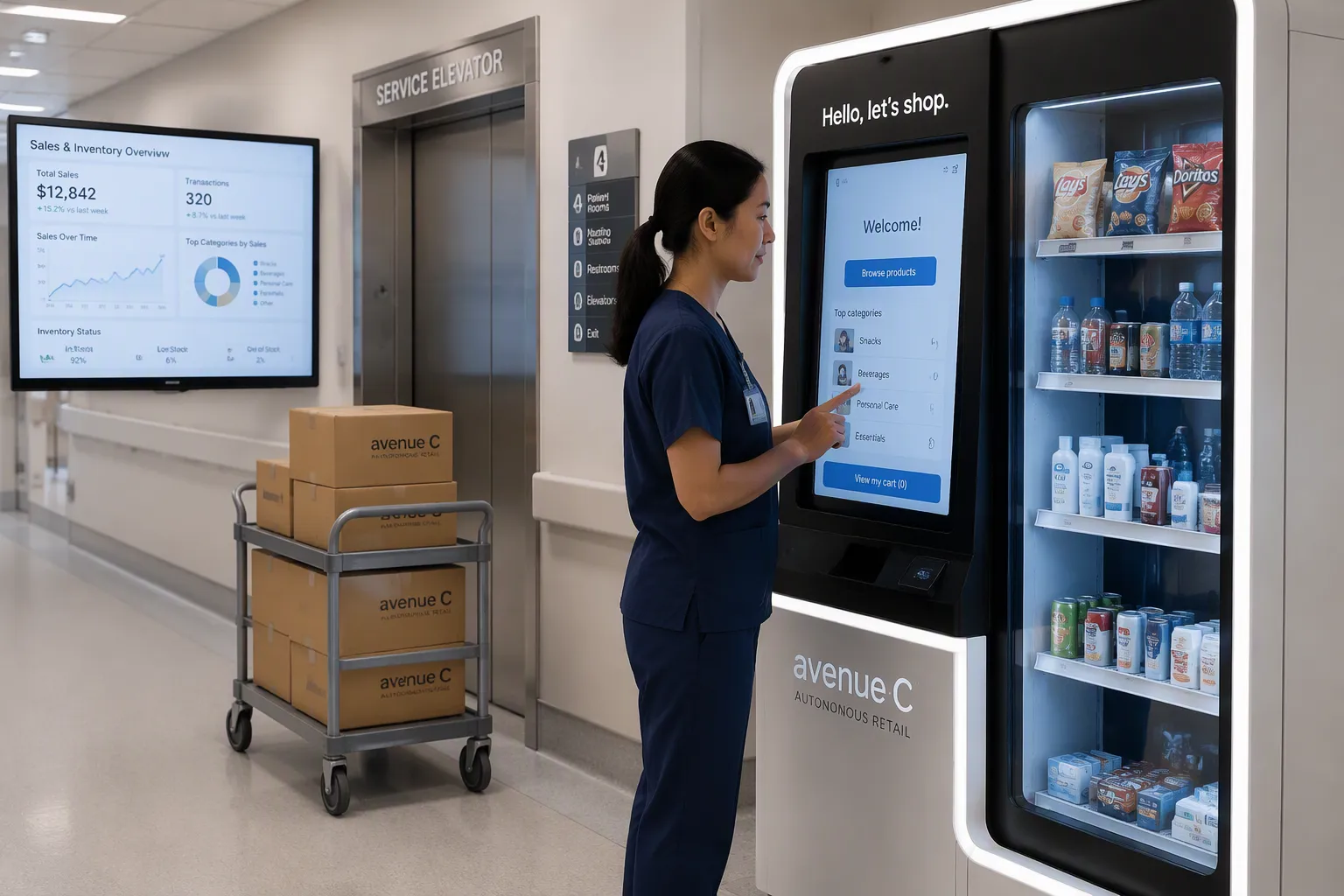
Real-time data guides every decision. Leaders track sales weekly. Sales per day reveal adoption patterns. Inventory management depends on accurate forecasts. AI predicts demand by shift and day. It flags unusual velocity. This automation reduces waste. It also prevents empty shelves during night shifts. Inventory management teams review forecast accuracy weekly. They adjust reorder points as needed.
Four categories of metrics matter. Operational metrics include transaction count, average basket size, and restocking time. Financial metrics cover revenue, margin, and shrink rates. User experience metrics measure satisfaction and repeat usage. Compliance metrics track audit scores and incident reports.
Teams review these KPIs weekly in the first month. After initial stabilization, reviews may shift to biweekly. Integration dashboards connect cameras, point-of-sale systems, and stock tracking. A single view reduces manual reporting. It enables rapid response to stockouts.
User satisfaction deserves special attention. A short tablet survey near the exit captures quick ratings. Staff surveys capture longer comments. Satisfaction below target triggers immediate adjustments. Track peak-hour queues. Long waits deter busy clinicians. Cycle time should stay short.
Operational efficiency improves when leaders act on data. A frequent early-morning stockout suggests a delivery schedule change. Medical supplies remain available without excess storage in healthcare areas.
Compliance monitoring continues alongside performance tracking. Weekly compliance audits check data access logs. Monthly reviews reconcile retention policies. Compliance findings feed directly into operations. Integration prevents minor gaps from becoming major violations. This integration protects both patients and the healthcare facility's reputation.
The final report compares results against SMART goals. A pilot that meets transaction targets makes a strong case. One that misses targets still yields insights. Both outcomes inform future implementation and integration decisions. Consistent tracking across hospitals builds evidence for scale. Operational efficiency gains justify continued investment.
Evaluating Success and Planning for Scale
Analyzing Data and Feedback
The pilot's final evaluation compares results against the SMART goals set at the start. Leaders pull quantitative data from sales dashboards, inventory systems, and compliance logs. They examine transaction counts, basket sizes, and stockout frequency. They also review audit scores and incident reports. This analysis reveals whether the store met its targets. A pilot that hits 200 weekly transactions and 80 percent staff satisfaction has clear evidence for expansion. A pilot that misses those marks still offers lessons. Both outcomes inform the next phase.
Qualitative feedback adds context that numbers alone cannot provide. Exit surveys, staff interviews, and focus groups capture user sentiment. Patients may praise convenience but request more healthy options. Nurses may value speed but ask for better night-shift stock. Leaders should code this feedback into themes. They can then map each theme to operational changes. This step ensures that stakeholder voices shape the next iteration. It also builds trust with the hospital community.
Building the Business Case for Expansion
A strong business case rests on three pillars: financial return, operational efficiency, and strategic fit. Leaders should calculate revenue per square foot and compare it to existing retail options. They should also measure labor savings from automation. Reduced restocking time and fewer manual audits lower operating costs. These figures demonstrate value to hospital finance teams.
The case must also address compliance and integration. Health systems need assurance that the model meets HIPAA, infection control, and ADA standards. Documentation from the pilot provides that proof. Integration with existing logistics and procurement systems shows scalability. Leaders should present a phased rollout plan for additional hospitals. They can start with high-traffic locations and expand based on demand. This framework turns pilot results into a compelling argument for broader adoption. It also positions the autonomous store as a strategic asset for the health system.
A successful pilot is a strategic project, not a simple technology installation. Leaders who follow best practices for launching a pilot autonomous store define clear objectives, prioritize compliance, and focus on staff engagement. They also plan for careful integration at every stage.
An autonomous store can enhance the healthcare experience for everyone. Staff gain quick access to meals. Patients and visitors find convenient essentials. Thoughtful implementation turns a small pilot into a lasting asset for the entire health system.
FAQ
How long does a typical pilot take to launch?
A soft opening can begin within weeks of site preparation. The first 90 days serve as the core evaluation period. Leaders should set clear milestones for each phase. This timeline allows teams to test systems, gather feedback, and adjust operations before broader rollout.
What happens if the technology fails during operation?
Teams should establish a manual backup process before launch. Staff can handle transactions and restocking if systems go offline. Regular maintenance and real-time monitoring reduce downtime risk. A named owner should resolve technical issues quickly to protect the patient and visitor experience.
How does an autonomous store handle infection control?
Touchless entry and easy-to-clean surfaces support infection prevention. Designers should select hardware that withstands frequent sanitizing. Staff must follow hospital cleaning protocols for high-touch areas. These measures align the store with existing healthcare safety standards and protect vulnerable populations.
What is the biggest risk to a pilot's success?
Weak staff engagement poses the greatest threat. Employees who feel excluded from planning may resist the change. Leaders should recruit internal champions early and train mentors. Regular feedback sessions build ownership. Strong engagement drives adoption and supports long-term integration within the healthcare system.
Can a small hospital with limited space still launch a pilot?
Yes. A compact footprint works well in constrained environments. Planners can place the store near break rooms or lobbies. Wide aisles and clear signage support accessibility. AI forecasting helps maintain stock without requiring large storage areas. Small-scale pilots often provide the strongest evidence for expansion.
See Also
Why AI-Powered Stores Represent The Future Of Retail
The Rise Of AI-Powered Corner Stores: Retailers Should Take Note
Walgreens Self-Checkout Delivers Retail Convenience And Real Challenges
Combo Vending Machines Offer AI Features And Modern Retail Benefits
