What if your office building had a store that never closed?

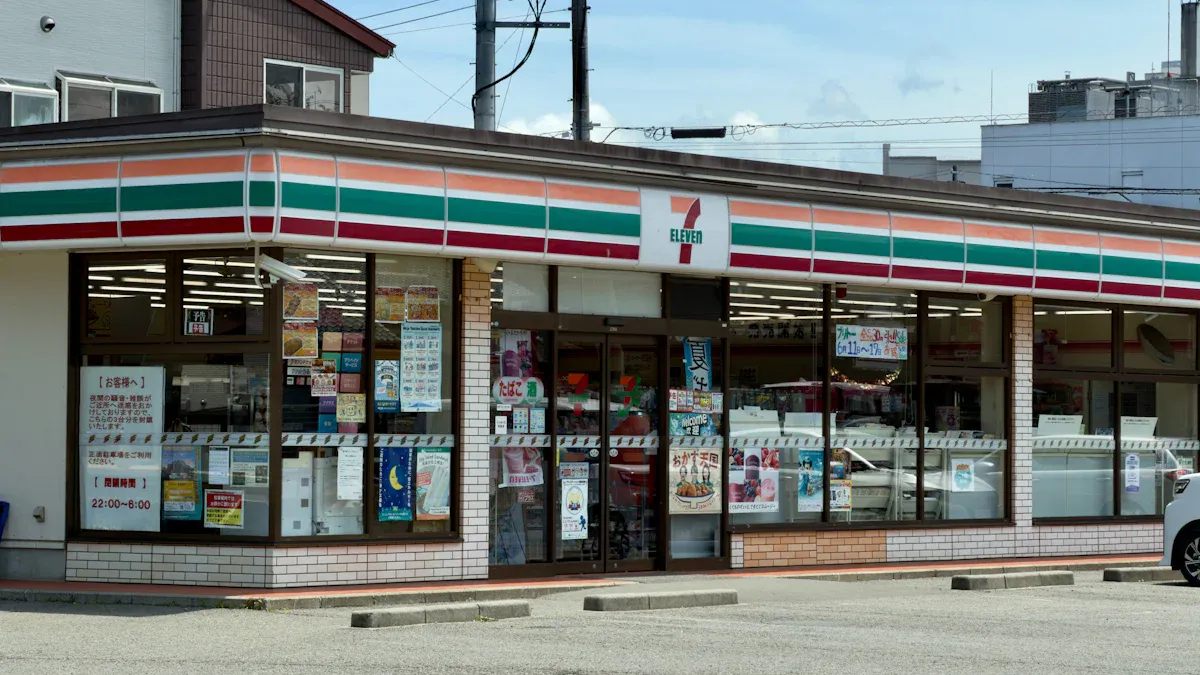
A busy worker needs a quick snack or drink. Leaving the office means traffic, parking, and long lines. That errand takes time away from the workday. A self-serve store right in the building fixes this problem. The wepick store gives office workers 24/7 access to drinks, snacks, and daily essentials. What if your office building had a store that never closed? A store like this makes things easier for everyone in the office. Having on-site retail amenities makes workers happier and helps office buildings stand on their own. Renters get easy access to daily services without going outside. The office serves its people better. This small office feature brings real value. Every office team stays productive.
Key Takeaways
An on-site store gives workers 24/7 access to snacks and drinks without leaving the building.
Autonomous checkout lets shoppers grab items and go, with no lines or waiting.
Adding a store can make tenants happier and more likely to stay in the building.
A small store can fit in a lobby or hallway and turn unused space into a helpful service.
The store can reduce car trips for small errands, which helps the environment.
The Customer Experience

A Seamless Shopping Journey
A shopper walks up to the store entrance. A camera spots the face from about 1.5 meters away. The system maps 128 facial points and checks them against a stored biometric hash. If the match is above 99.8% confidence, the gate opens in 200–500 milliseconds. No ticket, wallet, or checkout line is needed.
Inside, the shopper looks at open shelves and refrigerators. Computer vision and sensor fusion track each item picked up. Ceiling cameras and shelf weight sensors double-check the selection. The system adds products to a virtual cart. At the exit gate, the linked payment method is charged on its own. A digital receipt shows up on the shopper's phone within seconds.
Amazon Go proved this model. Shoppers enter with an app, a card, or palm recognition. The exit gate triggers the final charge. The shopper walks away without doing manual checkout. AI models keep the cart accurate.
Frictionless Solutions for Everyday Needs
The journey solves a problem we all know. An office worker wants a drink or a snack. That small errand should take seconds, not a trip outside. The wepick store brings this experience inside the building. Office workers get easy access to drinks, snacks, and daily amenities without leaving the premises.
Traditional vending machines fall short here. They offer a narrow mix from a single cabinet. Autonomous retail setups give a bigger catalogue with clearer browsing. Touchscreens handle pricing, promotions, and checkout. These compact stores fit into lobbies and corridors where a staffed store cannot run. Cloud telemetry shows sales and stock status in near real time. Restocking becomes driven by evidence rather than habit.
The result is a small service that fits the workday. People grab what they need and get back to work. The office keeps its people moving.
Strategic Value of On-Site Retail Amenities
Building Amenities and Tenant Satisfaction
On-site retail amenities bring snacks and drinks closer to the people who work and visit there. A small store in the lobby or hallway uses space people already walk through. This spot turns an unused corner into a helpful stop. Tenants can grab a coffee or a sandwich without crossing the street. The building feels more complete.
Grace Hill surveys tenants across more than 2.2 billion sq ft of commercial real estate each year. Their data shows a clear pattern in office and retail properties. Satisfaction and renewal intent move in the same direction. This link suggests amenities influence renewals in these property types.
Property Type | Satisfaction vs. Renewal Intent Trend (2023–2025) | Lowest-Rated Feature |
|---|---|---|
Office | Track together (move in same direction) | Heating and A/C performance |
Retail | Track together (move in same direction) | Foot traffic on the property |
Industrial | Satisfaction rose, renewal intent dipped in 2024, flat by 2025 | Security |
Medical Office | Renewal intent moves independently | Heating and A/C performance |
In 2025, wellness amenities topped tenant requests. They ranked ahead of food and beverage, fitness centers, EV charging, and parking. This finding shows what tenants value most. Building owners who add these features see stronger tenant satisfaction.
Commercial Tenant Benefits and Retention
On-site retail amenities help employees feel happier and work better. Office workers save time on small errands. They stay in the building and get back to work faster. This ease supports a good balance between work and life. It also cuts down on interruptions during the day.
Commercial tenant benefits go beyond daily ease. A store in the building gives office tenants a reason to stay. Tenant retention gets better when the workplace meets daily needs. Property managers can point to these features during lease talks. Tenant demand for easy access keeps growing.
Real-world examples show the change. An office tower with a staffed cafe and a small market becomes a self-sufficient hub. Tenants meet neighbors in the lobby store. The building turns into a community, not just a workspace.
Sustainability adds another layer. A store inside the building cuts short car trips for snacks and drinks. Fewer commuter trips mean less traffic and lower emissions. Local and eco-friendly product choices support nearby suppliers. These choices appeal to tenants who care about the environment.
The table above shows retail foot traffic as the lowest-rated feature. Tenants depend on foot traffic completely. A store inside the building creates built-in customer traffic. This captive customer base supports the retail operator. Resident and worker traffic keeps the store viable.
Compact retail works as a complementary service. It adds value to existing shops, restaurants, and services. Property teams should view it as a partner, not a competitor. The right mix keeps tenants happy and the building vibrant.
Retail Implementation and Design Considerations
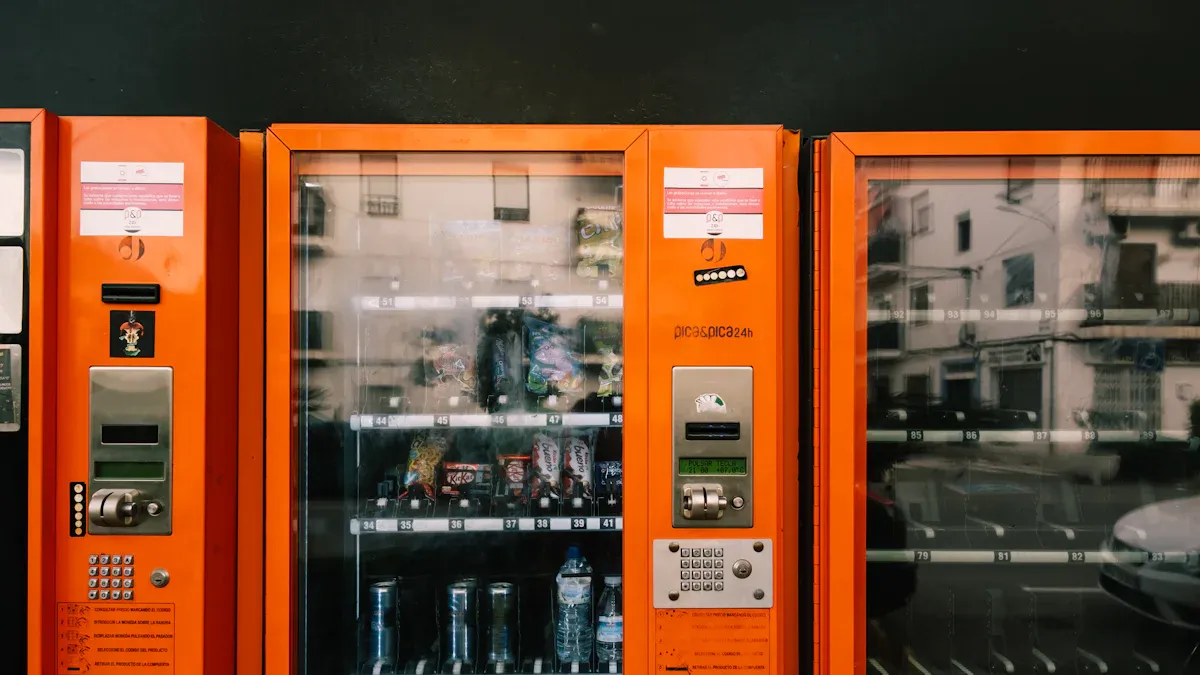
Understanding Location and Occupant Demographics
A store does well when you first understand the building and the people in it. Property teams should look at the location before anything else. Is the building in a busy downtown area or a suburban campus? Who walks through the lobby every day? Office workers, visitors, and maintenance staff all need different things. The products should fit what they do each day. Morning crowds want coffee and breakfast foods. Afternoon traffic leans toward snacks and cold drinks. Evening shifts may need quick meals.
Where the store sits inside the building matters just as much. A spot near the main entrance catches foot traffic from everyone coming in. A location by the elevator bank serves tenants on upper floors. Ground-floor retail spaces work well because people already walk through them. Planners should also decide how restocking will work. Will staff refill shelves during off-hours? Can a delivery robot move goods from a back room to the shelf? Customer support needs a plan too. A help line or app chat gives shoppers a way to fix problems quickly.
Designing for Success and Operational Support
Design choices affect whether shoppers come back. A clear entrance shows where to walk. An easy-to-browse mix lets people find items fast. Clear purchase information builds trust. Every detail should help the customer journey.
Operational support decides long-term success. Manual ways of placing inventory need periodic re-slotting projects. These projects need engineering study and labor-intensive moves. Autonomous systems handle this differently. Fast movers move toward the pick face on their own. Slow movers get repositioned smartly. Manual picking has an error rate of about one to three percent. Automated systems reach one percent or less. Best-in-class order accuracy hits 99.5 to 99.9 percent.
Operational Area | Manual Approach | Autonomous Approach |
|---|---|---|
Inventory positioning | Periodic re-slotting with engineering study | Continuous self-optimization |
Accuracy | One to three percent error rate | One percent or less |
Returns processing | Side process causing congestion | First-class workflow with automatic routing |
Facility design | Separate lines for each order type | Single inventory pool serves all demand |
Real-time inventory visibility is a key building block. A single, accurate view across all locations stops mismatches. Cross-channel fulfillment adds complexity when a store fills online orders alongside walk-in customers. Returns integration is costly to run. Manual workarounds can stretch a two-to-three-minute process into fifteen to twenty minutes. The store's role grows in an omnichannel model. It becomes a showroom, fulfillment center, returns hub, and service point all at once.
Strategic partnerships with technology providers make implementation smoother. Autonomous delivery robots can help with in-store restocking tasks. Cloud-based performance metrics give near real-time reporting on delivery usage and routes. Robots with sensors collect shelf analytics data for inventory management and planogram compliance. A centralized AI platform manages different robot fleets consistently. Brain Corp and its partners have deployed over 10,000 robots worldwide, accumulating more than 2 million autonomous hours. This scale proves operational viability in indoor public spaces.
Data-driven insights from usage patterns help improve product offerings over time. Property teams can track which items sell fastest and adjust orders accordingly. This approach keeps the store fresh and responsive.
Industry Relevance and Cloudpick's Approach
Opportunities for Property and Facility Managers
Property-service companies like CBRE, JLL, and Cushman & Wakefield watch workplace amenity trends closely. Their 2024 reports show clear directions for building owners.
Firm | Reported Trend in Workplace Amenities (2024) | Supporting Detail |
|---|---|---|
CBRE | More Internet-of-Things (IoT) tech in workspaces | Companies want fit-outs that show their brand and adapt to change; more focus on carbon neutrality and a 'new genre' of sustainable fit-outs |
JLL | Office designs changing to support hybrid work | U.S./Canada workers spend about 3.1 days/week in office; companies check how physical experience engages employees |
Cushman & Wakefield | Upgrades to older buildings to stay competitive | Bigger demand gap between lower-class and higher-class buildings pushes owners of older assets to upgrade |
Facilities and food-service businesses like ISS A/S and Sodexo can also benefit. A compact retail offer adds to existing services. It fills gaps between meal times and gives tenants a quick option.
High-satisfaction amenities in 2024 commercial real estate studies include:
Flexible workspaces that support hybrid work and community building
Wellness amenities such as fitness centers and wellness rooms
Tech-enabled spaces with touchless access and smart security
Sustainable features such as green certifications and renewable energy
Community and collaboration spaces that foster networking
The RiverSouth building in Austin, Texas hit 98 percent occupancy within 18 months of opening. It used amenities like a glass-encased fitness facility and a rooftop lounge, cafe, and bar to stand out.
Cloudpick's Customer-Journey-First Methodology
Cloudpick advises building owners and operators to look at the customer journey first. They should then check the store format against the needs of the location. This approach follows a clear sequence:
Identify who will use the store.
Determine which products fit their routines.
Decide where the store should sit within the building.
Plan how replenishment and customer support will be organized.
The format decision frames understanding the location. It turns a retail corner into a service people can use as part of their normal day. Facility managers and building owners should view compact retail as a complementary service. It adds value to existing workplace offerings.
A never-closing store represents a small design goal with significant impact. This feature enhances workplace convenience and occupant satisfaction. Office workers gain easy access to daily essentials without leaving the building.
On-site retail amenities contribute to employee retention and productivity. They create a vibrant building community. Tenants appreciate the added services. Property managers should view compact retail as a complementary offering that strengthens existing workplace services.
Cloudpick invites building owners to explore this opportunity. The wepick store transforms ordinary spaces into self-sufficient hubs. Connect with Cloudpick to discuss your space and audience. Visit www.cloudpick.ai, email jefffeng@cloudpick.me, or schedule a meeting at https://lnkd.in/gWsGAewR. #wepick #Cloudpick #smartretail #workplaceamenities
FAQ
How Does the Checkout Process Work?
Shoppers enter through a gate that recognizes their face. The system tracks items picked from shelves and refrigerators. When the shopper exits, the linked payment method charges automatically. A digital receipt appears on the phone within seconds. No wallet, app, or checkout line is required.
What Products Does the Store Offer?
The store carries drinks, snacks, and daily essentials that office workers need throughout the day. Morning crowds find coffee and breakfast items. Afternoon traffic finds cold drinks and quick meals. The product mix adjusts based on real-time sales data and usage patterns.
How Does the Store Benefit Building Owners?
On-site retail amenities increase tenant satisfaction and renewal intent. Property managers can point to the store during lease negotiations. The store transforms unused lobby space into a useful service. Buildings with such amenities attract and retain tenants more effectively.
What Happens When Technical Issues Occur?
Cloud telemetry monitors store operations in near real time. Support teams receive alerts when systems need attention. A help line gives shoppers a way to report problems. Restocking follows evidence-based schedules rather than guesswork. The autonomous system maintains high accuracy through continuous self-optimization.
How Does the Store Support Sustainability Goals?
A store inside the building reduces short car trips for snacks and drinks. Fewer commuter trips mean lower emissions and less traffic congestion. Local and eco-friendly product choices support nearby suppliers. These features appeal to environmentally conscious office workers and align with corporate sustainability targets.
See Also
How The PARC At Tysons Became A Thriving Community Hub
Why Stores Powered By Artificial Intelligence Will Dominate Tomorrow
How Time Out Corner Stores Are Transforming Urban Local Convenience
Launching An AI-Powered Corner Store With Very Little Money
Boosting Small Office Employee Productivity Using Smart Vending Machines
