What Questions to Ask During a Cashierless Store Demonstration

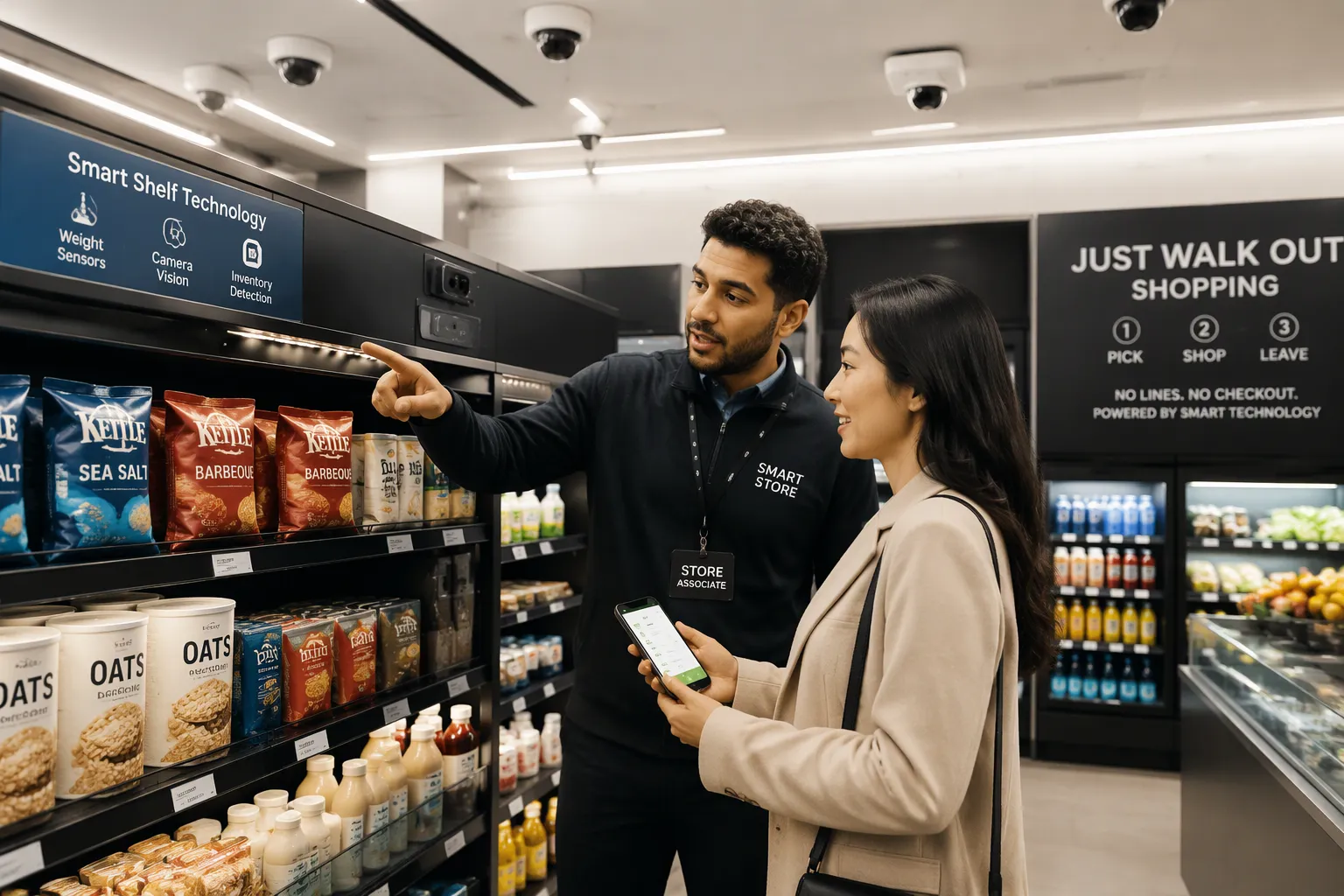
You sit in a demo room. A screen shows shelves, cameras, and a checkout flow. The vendor talks. You listen. Think of this session as an interview, not a sales pitch. Your questions decide what you learn from any cashierless store demonstration.
Four decision areas organize the conversation: technical performance, application fit, compliance, and cost. Cloudpick's demo serves as the running example throughout this guide. You will see how these questions play out with a leading AI-powered unmanned retail provider, from sensor fusion to remote store management.
A practical shortlist follows. Bring it to your next cashierless store demonstration and ask these items first.
Key Takeaways
Ask how the system measures accuracy, and ask for the method, not just a percentage.
See how the system links to your POS and inventory so everything runs smoothly.
Learn what shopper data the system collects and how it is kept safe.
Ask for the total cost of ownership, broken into clear lines so you can compare fairly.
Ask for case studies from similar stores to check how well it works in the real world.
Technical Performance Questions
Accuracy and Speed
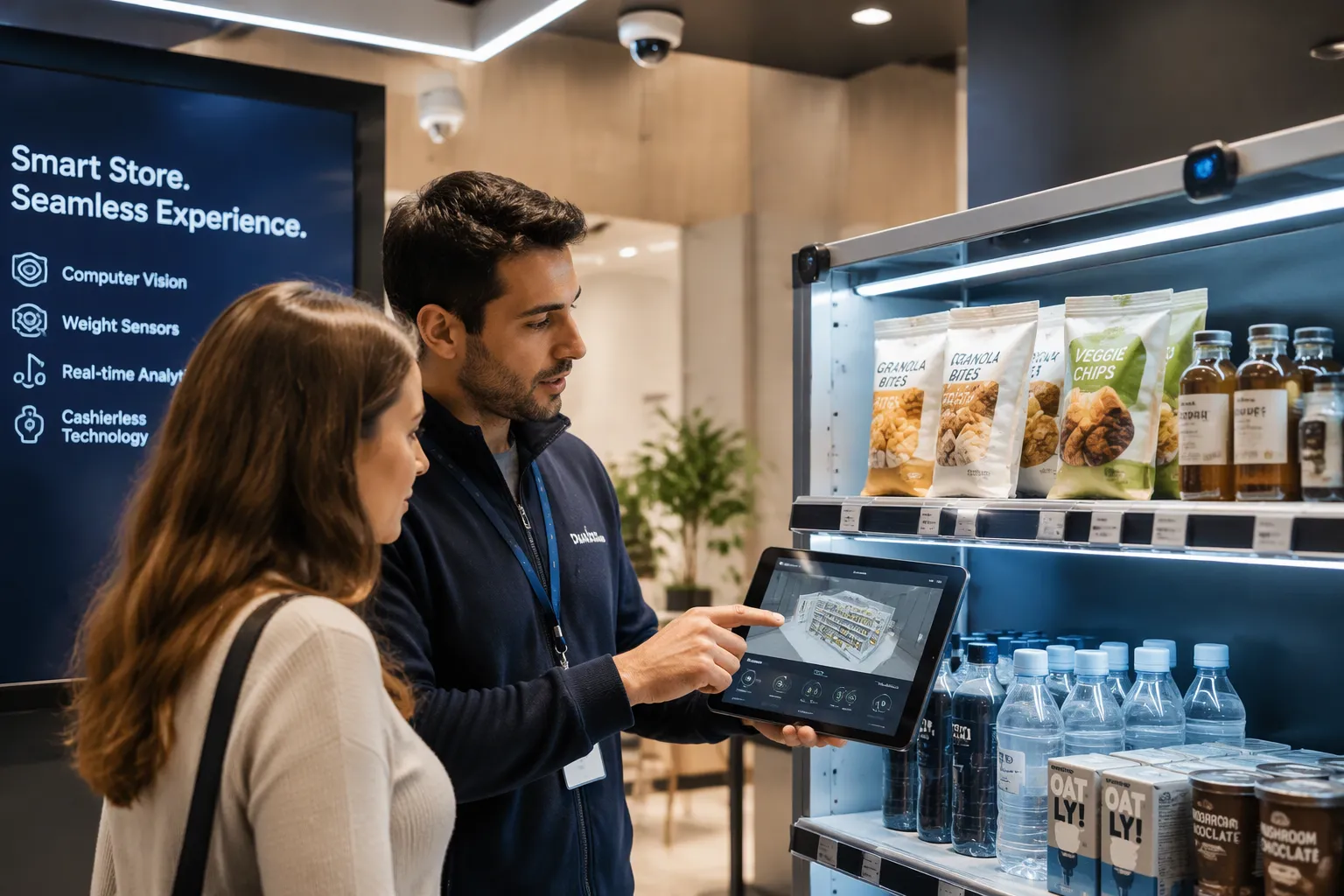
Begin with how the system senses things. Ask how it knows which product a shopper takes off the shelf. Some vendors use only cameras overhead. Others mix shelf sensors, weight scales, and cameras into multi-dimensional sensor fusion. The answer shows you how much backup protects the recognition step. Cloudpick, for example, pairs multi-dimensional sensor technology with digital twin store reconstruction. The system builds a virtual copy of the real store, so it can match every pick event to a known shelf spot and product. Ask your vendor to explain that matching logic on a live shelf.
Next, test accuracy under real conditions. A clean demo shelf proves very little. Ask how the vendor measures accuracy and what rate it reports when shelves are crowded, lighting changes, and several shoppers move at once. Request the measurement method, not just a headline percentage.
Exceptions need equal attention. Ask what happens when a shopper puts an item back, picks the wrong product, or the system misreads a pick. Find out how billing disputes get resolved and who reviews them. Cloudpick's smart store management system supports remote monitoring, so operators can check flagged events without standing in the aisle. Ask whether your team gets the same visibility.
Finally, time the exit. Ask for typical checkout duration and how it compares with a traditional staffed lane. Speed is the promise of the format, so hold the vendor to it.
Hardware and Integration
Map the physical footprint before you discuss software. Ask what hardware the system needs — cameras, shelf sensors, scales, edge computing units — and what installation involves. Maintenance matters too. Find out the service interval and who performs it.
Integration decides whether the system fits your operation. Ask how it connects to your existing POS and inventory management. A clean integration keeps stock counts accurate and settlements automatic. Cloudpick's platform handles automated settlement as part of its unmanned operation model, and its remote management layer lets one team oversee multiple sites. Ask how that layer would connect to your current systems.
Outage behavior closes this topic. Ask what happens during a network or power failure. Can the store keep operating, and in what limited mode? A vendor with a clear answer has thought through real deployment conditions. A vague answer signals risk you will inherit.
Application Fit for Your Cashierless Store Demonstration
Store Size and Product Types
Fit comes before features. Ask if the format matches your store size and the products you sell. Vendors build for different shapes: small units, coolbinet-style cabinets, or full stores. Then dig into your product mix. Fresh items, weighted goods, and age-restricted products each test the system in different ways. A vendor that handles packaged snacks may struggle with loose produce.
Cloudpick shows how one provider covers several shapes. Its computer vision coolbinets work as "mini AI unmanned stores" for purchases within the last 10 meters. The Moby Mart mobile smart store adapts quickly to outdoor settings. Full unmanned stores serve larger spaces. Ask your vendor to match each of your store formats to a product that fits.
Scaling deserves its own question. Ask how the system handles a store expansion or a changed product mix. Adding a shelf or a new category should not require a rebuild. Cloudpick's digital twin approach rebuilds the store digitally, so the model can follow layout changes. Confirm that your vendor offers a similar path.
Customer Experience and Loss Prevention
Walk through the shopper journey step by step. Ask which payment methods the system accepts, how receipts arrive, and how returns and refunds work. These details shape daily satisfaction more than the demo video suggests. Then ask about shoplifting and loss prevention. Find out what the system flags and how your team responds.
References close the fit discussion. Ask for case studies from retailers that used the same technology in a similar setting. Cloudpick offers a strong proof point here: 200+ deployments in 13 countries, serving clients across transport hubs, tourism venues, enterprise parks, hospitals, and factories. Request a reference close to your own scenario during the cashierless store demonstration.
Compliance and Privacy Questions
Data Privacy and Security
Ask what shopper data the system collects. Cameras and sensors may record video, purchase history, or movement patterns. Find out if the system uses biometrics, like facial recognition, and if you can turn that off. Then ask where the data is stored, how the vendor protects it, and who can see it. A clear answer covers storage location, encryption, and how long data is kept.
You also need to know how the data gets used. Ask if shopper data only helps the checkout process or also feeds analytics and marketing. Request the vendor's data processing agreement and review it with your legal team. Ask every vendor the same question: "How does your platform handle shopper data, and what controls do we keep?" For Cloudpick, ask how its smart store management system stores and protects the event data it captures for remote monitoring. Keep the talk factual and let each vendor describe its own practices.
Accessibility and Payments
Accessibility decides who can shop in your store. Ask how the system helps shoppers with disabilities, limited mobility, or language barriers. Find out how it checks age-restricted products and weighted items, like loose produce. A good answer explains the check in plain terms and shows where a staff member can step in.
Payment methods come next. Ask which options the system accepts, how receipts reach the shopper, and how refunds get processed. These details affect daily satisfaction and dispute handling. Ask Cloudpick how its platform handles payment, receipt delivery, and refunds within its automated settlement flow. Compare the answers across vendors on the same terms, and note any gap you would need to close before launch.
Cost and ROI Questions
Upfront and Ongoing Costs
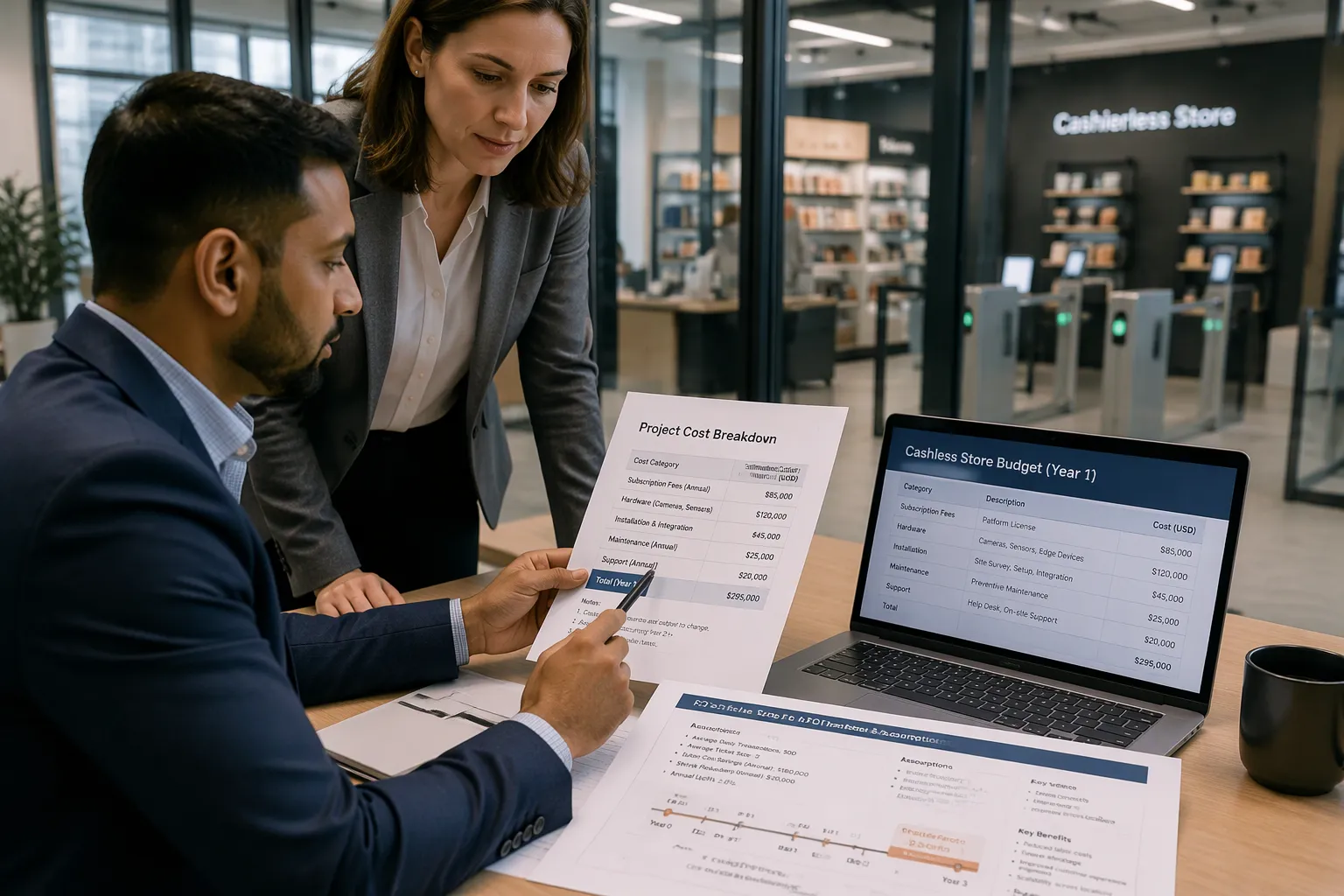
The price on the label rarely shows the full cost. Ask for the total cost of ownership over the whole deployment. Split the number into parts: subscription or licensing fees, hardware purchase, installation labor, maintenance, and ongoing support. Ask for each item as its own line. A single bundled price hides the costs that grow after the first year.
Push on the things that change the price. Ask whether pricing scales with store count, transaction volume, or square footage. Find out what happens to the fee when you add a location or upgrade hardware. Ask who pays for replacement parts and software updates. Get the answers in writing before you compare vendors.
Cloudpick's model changes the cost structure in a helpful way. Its automated settlement removes the manual reconciliation work at the point of sale. Its unmanned 24/7 operation model lets a store run without staffed shifts. Both cut the recurring operating cost that usually sits outside the hardware quote. Ask Cloudpick for a cost breakdown you can line up against every other vendor you evaluate. Use the same categories for each bid, and the comparison becomes honest.
ROI Timeline and Support
Payback speed depends on assumptions, so ask what drives the timeline. A vendor may assume a certain basket size, shopper traffic, or labor saving. Ask which of those assumptions you control and which the vendor supplies. Request the model behind the payback estimate. A vendor that shows its math gives you something to test against your own store data.
Then look at what happens after launch. Ask what support and service-level commitments come with the deployment. Cover response times for outages, remote versus on-site help, and the length of the warranty. Find out who monitors the store at night and how fast a failed sensor gets fixed. Cloudpick's smart store management system supports remote monitoring, so one team can watch multiple sites. Ask how that capability would lower your own staffing needs.
Close the cost talk with a direct request. Ask each vendor, Cloudpick included, to map its fees to the same five categories: subscription, hardware, installation, maintenance, and support. Ask for the ROI assumptions in the same format. You then hold comparable bids, and the cashierless store demonstration ends with numbers you can defend to your finance team.
You now have four sets of questions: technical performance, application fit, compliance, and cost. Treat every cashierless store demonstration as an interview. Your questions shape what you learn.
Start with four items. Ask how the vendor measures accuracy. Ask how the system connects to your POS and inventory. Ask what shopper data it collects and how it stays protected. Ask for total cost of ownership, broken into clear lines. These four answers separate a serious vendor from a polished pitch.
Bring this checklist to your next demo. Request a Cloudpick walkthrough and watch these answers play out on a live shelf.
FAQ
How long does a cashierless store demonstration usually take?
Plan for about an hour. Ask the vendor to show a live pick-and-pay flow first. Save your technical and cost questions for the second half. A focused session works better than a long tour, and you leave with answers you can compare across vendors.
Can I test the system with my own products before signing?
Yes, and you should. Ask the vendor for a pilot with your real product mix, including fresh, weighted, and age-restricted items. Cloudpick's digital twin approach rebuilds a store digitally, so a pilot can copy your actual layout. Test accuracy under your own lighting and traffic conditions.
What is the difference between a coolbinet and a full unmanned store?
A coolbinet is a small cabinet-style unit. Cloudpick calls its computer vision coolbinets "mini AI unmanned stores" for purchases within the last 10 meters. A full unmanned store serves a larger space with more product choices. Match the format to your location and shopper volume.
How do I compare vendor quotes fairly?
Ask every vendor to split costs into the same five lines: subscription, hardware, installation, maintenance, and support. Request ROI assumptions in one format too. Cloudpick's automated settlement and 24/7 unmanned model cut recurring operating costs, so ask how each bid accounts for those savings.
What proof should a vendor provide from real deployments?
Ask for case studies from retailers with a similar store format and setting. Cloudpick reports 200+ deployments in 13 countries, serving clients across transport hubs, tourism venues, enterprise parks, hospitals, and factories. Request a reference close to your own scenario and call it before you decide.
See Also
Cloudpick Delivers Cashierless Shopping Convenience to Your Retail Store
Walgreens Self-Checkout Explored: Retail Convenience and Challenges Combined
Micromarkets Versus Smart Stores: Global Automated Convenience Retail Explained
