Cloudpick AI Retail Turns Transit Stations into Revenue Hubs

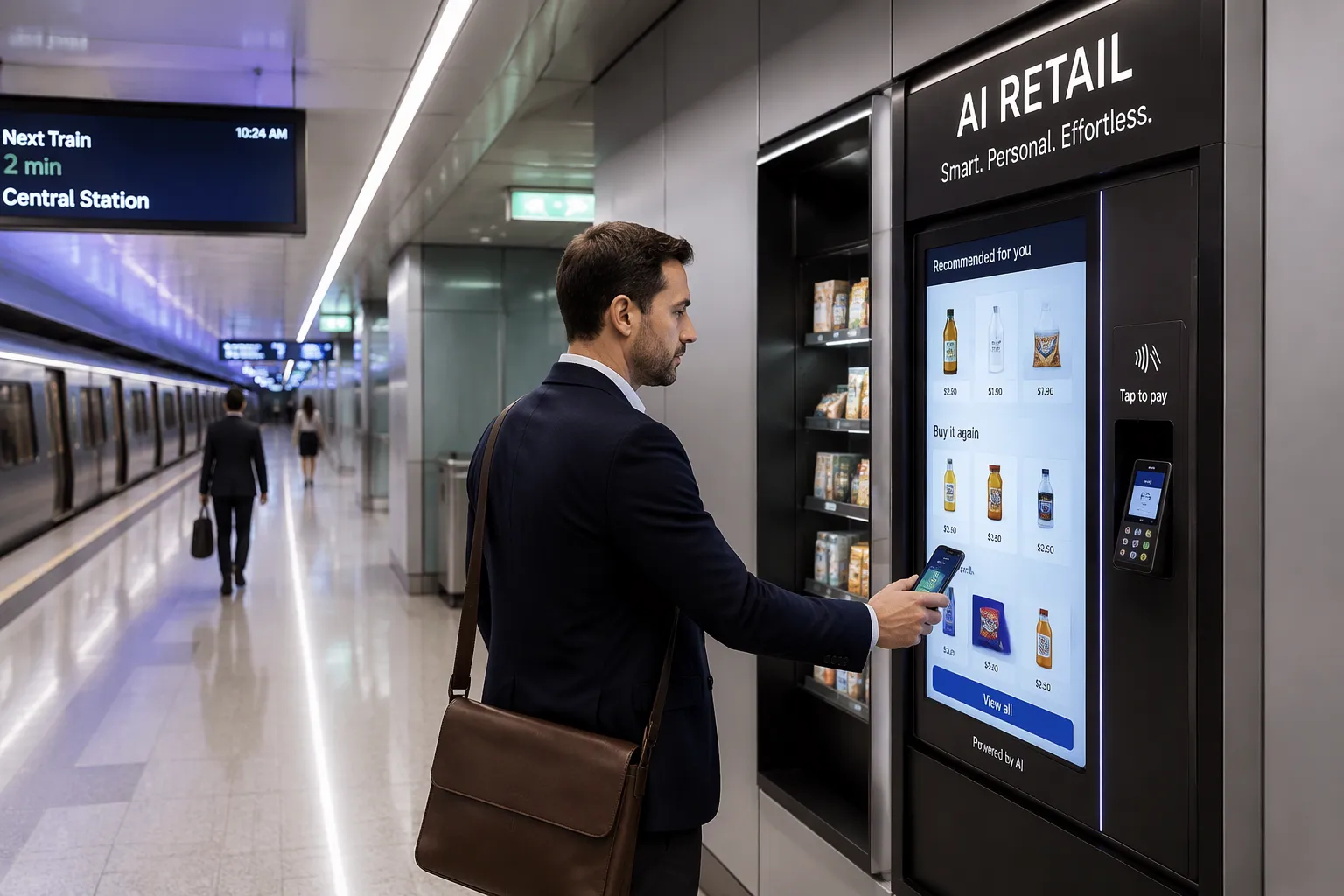
Millions of people go through transit stations every day. Most of them buy nothing. That gap between heavy foot traffic and weak retail sales is a big missed chance for operators.
Cloudpick changes this. Its AI retail platform turns unused passenger flow into new revenue with AI-powered self-service stores. Computer vision, smart shelves, and easy checkout work together to catch sales that regular kiosks miss.
Transit operators often ask how AI retail for transit stations – scenario 12 raises income, what a launch needs, and which returns are realistic. The answers depend on proven retail automation. Cloudpick already runs more than 200 smart stores worldwide, and its self-service retail model fits busy transit stations well. Operators can test the model with a pilot and measure results directly.
Key Takeaways
Cloudpick turns busy transit stations into money-making hubs with AI-powered self-service stores.
The system uses computer vision and smart shelves to track items. This makes checkout fast and easy.
Operators can get their money back in 8 to 14 months. They can also see net margins go up by as much as 50%.
Stores stay open all day and night with no workers on site, catching sales from passengers at any hour.
A single team can run many stores from a distance, so it is easy to grow from a small test to a full network.
The Revenue Opportunity in Transit Stations
High Foot Traffic, Low Conversion
Transit stations move huge crowds every day. Platforms, concourses, and ticket halls see the same passengers morning and night. Yet most of these people walk past empty walls and closed kiosks. The gap between foot traffic and spending is the core problem. Operators see the crowds, but they capture very little of the money those crowds carry.
A typical setup, ai retail for transit stations – scenario 12, shows how much room exists. In that setup, ai retail for transit stations – scenario 12 puts small self-service units along busy walkways. The result is more sales from passengers who would otherwise leave with nothing. Industry data backs this up. Retailers using AI-driven assortment planning have increased gross margins by up to 4%, according to McKinsey. Those numbers make a strong case for ai retail for transit stations – scenario 12 as a starting model.
Unmet Convenience Demand
Passengers want quick, simple purchases. They want a drink, a snack, or a charger without a long line. Traditional kiosks often close early or run short on staff. This leaves demand unmet across transit stations, and the lost sales add up over a year.
Retail automation closes that gap. Self-running retail formats keep shelves open all day and night. Local merchant partnerships add regional products that appeal to daily commuters. Service reliability matters too, because a store that stays open builds trust and repeat visits. Operators who adopt ai retail for transit stations – scenario 12 can pair these levers with ai retail for transit stations – scenario 12 data on peak hours. That combination delivers more revenue per visit and stronger results from ai retail for transit stations – scenario 12. With ai retail for transit stations – scenario 12 in place, ai retail for transit stations – scenario 12 turns idle space into steady income.
How Cloudpick Powers Retail AI Automation
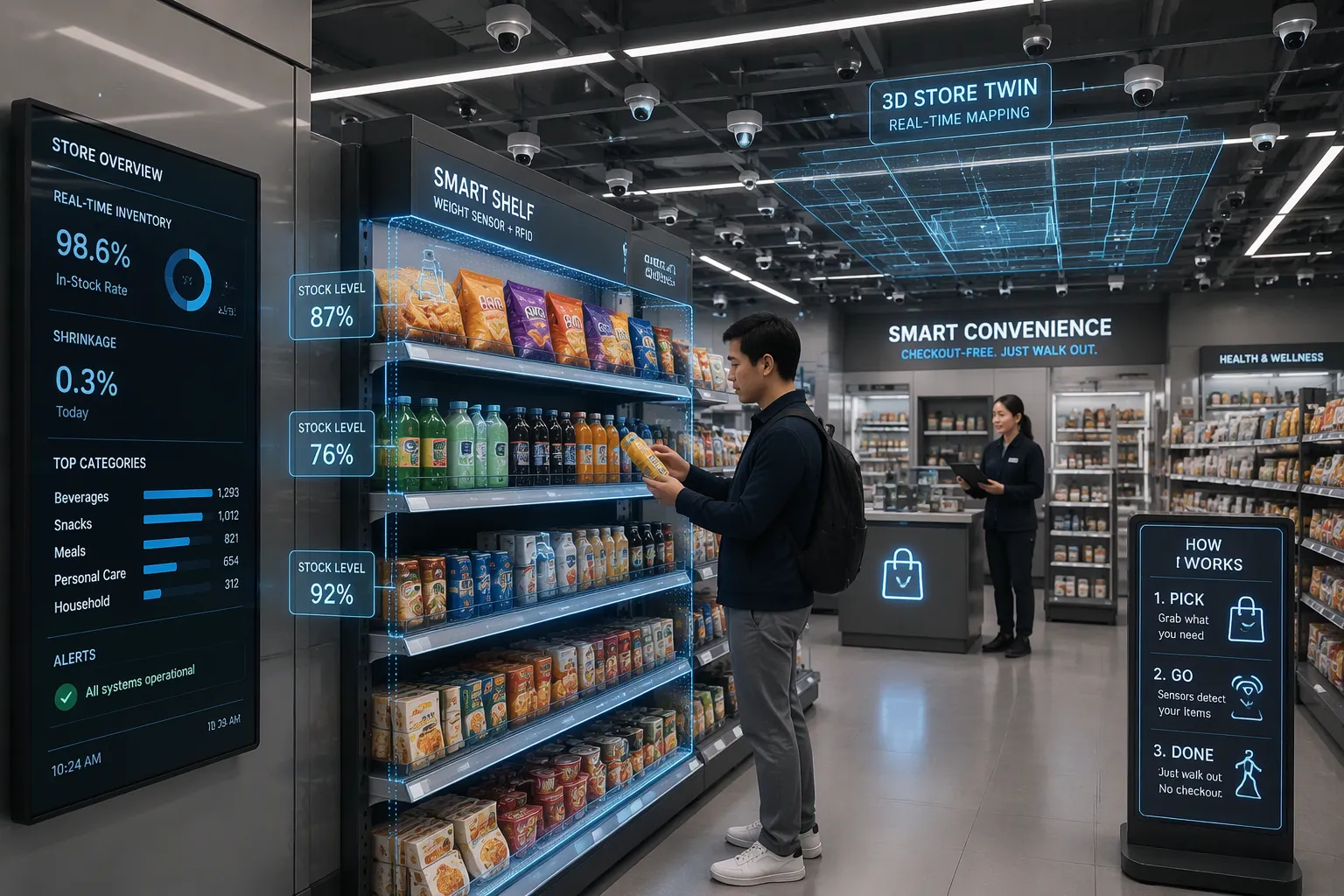
Cloudpick builds its platform on multi-dimensional sensor technology. Smart shelves, pressure sensors, and RFID tags work together to track every item. Computer vision studies visual data to identify products and watch customer interactions. This mix keeps billing accurate in real time, even when a shopper puts an item back on the shelf. Cloudpick's sensor fusion and deep learning track shoppers and stock levels with near-perfect precision, whether a customer holds a product or slips it into a pocket. The system does not use face recognition or collect biometric data, which protects customer privacy.
Computer Vision and Smart Shelves
A dense grid of cameras and sensors builds a digital twin of each store. This virtual model mirrors the physical space and tracks every item on every shelf. The approach blends computer vision with weight sensor data, which proves more reliable than vision-only systems. Cloudpick's measurement engine also sends store performance data back to operators on a regular basis. Product teams use that feedback to improve sales, optimize operations, and boost productivity. Depth cameras capture a 3D representation of the retail space, and gesture recognition algorithms tell shoppers apart from staff while tracking product interactions in real time.
The product portfolio covers several transit scenarios. The AI-Powered Unmanned Store handles full-size formats with automated settlement and round-the-clock operation. The Computer Vision Coolbinet serves last-10-meter purchases as a compact mini store. The Moby Mart adapts quickly to outdoor or overflow locations. The Smart Store Management System lets managers control stores remotely and cut operating costs. Together these tools form a complete set of retail automation solutions for busy stations.
Seamless AI Checkout
The ai checkout journey removes every traditional pain point. Cloudpick describes the flow in five simple steps:
Customers scan a QR code to enter.
They pick up what they need.
They leave directly when finished.
AI-powered cameras automatically recognize items.
Orders are generated and settled instantly in the background.
No counters, no item scanning, no lines. Shoppers can also enter through facial recognition or apps like LINE, and several people may shop at once. AI vision detects products removed from shelves, and sensors track each transaction live. Payment settles automatically within seconds. Managers monitor everything remotely from their phones. This friction-free checkout model delivers an enhanced customer experience and lifts sales per square foot.
Cloudpick's retail ai automation stack fits transit stations because it needs no on-site staff. The autonomous retail removes the friction that keeps passengers walking. Retail automation turns a quick pause on the platform into a completed purchase. Each store runs on the same retail ai automation backbone, so operators manage many sites from one dashboard. The ai retail platform also supports cashierless checkout systems across every format. Operators who adopt ai retail gain a proven path to autonomous checkout at scale. Cloudpick's retail automation record spans more than 100 clients in 30 countries. That footprint shows retail ai automation works beyond pilot projects. The company's retail automation solutions now power over 200 smart stores worldwide. Retail automation at this scale gives transit operators a tested model. Cloudpick continues to refine its retail automation engine with each deployment. The result is dependable in store automation for high-traffic venues. Autonomous retail removes the friction, and retail automation keeps it gone.
Key Revenue Drivers for Operators
Speed, Uptime, and Product Mix
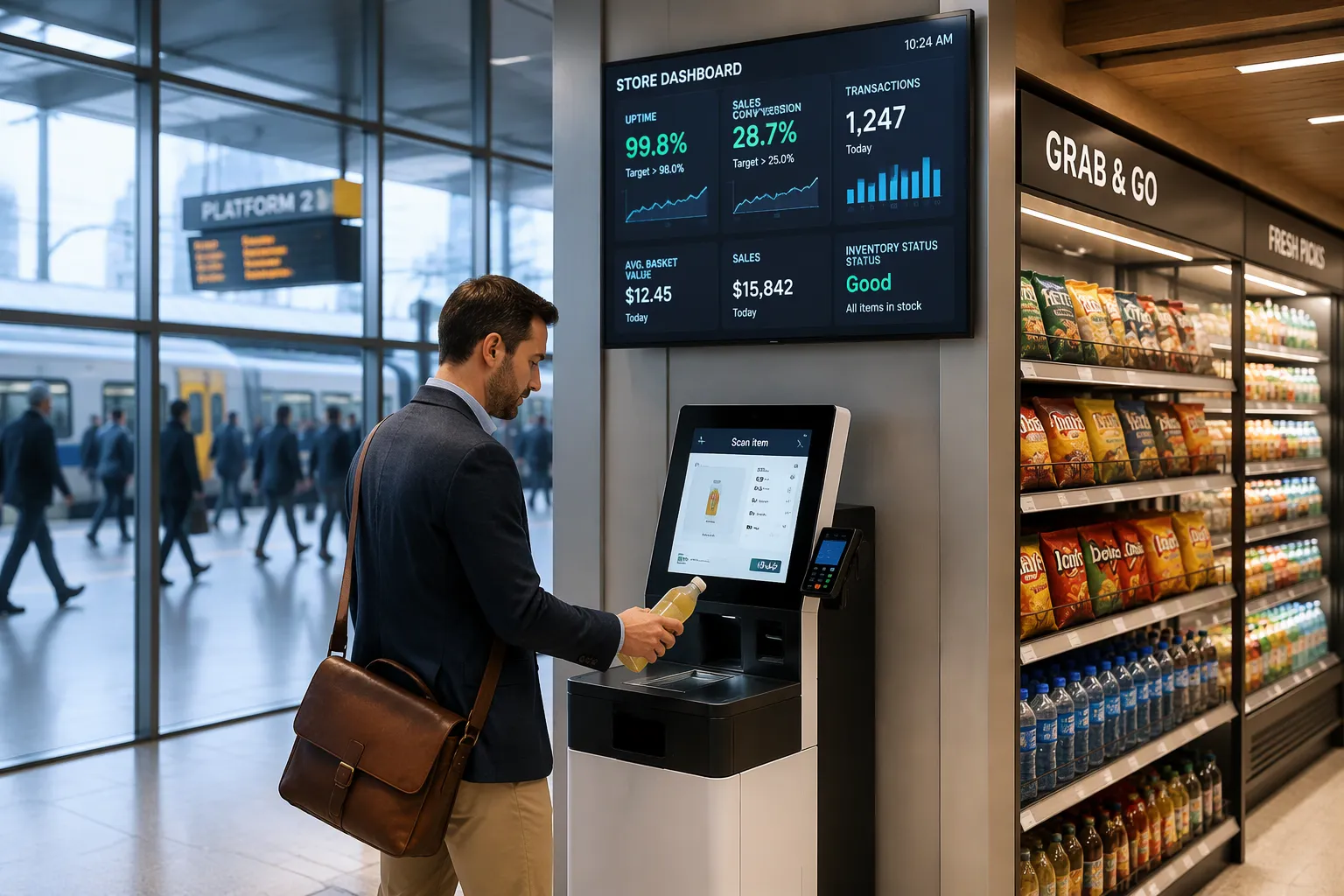
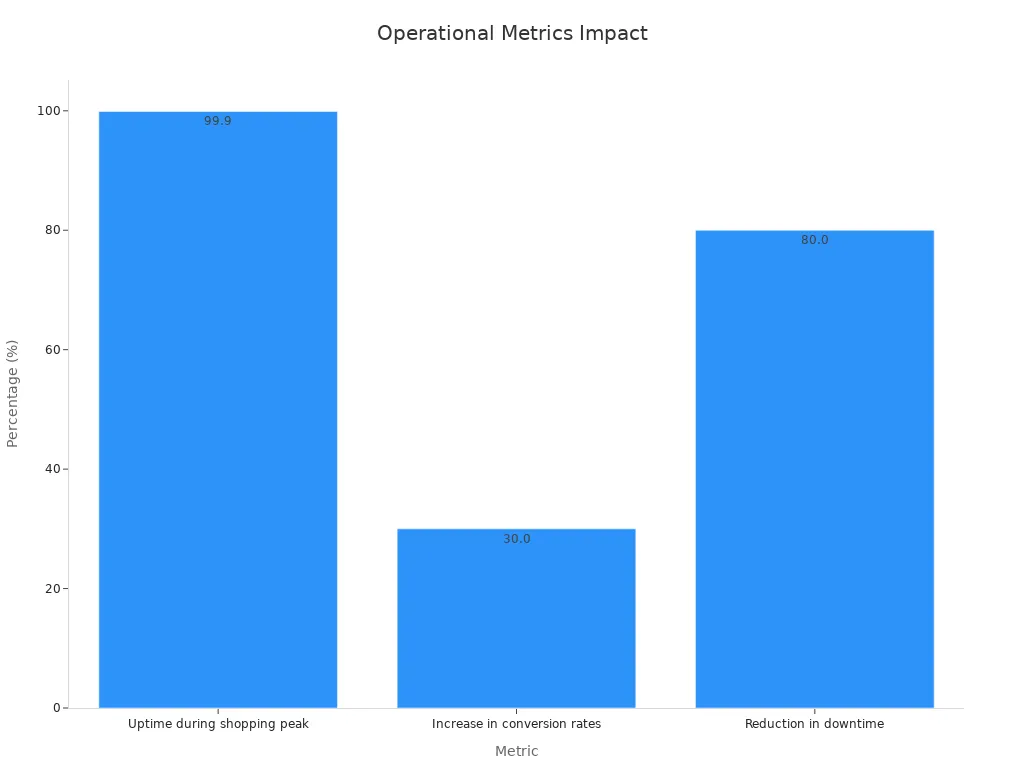
Speed brings in money at a station store. A passenger has only minutes, not hours. Faster checkout means more sales, because each line clears fast and the next traveler steps up. Long lines lose sales, and speed gets rid of them. New Relic reports that retail systems reach 99.9% uptime during busy shopping peaks, raise conversion rates by 30%, and cut downtime by 80%. The chart below, from New Relic, shows these three gains side by side.
Running all day and night adds another layer. A hybrid model keeps staff on hand during peak hours to restock, then switches to fully unmanned mode at night, according to Case DIY Machine. That setup captures night-time revenue without paying graveyard-shift wages. Micro-retail formats fit subway stations and set up in days rather than months, following foot traffic in real time. VenHub notes that 24/7 availability turns idle wait time into steady, added income at transit hubs. Space efficiency matters as well. A small footprint lowers rent and puts stock where passengers actually walk. Faster transactions lift throughput per square foot, and steady scanning keeps lines moving when baskets get busy.
Product mix decides whether a shopper comes back. Retail automation strategies that track what sells at each hour help operators stock the right items. Automated checkout removes the line, and automated inventory management keeps shelves full. Retail automation keeps the mix tight and lifts sell-through. Each of these retail automation gains adds up across a network.
Retail AI Automation and Predictive Analytics
Retail ai automation and predictive analytics turn raw shopper data into better decisions. AI-driven traffic analytics map where customers linger, which displays hold attention, and where bottlenecks form. Combined with point-of-sale data, these models reveal conversion at a detailed level. A display with high traffic and low conversion signals a pricing or merchandising problem. Digital twins let operators simulate layouts before they change a single shelf.
Predictive models also refine assortment. McKinsey reports that retailers using AI-driven assortment planning raised gross margins by up to 4%. A station near a school needs different stock than one beside an office tower. Local data beats a national plan. Ai-powered demand forecasting adjusts orders to local patterns, and real-time inventory tracking flags slow movers before they tie up capital.
Dynamic pricing completes the picture. Demand-based pricing raises prices during rush hours and lowers them in quiet periods, a pattern public transit systems already use to manage congestion. The same logic lets ai retail capture more revenue per visit at 7 a.m. and clear stock at 11 p.m. Cloudpick's retail ai automation platform supports this cycle. The company serves more than 100 clients across 30 countries and runs over 200 smart stores. That scale proves autonomous retail works beyond a single pilot. Operators who adopt ai retail gain a tested path, and retail automation keeps improving with every deployment. Retail automation at this breadth gives transit stations a reliable model. Retail automation also boosts sales through better placement. Retail automation cuts waste, and retail automation raises throughput. Both ai retail and autonomous retail together form the backbone of a modern station store.
Deployment and Integration
Rollout Process and Technical Needs
Cloudpick follows a clear plan to get a store up and running. First comes a site check. Teams look at passenger flow, walkway width, power access, and network coverage at each possible spot. Then they pick the best place for a store or Coolbinet unit. Next is hardware installation. Crews set up the shelves, cameras, sensors, and payment terminals, then run tests to make sure the vision system works right. The last step links the store to Cloudpick's SaaS and data platform. Operators get a live dashboard for inventory, sales, and remote control.
Cloudpick's tech team of senior scientists from Silicon Valley and Seattle helps with fast deployment. That team shortens the time between site approval and opening day. The platform works with existing station infrastructure and common payment systems, so operators skip a costly rebuild. Retail automation runs on standard network connections and needs no dedicated on-site staff. Operators can grow from one pilot unit to a full network without changing the core setup.
Compliance and Regulations
Autonomous retail in a transit setting must follow several rules. Fire codes control materials, clearances, and emergency exits. Accessibility standards require shelves people can reach and clear pathways. Food and beverage sales bring health permits and labeling rules. Cloudpick's design avoids face recognition and biometric data collection, which makes privacy compliance easier. Operators should check local rules on camera signage and data storage before launch.
Payment rules also apply. Contactless and card transactions must follow the payment industry's security standards. Cloudpick's autonomous checkout handles settlement on its own, and the platform logs each transaction for audit. Operators should review insurance terms and station authority agreements early. A compliance review before installation prevents delays later. With these steps done, retail automation moves from plan to live operation with fewer surprises.
Cost-Benefit Analysis and ROI
Investment and Operating Costs
Upfront spending covers hardware, installation, and platform setup. Costs vary by format. A compact Coolbinet unit needs less capital than a full AI-Powered Unmanned Store. Operators should budget for sensors, cameras, shelving, payment terminals, and the SaaS subscription. Site preparation adds a smaller line item.
Operating costs stay low after launch. The Smart Store Management System lets managers run stores remotely, so no cashier sits on site. Cloudpick's work with Lawson in Tokyo shows the pattern. Automated checkout and automated inventory management cut labor expenses and raise operational efficiency. That store projects a 30% drop in staff workload by fiscal 2030, according to Cloudpick. The result is increased efficiency and reduced costs across the network.
Metric / Benefit | Detail |
|---|---|
Net margin improvement | Up to +50% |
Payback period | 8–14 months |
Revenue model | Dual-revenue model: retail by day, food rescue by night |
Operating costs | Lower operating costs |
Staffing | Reduced staffing pressure |
Projected Returns and Payback
Returns build from several sources. Faster checkout lifts sales per square foot. Round-the-clock operation captures late-night demand. Cloudpick reports net margin gains of up to +50% and payback periods of 8–14 months for autonomous convenience formats. Those figures come from real deployments, not projections.
Market momentum supports the case. Retailers using AI-driven assortment planning have increased gross margins by up to 4%, according to McKinsey. That shift shows confidence in ai retail at scale. Cloudpick's retail automation solutions fit transit stations best, where dense foot traffic and short dwell times reward speed. Larger staffed formats still suit high-touch retail. Operators who want more revenue per visit from compact space will find autonomous retail a strong match. Retail automation delivers steady returns, and retail automation scales with each new site. Retail automation keeps costs predictable, and retail automation turns idle space into income.
Cloudpick AI Retail helps transit stations earn more money. It captures the need for quick and easy purchases that is not being met. AI-powered self-service stores, faster checkout, 24/7 operation, and smart use of space turn empty areas into steady income. Retail automation removes the hassle of checkout lines. Retail automation keeps shelves full. The Smart Store Management System lets operators control stores remotely, so retail automation runs without on-site staff. Getting started is simple: a site check, hardware setup, and integration. Operators get their money back in 8–14 months, and net margins go up by as much as +50%. Retail automation makes the numbers work. Transit stations that adopt ai retail see sales go up. Ai retail can grow from one pilot store to a whole network. Operators should set up a consultation or pilot.
FAQ
How much space does a Cloudpick store need in a station?
A small Computer Vision Coolbinet fits narrow walkways and handles purchases within the last 10 meters. A full AI-Powered Unmanned Store works better in larger concourses. During the site check, Cloudpick teams look at passenger flow and walkway width, then suggest the format that fits the space available.
Does Cloudpick collect biometric data from shoppers?
No. The platform does not use face recognition or collect biometric data. Cameras and sensors track products and transactions, not personal identities. This choice makes privacy compliance easier for operators and cuts down on the signage and consent work a launch needs.
How fast can an operator open a new store?
Cloudpick's technology team comes from Silicon Valley and Seattle, and it shortens the path from site approval to opening day. The rollout includes a site check, hardware installation, and platform integration. Retail automation runs on standard network connections, so operators skip a costly rebuild of station infrastructure.
What returns should operators expect?
Cloudpick reports net margin gains of up to +50% and payback periods of 8–14 months for autonomous convenience formats. Those figures come from live deployments. Faster checkout, round-the-clock operation, and remote management drive the returns, and retail automation keeps operating costs predictable across a network.
Can one team manage stores across multiple stations?
Yes. The Smart Store Management System gives managers a live dashboard for inventory, sales, and remote control. One team can oversee many sites from a single interface. Cloudpick's retail automation already supports more than 200 smart stores for over 100 clients in 30 countries.
See Also
Discover How Cloudpick Delivers Cashierless Shopping Convenience to Your Store
Cloudpick Self-Checkout in 2025: Availability, Locations, and Real Customer Experiences
How Cloudpick Checkout Computers Boost Efficiency, Accessibility, and Overall Customer Experience
The Impact of Cloudpick Vending Machines on Promoting Healthier Snacking Choices
AI-Powered Combo Vending Machines: Key Features and Benefits for Today's Modern Retail
