How AI Is Transforming Customer Experience in Brick-and-Mortar Retail

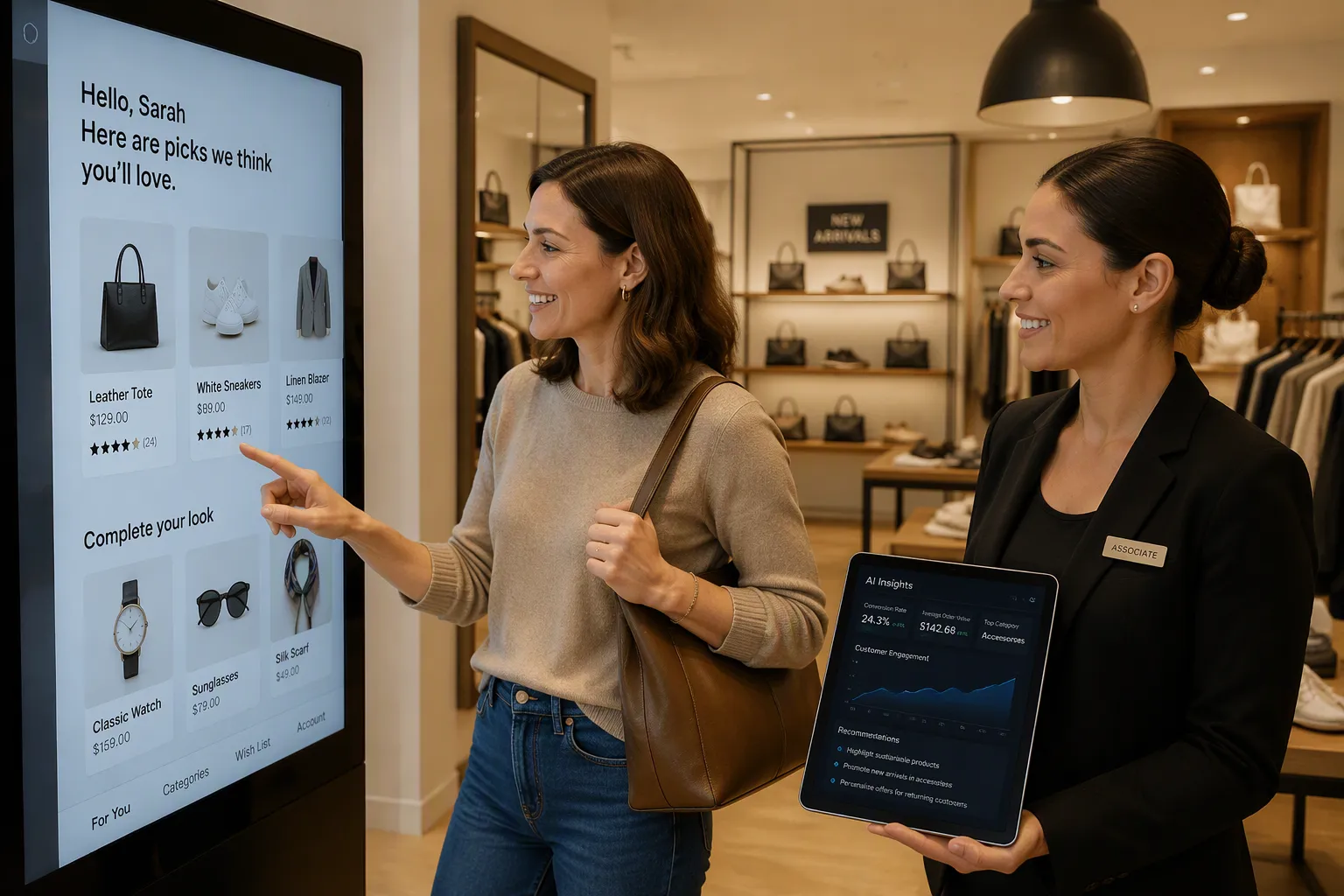
AI is changing brick-and-mortar retail. Stores now act as responsive, data-driven places. Artificial intelligence shapes personalization, inventory intelligence, computer vision and checkout, and service. These tools improve customer experience, sharpen operations, and help stores compete with e-commerce. Leaders face a practical question: what works today, what are the trade-offs, and where should a team start?
The stakes reach every aisle. AI in physical retail rewards teams that test carefully and measure honestly. AI brick-and-mortar retail pilots reveal real limits, too. AI's influence on brick-and-mortar retail grows fastest when stores pair it with clear goals. AI in retail works best as a partner to people. AI trends in brick and mortar retail show how AI is transforming retail customer experience step by step.
Key Takeaways
Begin with a small AI test project that fixes a real problem, like keeping track of inventory or watching shelves.
Use AI to give store workers quick answers, so they can focus on helping customers.
Link loyalty profiles and purchase history to predict what customers need next.
Try one checkout setup first. Then check shrink and customer satisfaction before you expand it.
Follow a clear plan: clean up your data, include teams from different areas, and track the results.
Personalized Journeys, Powered by AI
Real-Time In-Aisle Recommendations
Shoppers used to walk into a store with a question and wait for an answer. AI now changes that pattern. Store apps and smart shelves check a shopper's location, past purchases, and what is in their basket right now. Then they show a helpful product suggestion at the moment the shopper decides. A grocery chain can point out a matching item two aisles away. An apparel store can guide a returning customer to a size that fits, based on earlier returns.
These prompts only stay helpful when they respect the shopper. Teams should limit the number of alerts per visit and connect each one to a real need. Early pilots show that relevance matters more than volume. A well-timed suggestion increases basket size. A stream of random offers annoys people and breaks trust. Retailers should test one aisle, measure the response, and expand only after the data supports it.
From Queries to Proactive Journeys
The bigger shift moves brands from reactive search to proactive guidance. AI in retail links loyalty profiles, purchase history, and store visits into one view. That view lets a brand predict the next step instead of waiting for a query. A pharmacy can remind a customer about a refill before the bottle runs out. A home goods retailer can suggest a matching item after a furniture purchase.
This approach builds seamless omnichannel customer journeys. A shopper who browses online and buys in store gets one steady thread of service. The payoff shows up in stronger in-store experiences with ai and a smoother retail experience overall. Leaders should keep expectations realistic. Proactive outreach works when the data is clean and the timing is right. Poor data produces clumsy guesses. A careful pilot protects the retail customer experience and proves the model before a wider rollout.
AI Trends in Brick-and-Mortar Retail
The ai trends in brick and mortar retail picture one clear idea: stores now turn raw data into everyday choices. The ai trends in brick and mortar retail list begins with inventory intelligence. Sales records, shelf photos, foot-traffic patterns, and worker data all feed the same models. These models predict demand and point out high-value customers. Teams that watch the ai trends in brick and mortar retail closely see where ai in physical retail pays off first. A second look at the ai trends in brick and mortar retail shows why ai in retail stores now shapes store planning.
Smarter Inventory and Operations
AI-powered demand forecasting models read sales history, local events, weather, promotions, and social sentiment. They predict demand for each item at each store. This demand forecasting and inventory optimization work cuts overstocks and stockouts. Replenishment triggers fire in real time, and stock moves to the stores that need it. One reported result: customers often see about 5% faster inventory turns.
Computer vision for shelf monitoring adds a second layer. Cameras and mobile devices take shelf images. AI then finds out-of-stocks, planogram violations, and pricing errors in near real time. Industry reports call this the most rapidly maturing use in brick-and-mortar settings. Generative tools also help. Staff can ask plain-language questions about stock status or test seasonal demand before placing orders. This is artificial intelligence at work on everyday tasks.
Predictive Foot-Traffic Analytics
AI turns traffic data into a planning tool. Systems such as PassBy mix historical traffic with weather, holidays, local events, and time of day. The models forecast traffic by hour, day, or season. Retail managers then match staffing, maintenance, and utility use to expected flow.
Segmentation makes the picture sharper. AI sorts movement patterns into groups, such as browsers and mission shoppers. Multi-source integration joins Wi-Fi, Bluetooth beacons, mobile location data, and computer vision into one view. AI flags sudden surges or blockages. These signals help with safety response and layout changes. Together they help retail teams build smarter stores with less guesswork. The same ai trends in brick and mortar retail also explain why ai in retail now reaches the sales floor.
Frictionless Checkout with Computer Vision
Cashierless and Scan-and-Go
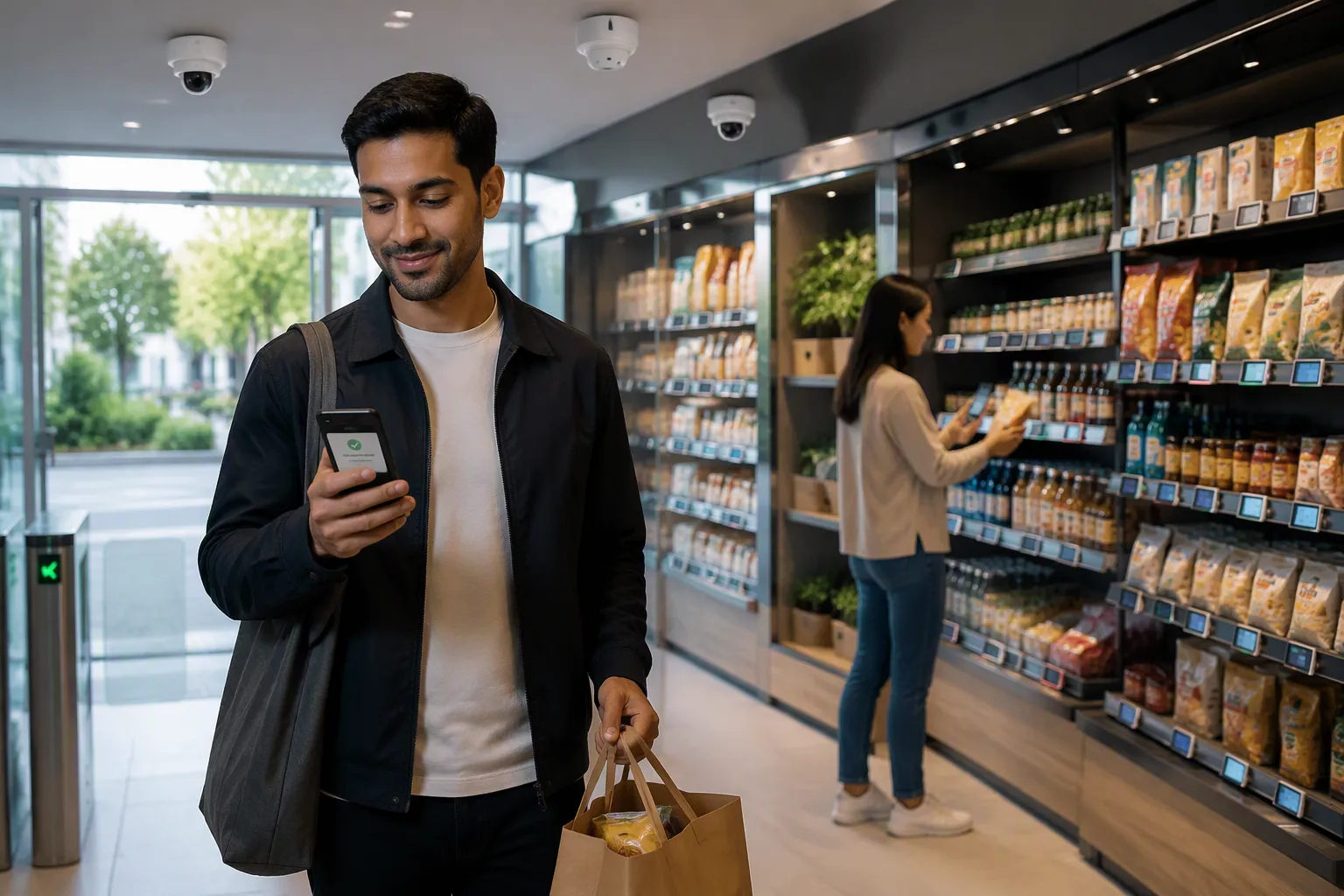
Computer vision cameras work with deep learning to spot product prices and add up the cost of chosen items. This setup gets rid of long lines, manual barcode scanning, and human error found in old point-of-sale systems. The result is cashierless operation that is more reliable and precise. A typical flow runs in clear steps:
Cameras and sensors in the store detect faces and track what shoppers do, like picking up an item or putting it in a cart.
The shopper's virtual cart updates on its own when the system detects a pick-up event.
Object detection, face recognition, pose estimation, and activity detection study movement in real time.
Smart carts with weight-sensitive scales confirm purchases and boost accuracy.
Sensors detect when a shopper leaves, and payment charges automatically with a receipt sent to the shopper.
Ceiling cameras, smart shelves, and scales build a digital copy of the physical store. The system tracks what a shopper picks up, returns, or places in a basket. Shoppers then walk out and let payment go through on its own.
Scan-and-go offers an easier path. Shoppers use their phones to scan items as they shop. Vendors and retailers report that the convenience benefit usually outweighs the fraud and loss risk. European rollouts at scale, around 1,000 stores, suggest retailers would not keep going if losses were large. Still, one major grocer dropped its scan-and-pay service after citing losses. Analytics that flag shoppers for audits, plus limits to known customers or membership programs, help control shrink. Re-scanning items can feel intrusive, though, and some retailers stay cautious about committing.
Digital Wallets and Barcode Scanning
Digital wallets and barcode scanning link the checkout to the shopper's phone. Instant redemption of points and coupons at in-aisle checkout, plus split payment across credit, points, and coupons, encourages repeat visits. Retailers can send personalized offers and reminders for frequently bought items right to shopper phones while they shop. In-app running totals can also encourage impulse purchases when shoppers stay under budget.
These tools support a broader shift in ai in retail. Removing physical checkout lanes frees floor space for more products or in-store experiences. Staff move from registers to the sales floor, where they help shoppers and build engagement. Lower cost per transaction, less cash handling, and fewer terminals to maintain all add up. Computer vision for shelf monitoring shares the same camera infrastructure, so teams get more value from one investment. For any brick-and-mortar retailer, the lesson is to pilot one format, watch shrink and satisfaction together, and scale only where the numbers hold.
AI Service and Customer Experience
Virtual Assistants and Smart Kiosks
AI helpers now guide shoppers as they look for products, get style tips, and make voice requests. L'Oréal uses AI helpers that read product descriptions, like "going on holiday," to point people to the right products. Walmart is testing helpers that manage shopping lists and restock items based on what they learn about each person. These tools mix chat-based AI with back-end systems and improve the in-store experience.
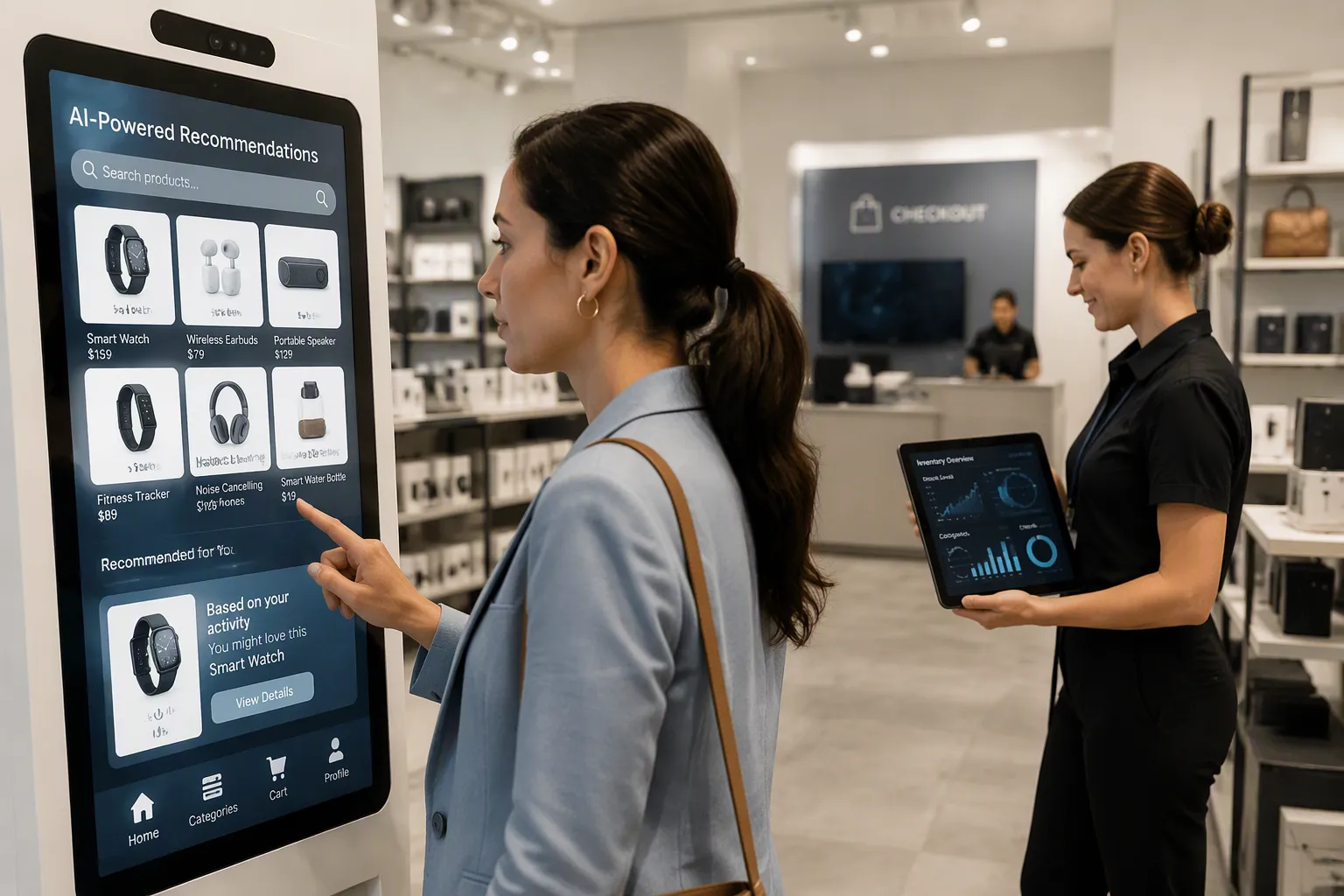
Self-service kiosks are replacing touch menus with hands-free spoken requests more and more. Natural language processing lets customers speak or type, and AI programs read purchase history to suggest products, deals, and loyalty rewards at the kiosk. Common setups show the range:
Amazon Go pairs computer vision with the Alexa voice assistant for product search and cart additions.
Home Depot kiosks use AI to recognize items and check weight, so billing stays correct without manual scanning.
Leofoo Village in Taiwan runs interactive meal-ordering kiosks with smart suggestions and mini-games that reward discount coupons.
General retail touchscreens answer questions, suggest products, and help with navigation, which frees staff for harder tasks.
AI Copilots for Associates
Copilots give associates knowledge right when they need it during a conversation. A live inventory lookup checks stock on the floor, in the back room, and at nearby stores, then offers shipping or holding the item. Guided selling asks clarifying questions and suggests the right product plus natural add-ons. With permission, the copilot shows a loyalty member's past purchases, sizes, and preferences. Instant answers on return windows, price-match rules, and warranties keep responses consistent.
The payoff shows in daily work. In one footwear store, a new associate used a copilot to pull a fit guide and two alternatives in seconds, turning a lost sale into a walk to the right pair. Teams track conversion rate, customer satisfaction, store revenue, and lower employee turnover. This is AI in retail at its most practical: it supports people, and it builds a stronger retail customer experience.
Benefits: Better Customer Experiences
Efficiency, Loyalty, and Results
These tools pay off in four areas: operations, satisfaction, money, and loyalty. AI handles routine tasks and frees associates to help shoppers. That change leads to better customer experiences and stronger results. The table below shows how named retailers link AI work to loyalty and money.
Retailer | AI Implementation | Impact on Customer Loyalty | Impact on Financial Results |
|---|---|---|---|
Kohl's | Real-time dynamic pricing based on inventory, competitor pricing, and demand; personalized promotions for loyalty members using purchase history | Personalized promotions raise customer loyalty and repeat purchases | Dynamic pricing maximizes profits and keeps the retailer competitive |
Walgreens | AI and advanced analytics on traffic and buying patterns to optimize store layouts and product placement | Improved customer satisfaction | Higher sales conversions and increased foot traffic in targeted areas |
Sephora | AI-powered in-store kiosks giving personalized product recommendations from skin type, concerns, preferences, and purchase history | More personalized, interactive experience raising customer satisfaction | Boosted sales via targeted recommendations |
This pattern shows up across the whole sector. Retailers that use integrated solutions make fast, data-backed choices at every step of the journey. That speed lifts buyer loyalty, retention, and customer lifetime value. Loyalty programs gain the most. Instead of sending the same points offers to every member, teams can tailor rewards, offers, and bundles to each shopper's buying frequency, category interest, location, and past engagement. This is artificial intelligence working quietly in the background of a retail experience.
Challenges and Adoption Roadmap
Adoption rarely goes smoothly. Teams worry about trust and data security. They run into organizational resistance and slow governance. Legal approval and procurement add friction. Inflated expectations lead to low repeat usage. Complex setups demand consultants, and smaller retailers feel that cost most. Third-party platforms raise privacy questions. Transaction disputes need clear records of who authorized an AI-driven purchase. Each barrier has a fix: protect sensitive data before sharing it, simplify approvals, embed compliance into the product, deliver immediate value, and document consent.
A practical roadmap keeps the first project small. Follow these steps:
Start where AI solves a real operational pain, such as inventory accuracy, fraud detection, or labor optimization, rather than chasing hype.
Clean and standardize store-level data before scaling, because fragmented data undermines AI performance.
Design pilots with scale in mind from day one so success repeats across hundreds of locations.
Involve cross-functional teams from IT, operations, and store leadership, since AI is a full-stack strategy, not just an IT project.
Select platforms that adapt, improve, and integrate across systems without constant manual tuning.
For in-store tools like smart mirrors, leaders must answer three questions. Which concrete customer problem does the tool solve? How well do commerce and store systems connect? Can the team prove a business case in daily operations through conversion rates, cart values, and employee support? Broad rollout needs structured product data for thousands of items and integrated cross-channel systems. Scalability only becomes profitable when a frequently changing product range can be integrated and continuously updated. That discipline separates leaders from experimenters and shapes a stronger customer experience in retail over a three-to-five year horizon. Every pilot should feed the same goal: a better retail customer experience that holds up at scale.
AI is changing the customer experience in retail by making people stronger, not by replacing them. Associates get answers faster, and stores run on cleaner data. Personalization, inventory intelligence, computer vision, and service AI all work toward one goal: a stronger retail customer experience. Leaders should start small, measure results, and scale what works.
A clear roadmap matters. 41% of retailers say missing KPIs or a roadmap is their biggest obstacle to transforming cx. Teams can audit one touchpoint this quarter, like aisle recommendations or shelf monitoring, and run a focused AI pilot. AI handles routine work, so staff can focus on complex issues. Track conversion and satisfaction. Then expand AI adoption where the numbers hold.
FAQ
Where should a retailer start with AI?
Begin with one real problem in daily work, like keeping inventory accurate or watching shelves. Clean up the store data first. Run a small test with growth in mind. Track sales and customer happiness. Then grow only where the numbers hold up.
Does AI replace store associates?
No. AI copilots give associates quick answers about stock, sizing, and store rules. That support frees them to handle harder customer needs. The article's footwear example shows a new associate turning a lost sale into a walk to the right pair.
How does AI improve personalization in a store?
AI connects loyalty profiles, purchase history, and store visits into one view. It then predicts the next need instead of waiting for a question. A pharmacy can send a refill reminder before the bottle runs out. Clean data and good timing keep these prompts helpful.
What holds retailers back from adopting AI?
Trust, data security, slow approvals, and hopes set too high all slow adoption. The article notes that 41% of retailers say missing KPIs or a roadmap is their biggest obstacle to changing customer experience. A focused pilot with clear metrics fixes both gaps.
Is cashierless checkout worth the investment?
It depends on the store format. Scan-and-go usually wins on convenience, though one major grocer dropped its service after citing losses. Retailers should test one format and watch shrink and satisfaction together before scaling.
See Also
The Future Of Retail Lies In AI-Powered Stores
Transforming Online Store Management With AI-Powered E-Commerce Tools
AI-Powered Corner Stores Are Rising: Essential Insights For Retailers
Comparing Micromarkets And Smart Stores: Global Automated Convenience Retail Explained
Smart Technology In Electronics Vending Machines Is Revolutionizing Retail
