Designing the ideal product assortment for autonomous stores in Hospitals & healthcare facilities

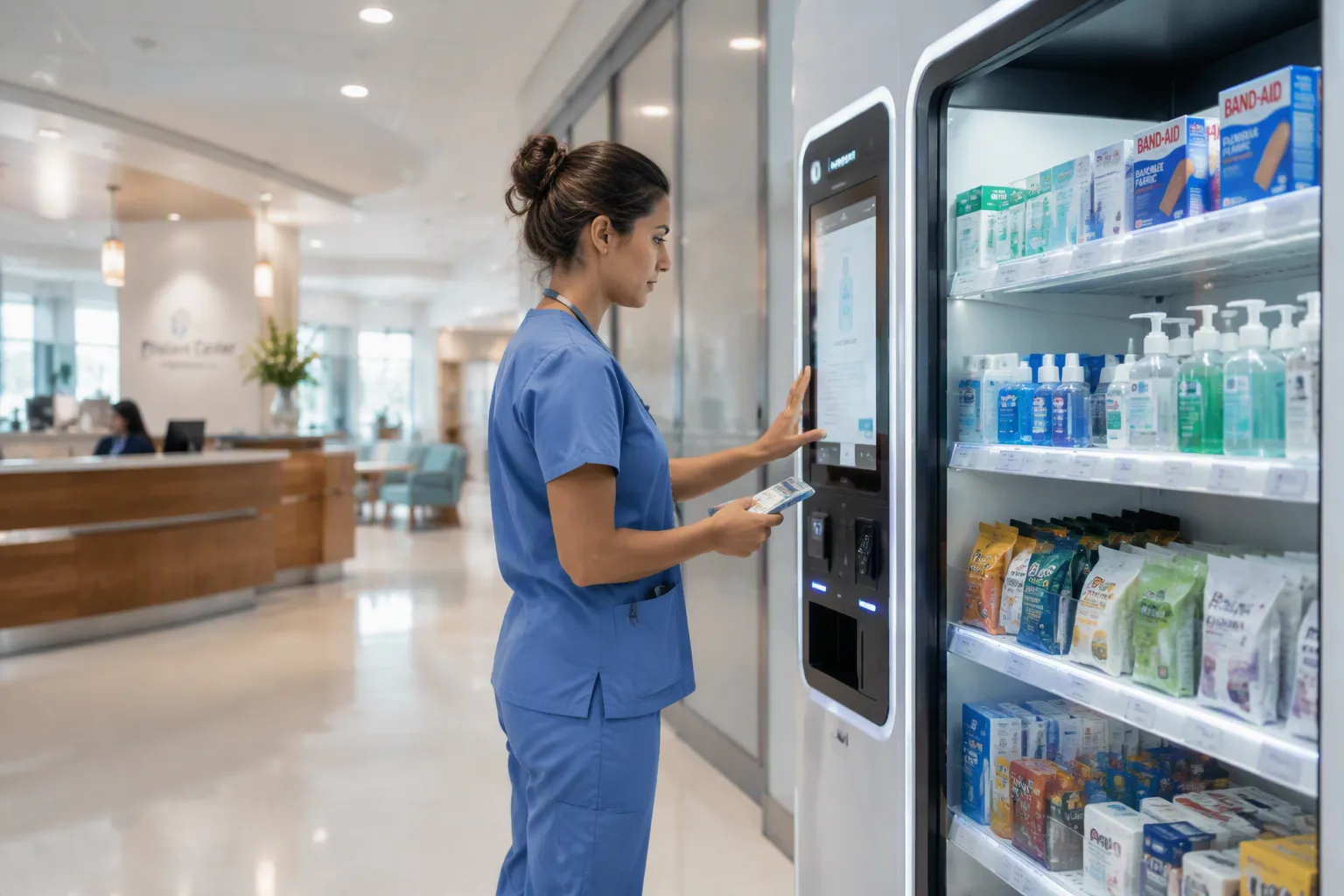
The ideal product assortment for an autonomous store in a hospital blends three things: high-demand everyday essentials, health-supporting products, and comfort items. All of this must fit within strict regulations and tight floor space.
Autonomous stores solve a real problem in healthcare settings. They deliver convenience without disrupting workflows. They also serve night shifts and emergency departments when hospital cafeterias close.
A strong mix keeps staff, patients, and visitors covered around the clock. The right approach turns a small footprint into a reliable resource. Focus on what people need most, and your store becomes a genuine support system for everyone who walks through the door.
Key Takeaways
Stock a mix of healthy snacks, comfort foods, and energy items to serve staff, patients, and visitors around the clock.
Use autonomous technology for 24/7 access and touch-free payments to improve convenience and hygiene.
Work with your pharmacy team to approve all medications and ensure compliance with safety standards.
Optimize your product mix with AI and data analytics to adapt to different hospital zones and changing demand.
Review and update your assortment monthly based on sales data and feedback to keep it relevant and effective.
Understanding Your Hospital's Customer Mix
Your hospital serves a unique mix of people. This hospital handles staff, patients, and visitors daily. Staff need quick fuel between long shifts. Patients require comfort items during their stay. Visitors look for gifts and personal care products. Each group has different needs. Your autonomous store must serve all three groups around the clock. Understanding these differences helps you select the right products.
Staff, Patients, and Visitors
Healthcare workers run on tight schedules. They want quick snacks, coffee, and energy drinks between tasks. Items that help them return to work fast work best. Patients in the hospital appreciate comfort items during their stay. Soft socks or lotion can make a long day better. Visitors in healthcare facilities often buy gifts or personal items. Common purchases include logo apparel, sweaters, and warm layers.
Accessories like handbags and compression socks also sell well. Visitors grab impulse gifts too. Candy, magazines, flowers, and greeting cards are popular choices. Personal items such as soap, deodorant, and razors serve urgent needs. Newspapers and cards from the gift shop complete the product mix. Your assortment must balance these varied demands. Stocking the right supplies keeps everyone satisfied. A store that serves all groups becomes a hospital essential.
Distinct 24/7 Needs by Zone
Each hospital zone has unique requirements. In ICU waiting areas, families sit for long hours. They need comfortable items and warm layers. Snacks and drinks help them stay alert. A small selection of personal care products supports overnight stays. In staff break rooms, quick nutrition matters most. Grab-and-go food, coffee, and energy bars work well here. Staff value items they can consume in under five minutes.
The emergency department lobby needs 24/7 access to essentials. Visitors arrive at all hours. They want snacks, drinks, and phone chargers. Time of day changes demand too. Night shift staff need different fuel than daytime workers. Morning visitors buy coffee and newspapers. Evening families need dinner items and comfort products. Tailoring your mix by zone and time keeps everyone satisfied. Your hospital store becomes a trusted resource. These medical facilities function around the clock. Your assortment must match their rhythm. The best hospitals use this approach to meet every customer need.
Building the Ideal Product Assortment
When you curate your store, balance many factors. The mix must serve staff, patients, and visitors. It must comply with hospital regulations. And it must fit in a small footprint. In healthcare settings, a smart approach starts with understanding what each group needs most. The ideal product assortment combines grab-and-go food with health-conscious items that meet compliance standards.
Food and Essentials for Grab-and-Go
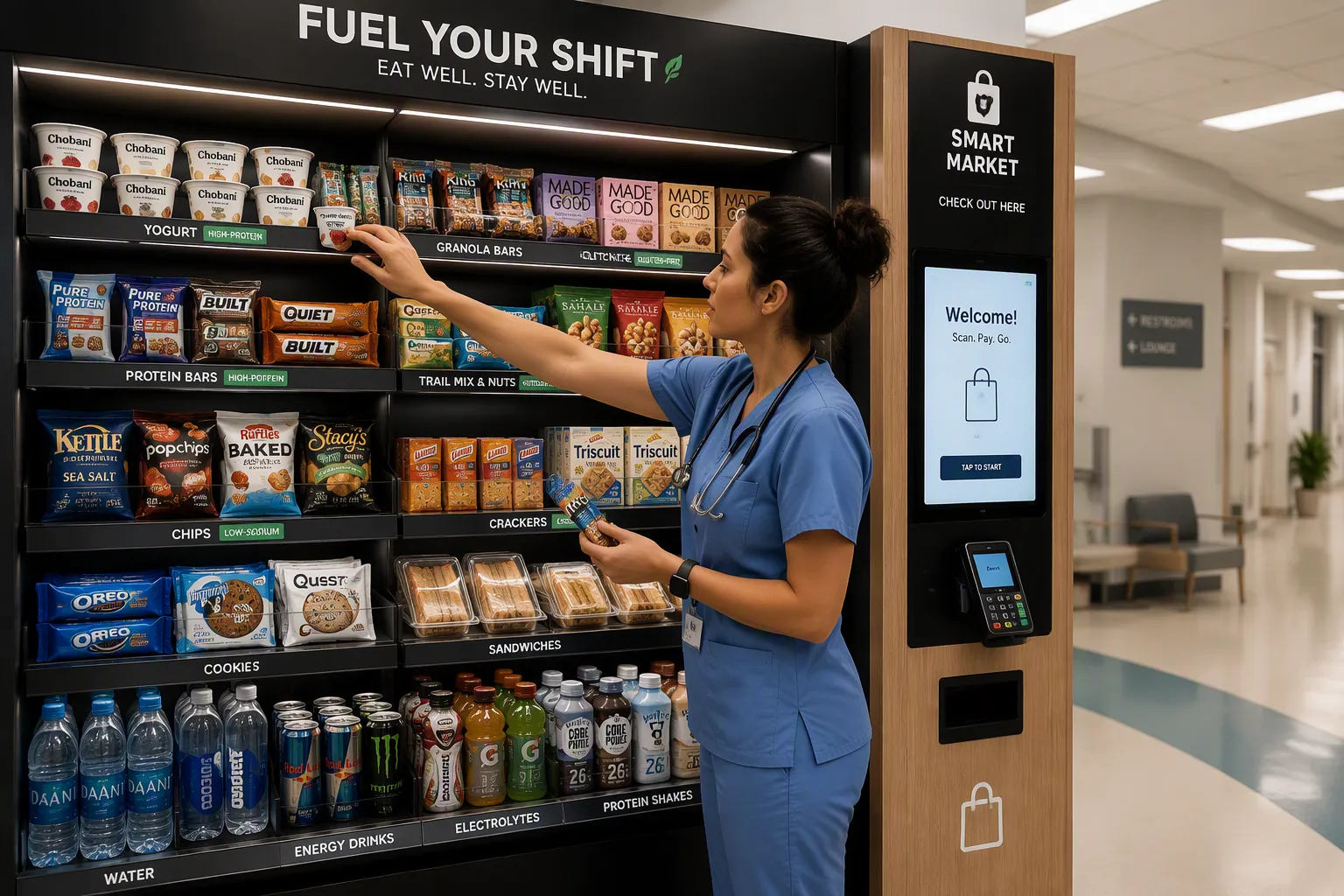
The core of your assortment is food, beverages, and essentials that people can grab and leave. In healthcare facilities, speed matters. A nurse on a short break can grab a yogurt and a granola bar. Her card charges automatically. She returns to patient care quickly. Staff satisfaction improves through reduced non-clinical burdens. Autonomous retail removes responsibilities like stocking supplies. The team can focus on patient care instead of inventory management. This shift reduces burnout and improves retention, which is important given severe staffing shortages.
The ideal product assortment follows a balanced split. You want about 40 percent healthy and dietary-conscious options. Sugar-free beverages serve diabetic patients. Low-sodium snacks fit cardiac diets. Protein bars give staff quick energy. Gluten-free and allergen-labeled items protect sensitive individuals. Comfort and traditional items make up about 35 percent. Bottled water, coffee, tea, chips, crackers, cookies, and sandwiches fill this category. Energy and functional items cover the remaining 25 percent. Energy drinks, electrolyte beverages, protein shakes, trail mix, and nuts sustain staff during long shifts.
The 70/30 rule offers another useful guideline. About 70 percent of your snacks can be traditional favorites. About 30 percent should be healthier alternatives. High-protein snacks are especially in demand at hospital locations.
Consider Candler Hospital. The Smart Byte Market used Mashgin autonomous checkout. Sales increased by over 110 percent after implementation. Peter Nyamora, VP of Ancillary Services at St. Joseph's / Candler, noted that having a secure retail location available 24/7 has been an incredible hit with the team, especially those working late nights and weekends. Touch-free transactions support infection control. In an environment where infection control is paramount, that peace of mind is immeasurable.
Your hospital can achieve similar results. Focus on convenient food and beverage access that meets real needs around the clock. Stock items that work for a quick break, a long wait, or an overnight shift. This balanced approach creates your ideal product assortment for any hospital zone.
Health and Wellness Items
Beyond food and essentials, include health and wellness products. Over-the-counter medications are essential. Pain relievers, antacids, and cold medicine serve urgent needs. Ensure every medication meets compliance standards. Stock only approved medications from your pharmacy team.
Personal care items serve visitors and overnight guests. These supplies help people feel comfortable during long stays at the hospital. Soap, deodorant, razors, and toothbrushes serve urgent needs. Compression socks and hand creams provide comfort. Offer boutique-style gifts like logo clothing and hoodies. Families appreciate finding a warm jacket without leaving the unit. Working with local sellers shows community support. Families who spend long hours at the hospital no longer need to leave the building for a snack or phone charger.
Patient safety drives every decision. Display calorie counts per item. List allergen information clearly. Include sugar content warnings. Healthcare environments demand extra caution. Offer diabetic-friendly options because many hospitals serve visitors with diabetes. Include caffeine-free alternatives for patients with restrictions. Patient safety also means proper labeling of every item.
Clinical safety also matters. Your store must meet ADA accessibility standards. Position buttons at accessible heights. Ensure retrieval areas are reachable from a wheelchair. Use clear product displays with adequate contrast. Choose easily cleanable exterior surfaces. Offer touchless payment options. Place the store away from sterile areas.
Work with your hospital's pharmacy team to approve all medications. The pharmacy understands compliance requirements. The pharmacy knows which products serve your patient population best. Each medication requires proper labeling and storage.
Operational Considerations for Autonomous Retail
24/7 Availability and Hygiene
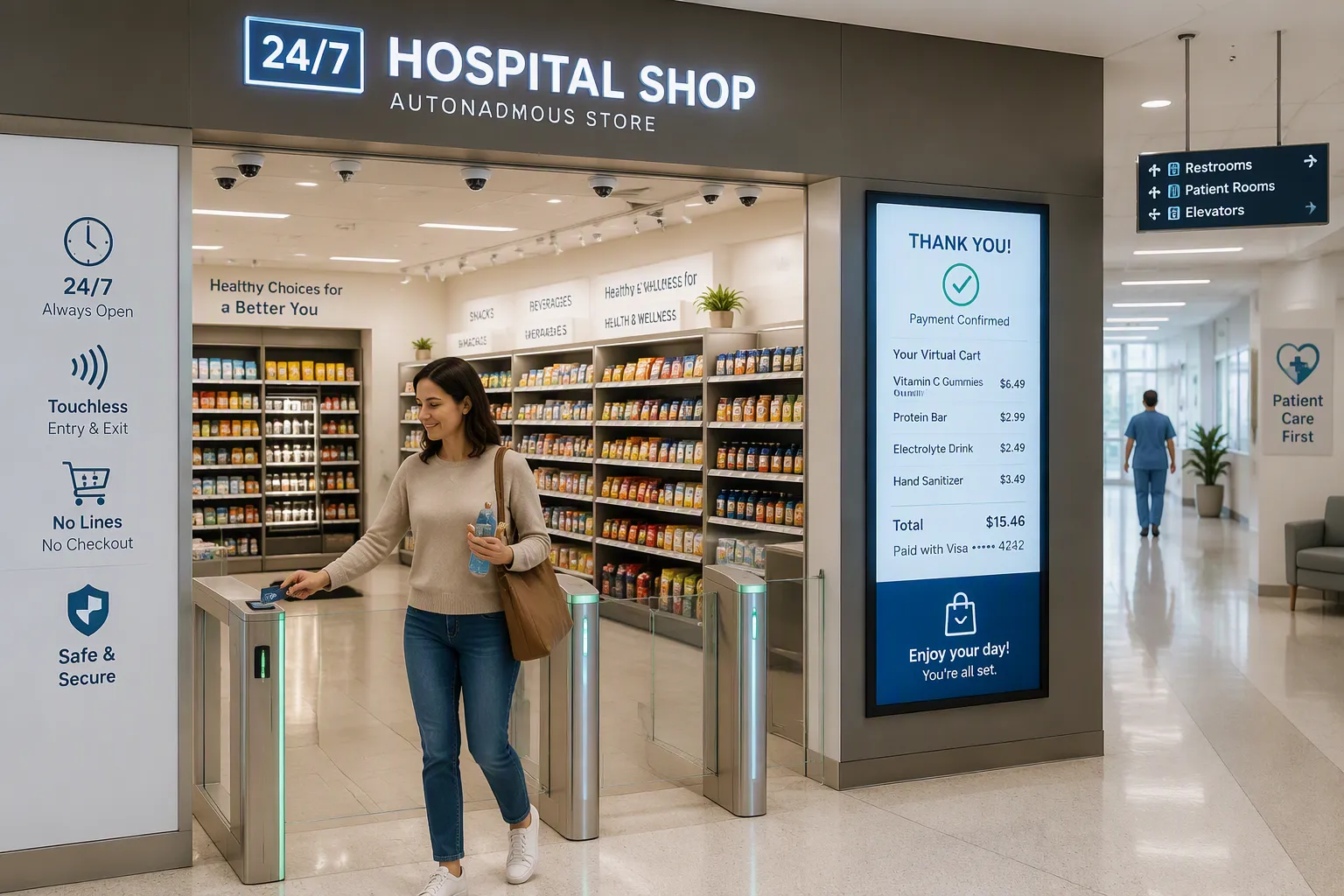
Staffing shortages make round-the-clock retail operation difficult for many healthcare facilities. You cannot easily hire people for overnight shifts. Autonomous retail solves this challenge directly. This technology removes the need for cashiers during off-hours. Shoppers enter using a credit card, mobile wallet, or employee badge. Advanced AI and computer vision detect items taken and create a virtual cart. When guests finish, they simply leave. Their payment method charges automatically. No checkout counters, no scanning, and no staff dependency are required.
This approach delivers measurable results. St. Joseph's Hospital in Tampa, Florida achieved significant improvements.
Institution | Metric | Value |
|---|---|---|
St. Joseph's Hospital, Tampa, FL | Faster shopping trip times | |
St. Joseph's Hospital, Tampa, FL | Increase in operating hours | 60% |
St. Joseph's Hospital, Tampa, FL | Shopping sessions during extended hours | 12% |
UC San Diego, CA | Shopping sessions in one hour (peak) | 400 |
UC San Diego, CA | Wait time reduction | 15-20 minutes |
UC San Diego, CA | Daily transactions increase | 14% |
Craig Anderson, VP of Innovation at BayCare which operates St. Joseph's Hospital, explained the motivation. "We just couldn't hire enough people to fill right after the pandemic, and we also knew that that was somewhat of a bottleneck for our shoppers' experience." He added that with this system, "You can sit there and eat, take that 20-minute break, and actually enjoy most of it. You're not standing in line and then racing to get through your lunch."
Hygiene benefits matter just as much as convenience. Touch-free transactions support infection control in healthcare settings. Every interaction avoids surface contact at checkout counters. This reduces transmission risk for staff, patients, and visitors. The system handles peak demand without forming queues. You maintain consistent service during lunch rushes and shift changes. This gives you 24/7 access to food and essentials without compromising safety.
Behind the scenes, automated material handling systems manage restocking and inventory flow. These automated material handling solutions keep shelves full without manual counting. The automated material handling infrastructure reduces human error in stock rotation. Automated material handling technology tracks expiration dates and utilization patterns. This automated material handling approach minimizes waste while maintaining availability. These systems integrate with your broader hospital supply chain operations. An additional systems layer connects retail inventory to your central logistics platform for seamless replenishment in this frictionless retail model.
Space and Compliance Constraints
Your retail footprint in a hospital lobby or staff break room has tight limits.
Room Type | Recommended Square Footage |
|---|---|
Display / Retail (Medical office lobby) | 30 sq ft |
Break Room | 100 sq ft |
With only 30 square feet for a lobby installation, every product choice matters. You cannot stock bulk medical supplies in this compact space. Focus on high-turnover essentials instead. In a 100-square-foot break room, you have more flexibility but still face constraints. Every shelf position requires justification.
Expiration date management becomes critical in healthcare retail. You serve medications, perishable foods, and health-sensitive items. AI-driven inventory management systems reduce medical supply chain waste while maintaining high availability rates. These systems automatically rotate inventory based on expiration dates and utilization patterns.
Automated quality control uses computer vision inspection for defects and labeling inconsistencies. Compliance checks monitor regulatory changes. Historical data analysis flags potential risks before violations occur. Your clinical operations benefit from this proactive approach to medication safety.
Patient safety drives every compliance decision. Coordinate with your pharmacy team to approve all medications. The pharmacy understands which over-the-counter products match your patient population. Each medication requires proper labeling and storage conditions. Your hospital supply chain must align retail inventory with broader medical supply chain operations.
Autonomous mobile robots can restock your store and transport supplies between departments. These autonomous mobile robots reduce the burden on clinical staff. Your central logistics platform connects retail inventory with the rest of your healthcare logistics network. This integration ensures frictionless retail does not disrupt other healthcare operations. Instead, it complements them perfectly using automated material handling systems designed for healthcare environments.
Optimizing Assortment with AI and Analytics
Using Data to Tailor by Zone
Your hospital zones generate different demand patterns. AI-powered assortment optimization helps you align inventory with those patterns. The system studies purchase data from each location. It learns what sells in the ICU waiting area versus the emergency department lobby. You can then stock each zone with the right products.
Real-time tracking shows you what moves and what sits. You see which items sell out during night shifts. You learn which snacks visitors buy on weekend mornings. This data removes guesswork from your product mix decisions. You stop stocking items that gather dust. You start prioritizing products that serve immediate needs.
The system also connects to your automated material handling systems. These systems track inventory levels across all zones. They flag low-stock items before shelves go empty. Automated material handling keeps your store running without manual counts. You gain a clear picture of demand across your entire healthcare facility.
Iterative Refinement with Feedback
Your ideal product assortment changes over time. Seasonality shifts demand. Flu season increases cold medicine sales. Summer brings higher demand for bottled water. AI models detect these patterns and suggest adjustments. You refine your mix month by month.
User feedback adds another layer. Staff might request more protein options. Visitors might ask for warmer clothing in winter. You collect this input through surveys or direct conversations. The system combines feedback with sales data. It recommends specific changes to your assortment.
Autonomous mobile robots support this cycle by restocking shelves efficiently. They move products from storage to display areas without staff involvement. This keeps your store responsive to demand changes. You test new items in small quantities. You measure results. You scale what works and drop what does not. This continuous loop keeps your hospital store relevant and profitable.
Build customer-centric categories for 24/7 needs. Enforce strict operational compliance. Pursue continuous data-driven refinement. This framework shapes your ideal product assortment.
The perfect mix evolves. Usage patterns shift. New products launch. Hospital priorities change. Your assortment must adapt.
Start with a core set of high-velocity items. Test them in your healthcare facility. Gather feedback from staff and visitors. Iterate monthly. Partner with an autonomous retail platform that provides real-time analytics and zone-level insights. This approach turns your hospital store into a trusted resource.
FAQ
What products should I stock first in a hospital autonomous store?
Start with high-velocity essentials. Stock bottled water, coffee, energy bars, and grab-and-go sandwiches. Add pain relievers and personal care items. These products serve staff, patients, and visitors around the clock. Your hospital store becomes useful from day one.
How do I handle expiration dates for perishable and health items?
Use automated material handling systems to track expiration dates automatically. These systems rotate stock based on freshness. They flag items nearing their limit. You reduce waste and protect patient safety. Your automated material handling keeps shelves compliant without manual checks.
Can I sell medications in an autonomous hospital store?
Yes, but only with approval. Work with your pharmacy team to select approved over-the-counter medications. Each medication needs proper labeling and storage. Your pharmacy ensures every product meets compliance standards. Patient safety depends on this partnership.
How much space do I need for an autonomous store?
A lobby installation can work in about 30 square feet. A break room setup may need around 100 square feet. Every shelf position matters in tight spaces. Focus on high-turnover items. Skip bulky products that gather dust.
How often should I update my product mix?
Review your assortment monthly. Track what sells and what sits. Collect feedback from staff and visitors. Adjust for seasonality and demand shifts. Small tests reveal what works. Scale successful items and drop poor performers.
See Also
Artificial Intelligence Driven Retail Shops Represent The Coming Future
Comparing Micromarkets And Smart Stores: Global Automated Convenience Retail Operations Explained
Boosting Worker Efficiency Through Intelligent Vending Machine Solutions In Small Offices
How Artificial Intelligence E-Commerce Tools Revolutionize Online Store Administration
Examining Walgreens Self-Checkout: Benefits And Difficulties In Retail Environments
