How autonomous stores enable new revenue models in Hospitals & healthcare facilities

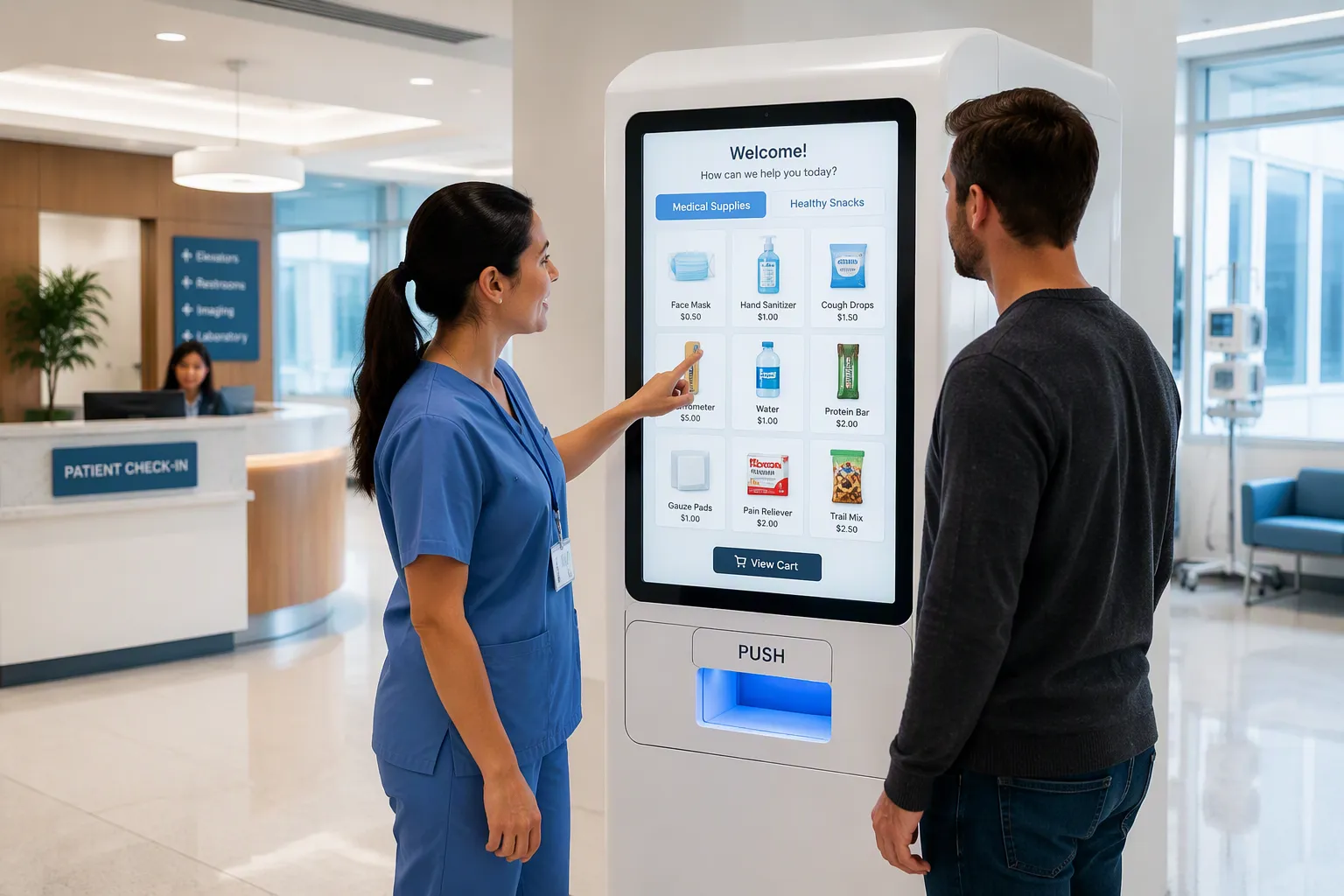
Autonomous stores enable new revenue models for hospitals. These cashierless retail spaces generate income around the clock without adding retail staff. Unattended retail, subscriptions and bundles, advertising, and data-driven merchandising each create a distinct income stream. The stores attach to budgets healthcare facilities already pay, and they support broader revenue cycle efficiency. Patients gain convenient access to essentials. Visitors and staff benefit from quick, unattended purchases during long shifts and waiting periods. Revenue growth and better experiences can coexist. Healthcare leaders deserve a practical view of the benefits and the implementation steps. Automation makes this model achievable at modest scale.
Key Takeaways
Autonomous stores generate revenue 24/7 without cashiers, turning idle hospital space into income.
Hospitals are ideal for these stores because of high foot traffic, long waits, and round-the-clock needs.
Multiple revenue streams include unattended retail, subscriptions, advertising, and data insights.
These stores improve patient and staff satisfaction by providing convenient access to essentials.
Start with a pilot in a high-traffic area, then scale based on data and compliance checks.
Autonomous Stores Enable New Revenue Models
Defining autonomous stores in healthcare
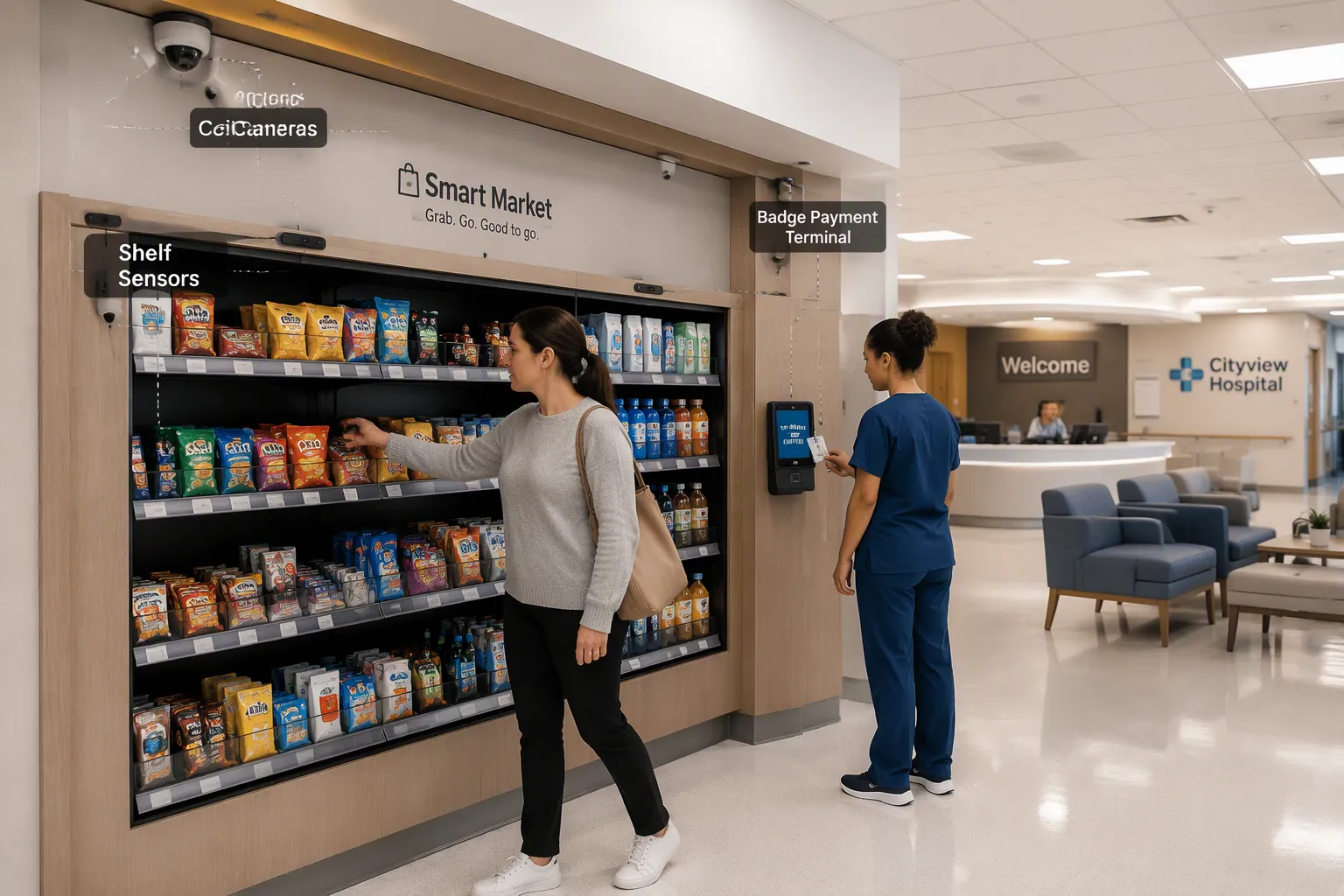
An autonomous store is a retail space that runs without cashiers. Shoppers grab items and walk out. Ceiling cameras and smart shelving track each selection. The system charges the customer automatically. This model follows the broader autonomous retail trend. Grab-and-go formats, cashierless checkout, and smart shelving all remove the checkout line. In a healthcare setting, the store fits into a lobby, a waiting room, or a break room. Staff and visitors use it at any hour.
The platform business model matters here. The store is digital technology attached to budgets hospitals and healthcare systems already pay. A facility does not build a new retail department. It adds a layer to existing operations. That layer generates revenue from purchases, subscriptions, and advertising. It also feeds data back into operations. The definition stays simple: a self-service retail platform inside a care facility.
Why hospitals are a natural fit
Hospitals and healthcare systems offer conditions that suit autonomous retail. The table below summarizes the main factors.
Factor | How it makes hospitals suitable |
|---|---|
High foot traffic | Main lobbies see constant mixed traffic from morning to evening. |
Long dwell times | ER waiting rooms often exceed two hours, creating repeat purchase chances. |
24/7 access | Night-shift staff and overnight visitors need snacks when cafeterias close. |
Integration with hospital systems | Stores can link to employee ID badges and payroll or preloaded balance platforms. |
Security and hygiene compliance | Placement near security, easy-to-clean surfaces, and minimal touchpoints meet infection-control standards. |
Suitable locations | Main lobbies, ER waiting rooms, and staff break rooms deliver the highest return. |
Proven technology | Ceiling cameras and computer vision already run in care facilities. |
Real-world deployments prove this concept works. Amazon Just Walk Out technology has appeared in hospital settings. AiFi has deployed similar autonomous solutions in healthcare facilities. ViaTouch Media integrated its Vicki smart stores with the M.M. Hayes Quickcharge platform at New York Presbyterian hospital. Physician residents there use monthly stipend accounts. Other employees charge purchases to payroll deduction accounts.
Staffing pressure also drives adoption. St. Joseph's Hospital in Tampa, Florida, operated by BayCare, adopted Just Walk Out technology in its cafeteria to address a post-pandemic labor shortage. Craig Anderson, vice president of Innovation for BayCare, said the facility "just couldn't hire enough people to fill right after the pandemic." The frictionless checkout system let the hospital keep the cafeteria open without full staffing. Shopping trip times dropped by 75%, from about 12 minutes to three minutes. Operating hours increased by 60%. Twelve percent of shopping sessions occurred during extended hours. This case shows how automation reduces dependence on retail staffing. Autonomous stores enable new revenue models while easing labor pressure. Healthcare organizations can attach this technology to budgets they already fund. The result is a practical path to new income.
Revenue Models for Hospitals
Unattended retail and 24/7 sales
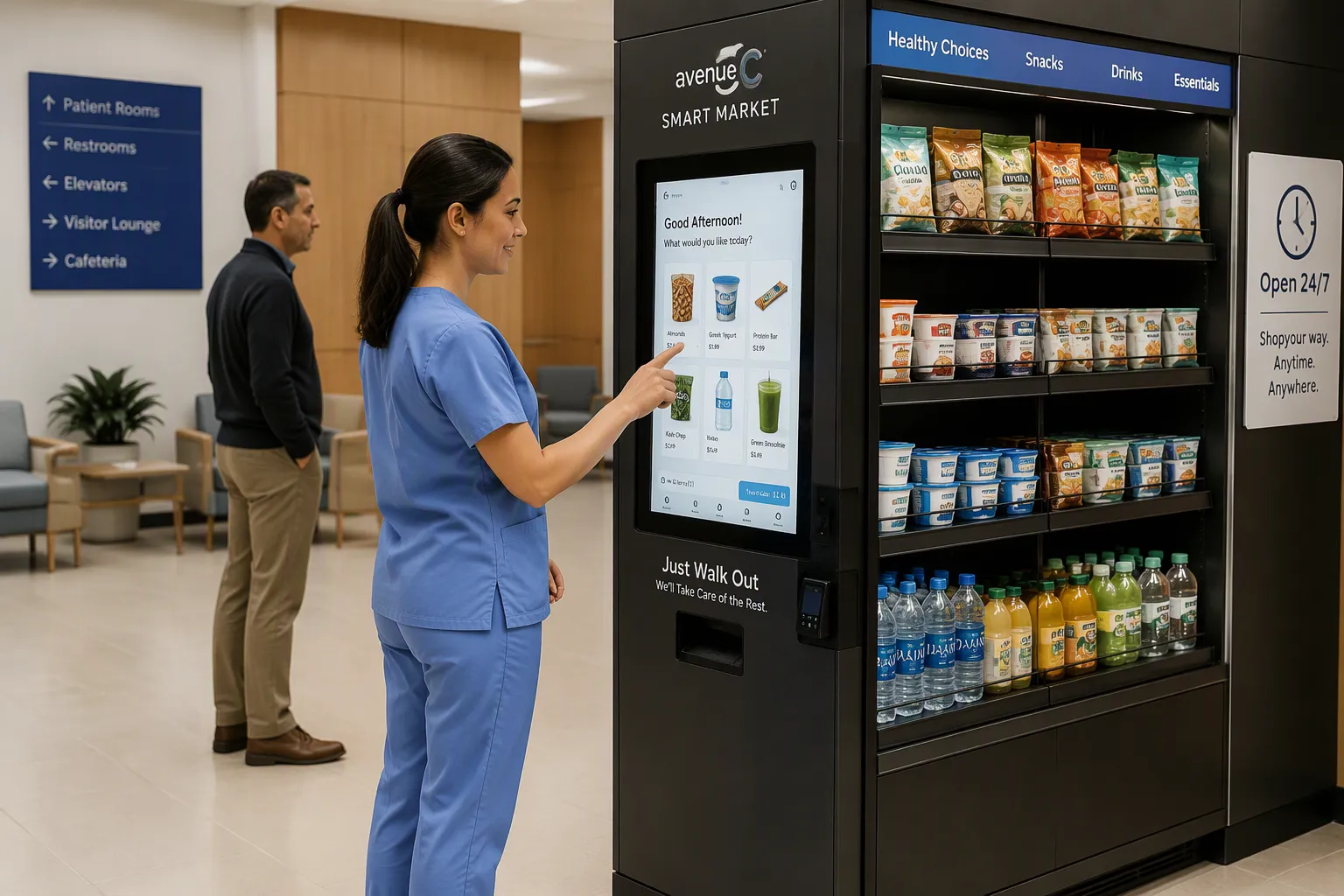
Unattended retail turns idle square footage into a steady income stream. A shopper pays at the shelf, and the store captures the sale at any hour. Each transaction adds revenue without a cashier on the payroll. Hospitals see the strongest lift in lobbies, emergency waiting rooms, and staff break rooms.
The satisfaction data tells a clear story. A 200-bed regional hospital placed a smart market near its ICU and tracked the results.
Metric | Value | Impact on Satisfaction |
|---|---|---|
Press Ganey "food availability" score increase | Families credited 24/7 access to comfort items | |
Reduction in late-night cafeteria runs | 60% | Fewer trips away from patients |
Daily transactions at an ER ice-cream robot | 60–80 per day | Eases anxiety during long waits |
Non-clinical time lost per nurse per shift | ~20 minutes (100+ hours/year) | Time returned to patient care |
Staff morale rises for related reasons. Nutritious options in break rooms signal that the facility values employees. A nurse on a 12-hour night shift can find a healthy meal at 3 AM without leaving the unit. Families stay close to loved ones and catch doctor updates. These gains support value-based goals such as patient outcomes, length of stay, and operational efficiency, not patient volume alone.
Subscriptions, advertising, and data insights
Three further models build on the same footprint. Subscriptions and bundles charge a recurring fee for coffee, snacks, or meal credits. Advertising sells shelf space and screen time to brands. Data insights turn purchase patterns into merchandising decisions that lift revenue per square foot.
Operators show strong appetite for this technology. The AHF State of the Industry Report found that 71% of operators are likely to invest in replacing equipment, and 68% plan technology investment within 24 months. FSD's Healthcare Survey reports that 22% name automation as the biggest trend in healthcare dining. One vending challenge produced a prediction engine that used per-machine sales data to forecast demand and recommend space allocation. Machine learning models now tailor restocking to each location. Hospitals can apply the same logic to reduce stock-outs and right-size product mix.
Automation extends beyond the shelf. Autonomous coding in healthcare strengthens the revenue cycle by converting clinical documentation into billing codes with less manual coding. The promise of autonomous coding rests on improved accuracy of coding and faster claims. An automated coding solution and computer-assisted coding both feed cleaner data into the revenue cycle. Coding powered by artificial intelligence supports autonomous or automated coding at scale. Autonomous coding adoption grows as leaders see the return. Each step of autonomous coding removes friction. Autonomous coding frees staff for higher-value work. Autonomous coding pairs well with retail data. Autonomous coding completes the picture. Autonomous stores enable new revenue models, and autonomous coding protects the income they generate.
Inside the Healthcare Revenue Cycle
Operational efficiency and cost savings
Autonomous store operations connect to automated revenue management and autonomous workflows across the revenue cycle. The store runs itself. It also feeds clean transaction data into the systems that track income and cost. That link matters for healthcare organizations that want tighter control over every dollar.
Data-driven stocking lowers operating costs in concrete ways. Machine learning forecasts demand. Computer vision monitors shelves in real time and shows exactly when and where to replenish. Optimization algorithms plan each restock. Anomaly detection flags stockouts, overstocks, and shrink before they escalate. Store-specific optimization puts the right product on the right shelf at the right time. These methods cut waste and reduce the manual labor behind inventory.
Reduced manual retail staffing adds a second saving. No cashier means no shift coverage gap and no overtime. The store also removes a common source of revenue leakage: unrecorded sales and spoilage. Leaders should treat these gains as plausible and measurable, not guaranteed.
Supporting the revenue cycle
Retail income only helps when it reaches the books cleanly. Automated workflows move store transactions into billing and reimbursement systems with less manual entry. That discipline supports reimbursement and protects against missing reimbursement opportunities.
Autonomous coding strengthens the same chain. Autonomous coding converts clinical documentation into billing codes with less manual work. Autonomous coding improves accuracy and speeds claims. An autonomous or automated coding solution feeds cleaner data into the revenue cycle. Autonomous coding reduces coding-related denials. Fewer coding-related denials mean a measurable reduction in denials overall. Autonomous coding frees healthcare revenue cycle teams for higher-value work. Autonomous coding supports accurate and more efficient billing. Autonomous coding pairs with retail data to complete the picture. Autonomous coding protects the revenue that autonomous stores generate. Healthcare revenue cycle departments that adopt autonomous coding see fewer coding-related denials and less revenue leakage. Autonomous coding belongs in any plan to modernize revenue cycle operations.
Benefits and Implementation
Revenue, experience, and satisfaction gains
Autonomous stores enable new revenue models that lift income while cutting costs. Unattended sales run around the clock and add revenue without cashier payroll. Subscriptions, advertising, and data-driven merchandising build additional revenue streams on the same footprint. Data-driven stocking reduces waste and shrink, which protects margin. Healthcare organizations also report stronger satisfaction scores when families and staff find essentials close by at any hour.
Patients and visitors gain convenience during long waits. Staff gain quick access to meals and snacks during shifts. These gains support value-based goals such as patient outcomes and operational efficiency. Revenue growth and better experience reinforce each other. Leaders should treat the numbers as measurable targets, not guarantees.
Technology, space, and compliance steps
Administrators can follow a practical sequence. First, select technology that fits existing badge, payroll, and balance systems. Second, plan space in high-traffic areas such as lobbies, emergency waiting rooms, and break rooms. Third, address compliance and privacy. Confirm infection-control practices, secure payment data, and review camera use with legal counsel. Fourth, run a pilot in one location and scale based on data.
Automation supports each step. Smart shelving and computer vision reduce manual work. Transaction data flows into the revenue cycle with less entry. Autonomous coding strengthens the same chain by converting clinical documentation into billing codes with less manual effort. Autonomous coding improves accuracy. Autonomous coding speeds claims. Autonomous coding reduces coding-related denials. Autonomous coding frees staff for higher-value work. Autonomous coding pairs with retail data. Autonomous coding protects the revenue that stores generate. Autonomous coding belongs in the modernization plan. Autonomous coding completes the picture for hospitals that scale.
Autonomous stores enable new revenue models that fit modern healthcare budgets. Unattended retail, subscriptions, advertising, and data insights each add revenue around the clock. The same platform lowers staffing costs and supports revenue cycle efficiency. Revenue growth and better experiences for patients, visitors, and staff reinforce each other.
Leaders should start with a pilot in a high-traffic location. They can scale based on data from that site. Automation makes each step easier to measure and repeat. Autonomous retail now belongs in the plan for any forward-looking healthcare facility. The model turns idle space into steady revenue and a better visit.
FAQ
How much space does an autonomous store require?
A compact footprint works well. Most units fit into a lobby corner, a waiting area, or a break room. Administrators should pick a high-traffic spot first. The store then earns its keep through steady daily sales.
Do autonomous stores replace cafeteria staff?
No. These stores complement existing food service. They cover overnight hours and busy periods when the cafeteria closes. Staff move to higher-value roles. Automation handles checkout and inventory tracking instead.
How do hospitals handle payment and privacy?
Stores can link to employee badges, payroll deduction, or preloaded balances. Leaders should review camera use with legal counsel. They should also confirm secure payment handling. Clear signage helps patients and visitors understand the system.
What results should a pilot measure?
A pilot should track sales per square foot, transaction counts, and restocking costs. It should also measure satisfaction among staff and visitors. Leaders can compare these numbers against baseline data. They then decide whether to scale.
How does autonomous coding connect to retail income?
Retail sales only help when they reach the books cleanly. Autonomous coding converts clinical documentation into billing codes with less manual work. It reduces coding-related denials. Together, automation and autonomous coding protect the revenue that stores generate.
See Also
Why Stores Powered By Artificial Intelligence Will Dominate Tomorrow
Micromarkets Versus Smart Stores: How Automated Convenience Retail Operates Globally
How Artificial Intelligence E-Commerce Tools Change Online Store Management
Walmart Self-Checkout Access: What Changes Are Coming In 2025?
The Rise Of AI-Powered Corner Stores: What Retailers Must Understand
