What Should Be Included in a Cashierless Store RFP?

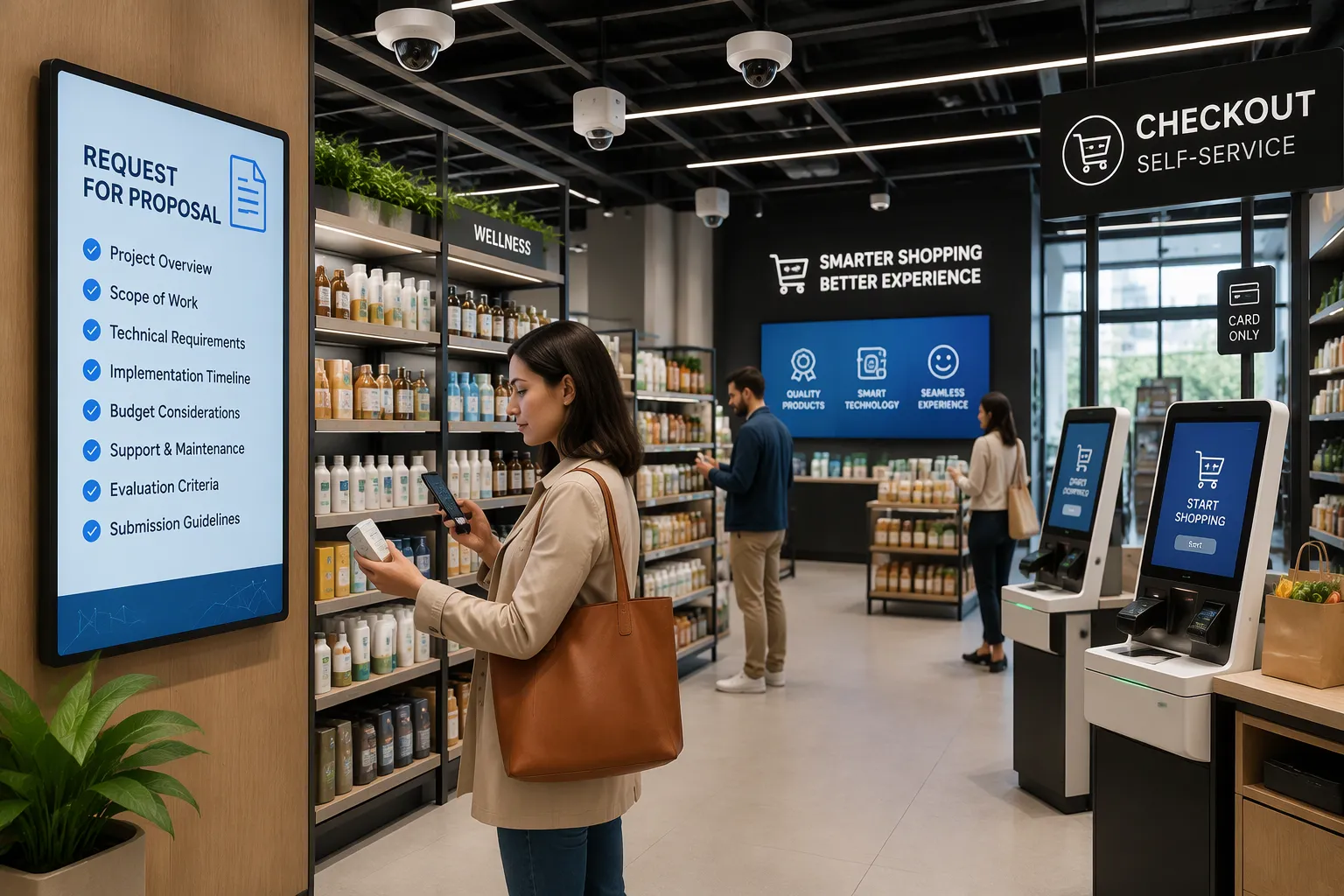
A cashierless store RFP succeeds or fails on completeness. Your document must cover company background, project overview, scope, technical requirements, security and compliance, performance metrics, timeline, support, cost, and vendor qualifications in one clear package.
Skip integration, security, or performance metrics, and you invite vague proposals and costly rework. This guide walks through each section in order. It uses Cloudpick, a global leader in AI-powered unmanned retail, as a benchmark for the technology and checkout-free capabilities you should expect. A strong cashierless shopping brief leaves nothing to guesswork, and a precise checkout-free store specification protects your budget. Treat every cashierless requirement as a test of vendor readiness.
Key Takeaways
A complete cashierless store RFP covers the company background, project overview, scope, technical requirements, security, performance metrics, timeline, support, cost, and vendor qualifications.
Set clear goals and scope so vendors can compete and lower costs.
State the technical details, such as hardware, software, and integration, so you don't get vague proposals.
Ask for performance goals you can measure and security rules to follow. This helps make sure the system is reliable and trusted.
Use a point-by-point response matrix and reference checks to compare vendors fairly.
Key Sections of a Cashierless Store RFP
Company Background and Project Overview
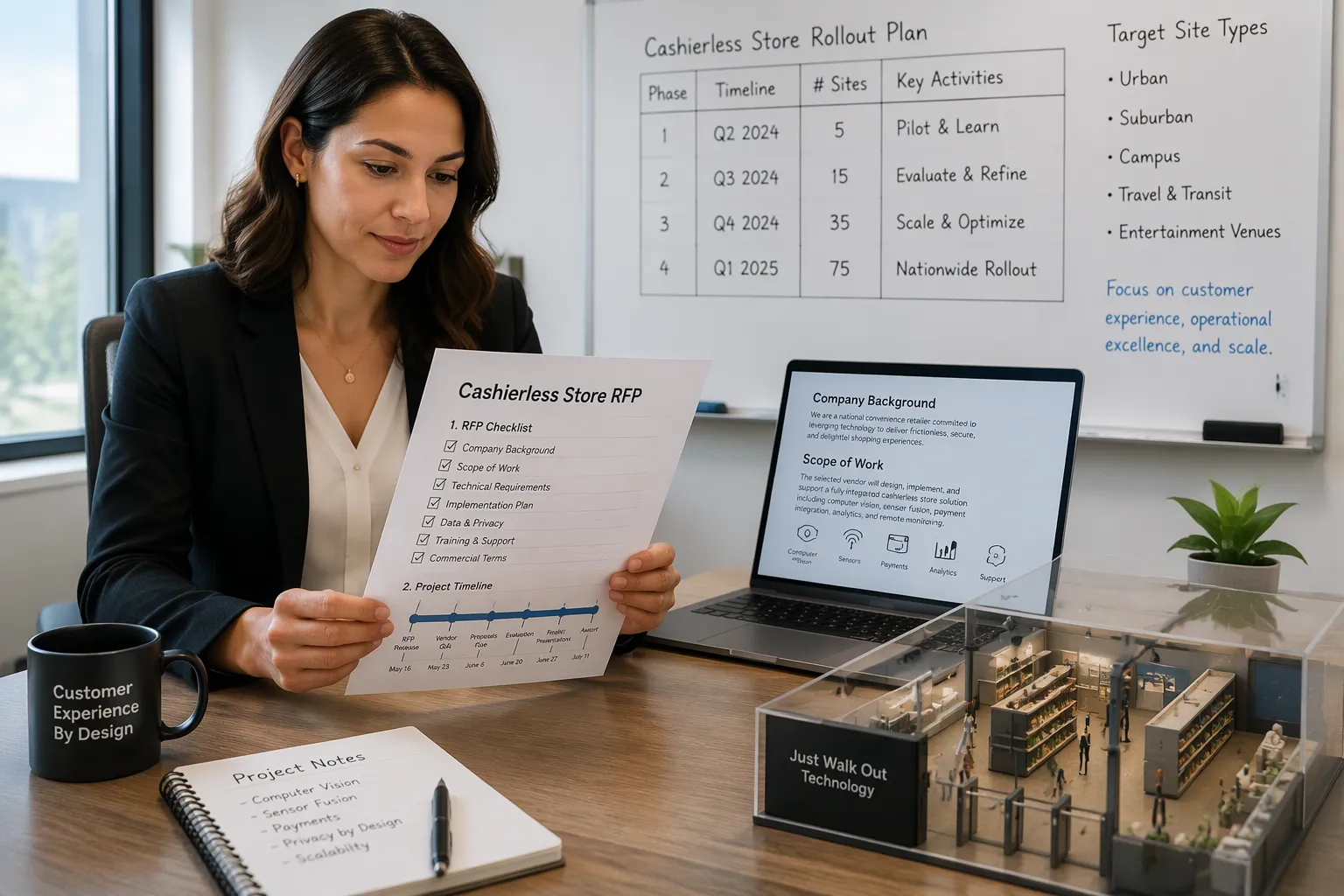
Start your cashierless store rfp with a short company background. Say who you are, where you operate, and what you want to achieve. Then add a project overview that lists your goals and the results you want. Keep one goal clear: you want vendors to compete, find the best supplier, and lower costs. A clear cashierless store brief at this stage shapes every answer that follows. Vendors read the overview first, and they base their bids and prices on it. Write the background in simple terms. Describe your current operations, your customers, and the problems you want to solve. Then say what a successful cashierless deployment looks like for your business. Keep this section short and factual. A vendor should finish it with a clear picture of your business and your goals.
The document usually runs 3-5 pages. Include a checklist of required elements so no vendor skips a section. Attach a sample master agreement with contracting tips as a template. This gives every bidder the same starting point. A well-built cashierless store rfp also names the response format, the deadline, and the contact person. That structure turns a checkout-free store proposal into a document you can score, not a sales pitch you must decode. State the evaluation criteria in the same section so bidders know how you will judge their answers.
Scope of Work and Timeline
Scope defines the cashierless store formats and deployment settings you plan to cover. List each site type:
Transportation hubs such as railways, highways, and airports
Corporate and industrial campuses
Hospitals and research institutes
Cultural and scenic spots
Name the number of sites and the order of rollout. This detail lets vendors size hardware, software, and support correctly.
Benchmark every response against proven formats. Cloudpick's AI-Powered Unmanned Store enables automated settlement and 24/7 unmanned operation. Its Moby Mart is a mobile smart store that adapts quickly to outdoor scenarios. Use these as reference points when you compare cashierless stores from different bidders. Ask each vendor how its computer vision handles product recognition and how its cashierless technology supports remote management. A serious bidder will explain its scanless technology in plain terms. The same applies to any just walk out store model, where sensors and cameras replace the traditional checkout.
Scope also covers product mix. State whether you sell packaged goods, fresh food, or general merchandise. Many grocery stores and stores without checkouts run different layouts, and the layout affects sensor placement. A cashierless store in a hospital lobby differs from a till-less store at a rail station. Describe the customer journey from entry to exit, including the check-out phase. Ask vendors to show how their technology removes friction at each step, how the checkout experience compares to a staffed counter, and which technology stack supports it. A cashierless rollout also changes staffing and restocking routines, so ask for a plan. Cloudpick's portfolio spans automated retail settings from transport hubs to scenic spots, so it serves as a useful yardstick for any cashierless plan. A checkout-free design should also state opening hours, restocking windows, and peak-hour coverage. Confirm that the cashierless design handles peak hours. Add a timeline with milestones: site survey, installation, testing, and go-live. Tie payments to those milestones so the schedule has teeth.
Technical Requirements for a Cashierless Store
Hardware and Cashierless Tech Specs
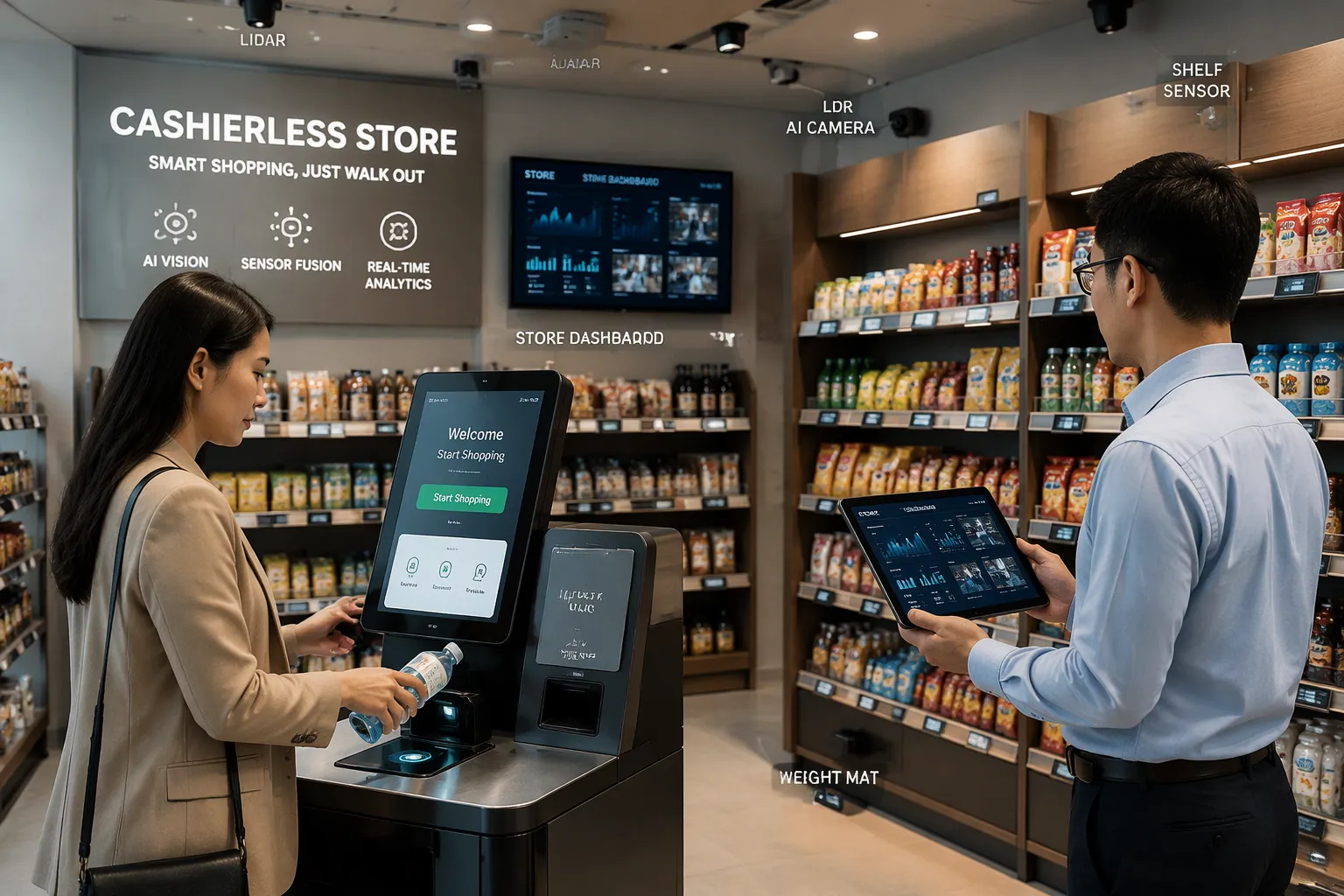
Your hardware section turns a general cashierless store vision into parts a vendor can price. Start with the multi-functional terminal. Say it must handle returns, lottery sales, utility payments, and special item lookups. Add built-in loyalty card printing so customers finish every task at one station. List each piece of equipment with its job, its size, and its power and network needs. This detail lets bidders quote the same scope.
Then describe the sensing layer. A strong cashierless tech stack combines computer vision with shelf sensors. Ask vendors to explain how their camera vision handles crowded shelves and how object detection tells similar products apart. Require a clear answer on sensor fusion: how the system merges data from cameras, shelf sensors, and weight mats into one reliable view. Some designs add lidar along with shelf sensors to sharpen position tracking. Request the recognition accuracy target and the method the vendor uses to measure it. Cloudpick's Computer Vision Coolbinet shows the compact end of this range, a mini AI unmanned store built for purchases within the last 10 meters. Use it as a benchmark for small-footprint sites.
Software, AI, and System Integration
Software specs should state your recognition accuracy expectations in plain terms. Define what counts as a correct item identification and how the vendor reports errors. Ask how the system performs tracking across a full shopping trip, from entry to exit. Remote management matters just as much. Cloudpick's Smart Store Management System provides remote store control, which cuts operational costs and raises efficiency. Require a demo of that control panel, not a brochure.
Integration decides whether the cashierless store works on day one. Name every system the new platform must touch: POS, ERP, payment processing, and your existing loyalty and inventory tools. Require vendors to document their APIs, including authentication, data formats, and error handling. Ask for deployment speed evidence. Cloudpick cites quick deployment across 200+ smart stores worldwide, so ask each bidder for a comparable record. Confirm how the autonomous checkout technology handles payments and refunds. A checkout-free flow fails fast when payment and POS systems disagree. Test scanless technology in a pilot before you sign. The best cashierless technology proves itself under real traffic, and solid sensor fusion keeps accuracy steady as store layouts change. Treat every integration claim as a question for the reference call.
Security, Compliance, and Performance Metrics
Data Security and Regulatory Compliance
Every cashierless store RFP needs its own security section. Ask vendors to explain how they protect shopper data. This includes what they collect, where they store it, and how long they keep it. Payment security comes next. Require proof that digital payments go through certified processing partners. Also confirm that card data never sits in the store system. System access control matters just as much. State who can reach which systems and which physical areas, from the stockroom to the management console. Name the rules that apply to your market. Then ask each bidder to confirm compliance in writing.
Customer research on self-service formats points to four concerns: convenience, security, social, and technical. Address each one in your requirements. Ask how the design protects shoppers from mischarges and how it handles disputes. Also ask how it reassures first-time users. A cashierless store lives or dies on trust. Cloudpick's Smart Store Management System gives operators remote store control, which keeps oversight tight without staff on site. Use that level of control as your benchmark when you compare cashierless proposals.
Performance Metrics and SLAs
Vague promises sink a cashierless project. Demand measurable targets for shrink rate, recognition accuracy, uptime, and service response. Set the shrink rate target as a percentage and define how the vendor measures it. Tie recognition accuracy to computer vision performance under real traffic, including crowded shelves and similar packaging. Specify uptime as a monthly percentage and state the penalty for missing it. Write service level agreements with response times for critical faults, remote monitoring duties, and update cadence.
Ask vendors to prove tracking accuracy across a full trip. Also ask them to show how object detection and sensor fusion hold up as layouts change. Cloudpick's record of quick deployment across 200+ smart stores gives you a reference point for uptime and support claims. Require every bidder to answer each metric with a number, a measurement method, and a remedy for shortfalls. Scanless technology only earns trust when the numbers are checkable. A cashierless store contract should let you audit those numbers after go-live, and a strong checkout experience depends on them holding steady.
Commercial Terms and Vendor Evaluation
Cost Structure and Support Model
Ask for clear prices in four areas: hardware, software licensing, integration, and ongoing support. Have each bidder break every area into unit costs and quantities. This lets you compare bids from vendors like Cloudpick line by line, not as one lump sum. A cashierless store budget hides surprises in bundled fees. Require a separate line for each item, and require the vendor to state what causes extra charges. Then you can score cost fairly across every cashierless proposal.
Support terms need the same precision. Specify response times for critical faults, remote monitoring duties, and how often software and recognition models get updates. Ask who monitors the store overnight and how fast a technician reaches the site. Cloudpick's Smart Store Management System provides remote store control, which shows the level of oversight you should expect. Tie support payments to measured performance, so the cashierless store stays reliable after go-live.
Vendor Qualifications and Evaluation Criteria
Judge each vendor on its deployment record. Cloudpick serves 100+ clients across 30 countries, with partners such as PICK & GO and the National University of Singapore. Ask every bidder for similar references and call them. Then require a point-by-point response matrix, so you score each answer against the same criteria. This approach keeps the evaluation fair and the technology claims checkable.
Clarify product restrictions before you score. State whether the store sells alcohol, tobacco, or nicotine products, since these categories often need age checks and extra controls. Confirm whether onsite food preparation applies, such as a deli or butcher counter, and note any retail store design requirements. These details shape the hardware, the tracking rules, and the compliance burden. A vendor with automated retail experience will answer them directly. Weigh each answer against your own priorities, and let the matrix decide the winner.
A complete cashierless store rfp connects every part: goals, technical specs, integration, security and compliance, measurable performance targets, timelines, support terms, and a clear cost structure. Next, put together a review team from different departments. Turn each section into a scoring checklist, then ask every vendor, Cloudpick included, to answer point by point. That step turns a pile of checkout-free store proposals into a fair comparison.
Treat the document as a living record. Store formats change and cashierless technology keeps improving, so revisit your requirements as your checkout-free plans grow. A cashierless store that once fit one site may soon serve many. Update the cashierless store rfp, rerun the scoring, and keep your checkout standards sharp. Strong technology choices start with a brief you keep current.
FAQ
How long should a cashierless store rfp be?
Keep it to 3-5 pages. Add a checklist of required elements and a sample master agreement as an attachment. A short, clear document helps vendors answer every section. It also helps you score each bid using the same rules.
Which metrics belong in the performance section?
Set targets you can measure for shrink rate, recognition accuracy, uptime, and service response. Ask for a number, a way to measure it, and a fix for each shortfall. Cloudpick's record of quick deployment across 200+ smart stores gives you a fair benchmark for those claims.
How do you test computer vision accuracy before signing?
Run a pilot with real shoppers. Ask the vendor to show tracking across a full trip, including crowded shelves and similar packaging. Confirm how sensor fusion keeps accuracy steady as layouts change. Check every claim against a reference call.
What support terms should you demand?
Spell out response times for critical faults, overnight remote monitoring, and how often software and recognition models get updates. Tie support payments to measured performance. Cloudpick's Smart Store Management System shows the oversight level to expect from a cashierless vendor.
How do you compare vendor bids fairly?
Require a point-by-point response matrix and score every answer against the same criteria. Ask for clear unit pricing across hardware, licensing, integration, and support. Call references from each bidder, and weigh the technology against your own site priorities.
See Also
Cloudpick Delivers Cashierless Shopping Convenience to Your Retail Store
Examining Walgreens Self-Checkout: Retail Convenience and Challenges Explored
Micromarkets Versus Smart Stores: Automated Convenience Retail Worldwide Explained
Walmart Self-Checkout Access: Key Changes Coming in 2025
AI-Powered Corner Stores Rising: Essential Insights for Retailers
