How Are New Products Added to a Cashierless Store?


You add a new product to a cashierless store by registering it in the store's inventory system and updating the computer vision models. Cloudpick's platform handles both tasks in one connected workflow. Four practical steps make up the full path. First, you complete product registration. Second, the system trains on the new item. Third, you place the product on the shelf and calibrate the sensors. Fourth, you run tests to validate recognition and checkout. These steps for New Products Added keep the process clear and manageable. Each step builds on the last one. The result is a product your store can sell and your system can recognize.
Key Takeaways
Add the product to the inventory system with its details and photos.
The system automatically teaches its AI to know the new item.
Put the product on the shelf and adjust the sensors.
Try the product in the store to make sure it is recognized and checked out correctly.
Cloudpick's connected workflow makes adding products quick and simple.
How New Products Added to Cloudpick Stores Work
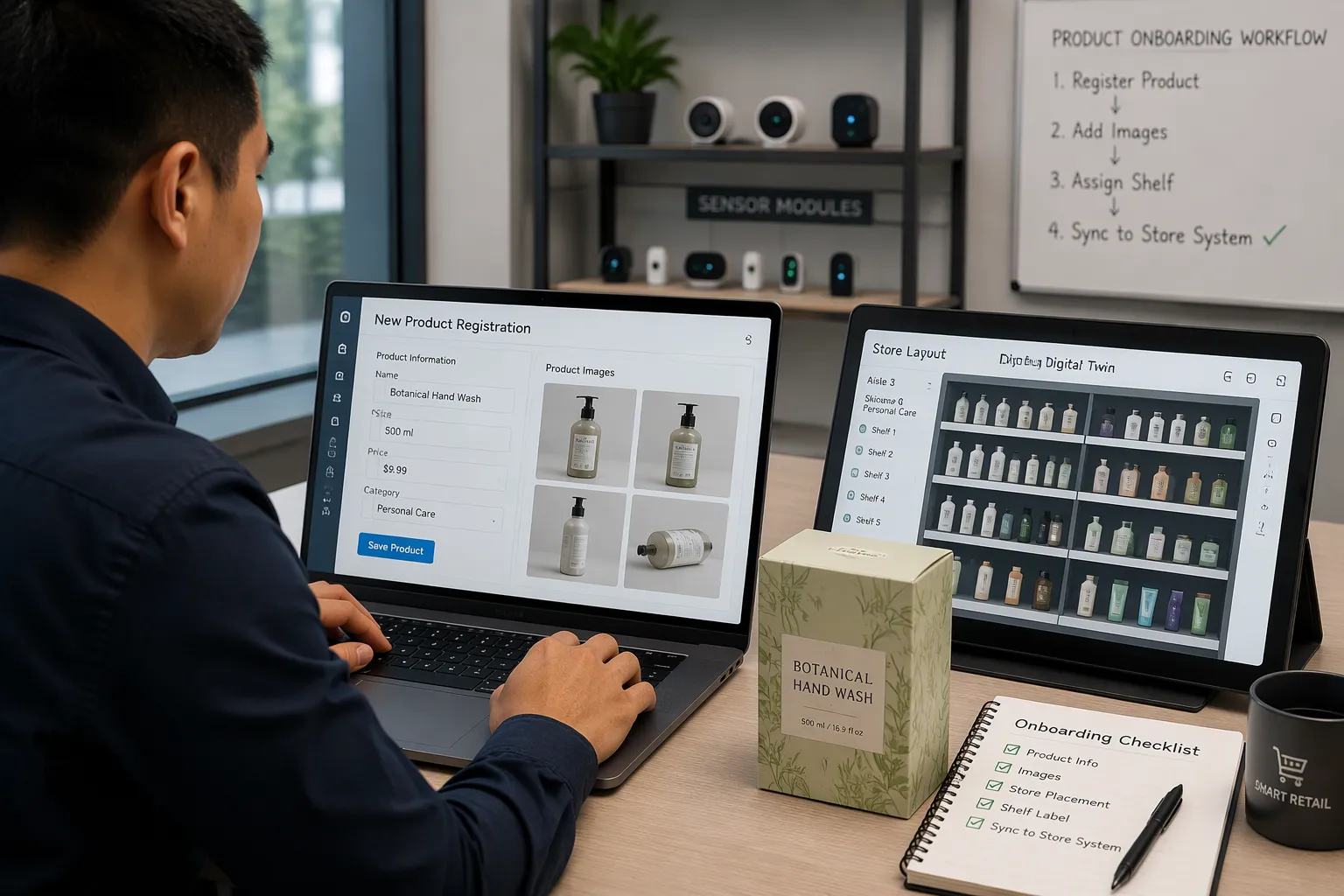
Cloudpick builds its cashierless format around two connected tools. The AI-Powered Unmanned Store runs the shopping experience. The Smart Store Management System gives you remote control over inventory, shelves, and sensors. Together they turn product onboarding into one workflow. You register the item, and the vision models update in the same pass. The product becomes purchasable and recognizable at the same time. That connection matters for New Products Added across every format, from the Computer Vision Coolbinet to the Moby Mart.
Registration in the Inventory System
You start in the Smart Store Management System. You enter the product name, size, price, and category. Then you upload images of the item from several angles. Those images teach the system what the product looks like on a shelf. A computer vision model is simply software that learns to identify objects from pictures. The more angles you provide, the better it learns.
Cloudpick's multi-dimensional sensor technology and digital twin reconstruction support this step. A digital twin is a software copy of the physical store. It mirrors shelf layouts, sensor positions, and product locations. You register a product once, and the digital twin places it in the right spot in the virtual store. The same record then applies to a Coolbinet in a transit hub or a Moby Mart deployed outdoors. You do not rebuild the setup for each format.
Updating the Vision Models
Registration feeds directly into model training. Cloudpick updates its vision models with your new images and sample data. The system then cross-checks identification with several signals. Weight sensors, vision, and related inputs work together to confirm what a shopper picked up. One signal alone can miss; the combination is far more reliable.
This is where the connected workflow pays off. You do not file a separate request to retrain the AI. The platform links the database record to the model update automatically. Your item moves from "in the system" to "recognized on camera" without a handoff between teams.
Other cashierless systems take different routes. Some rely on RFID tags, which suit high-value goods and bulk inventory tracking. Others use barcode scanning, which fits packaged products with clear labels. Each approach has a natural home. Cloudpick's vision-plus-sensor method fits stores where shoppers grab items freely and expect no scan at all.
The result is a single pass for New Products Added. You register, the models learn, and the item is ready for the shelf. The next step is physical placement and sensor calibration.
Registering Product Details and Images
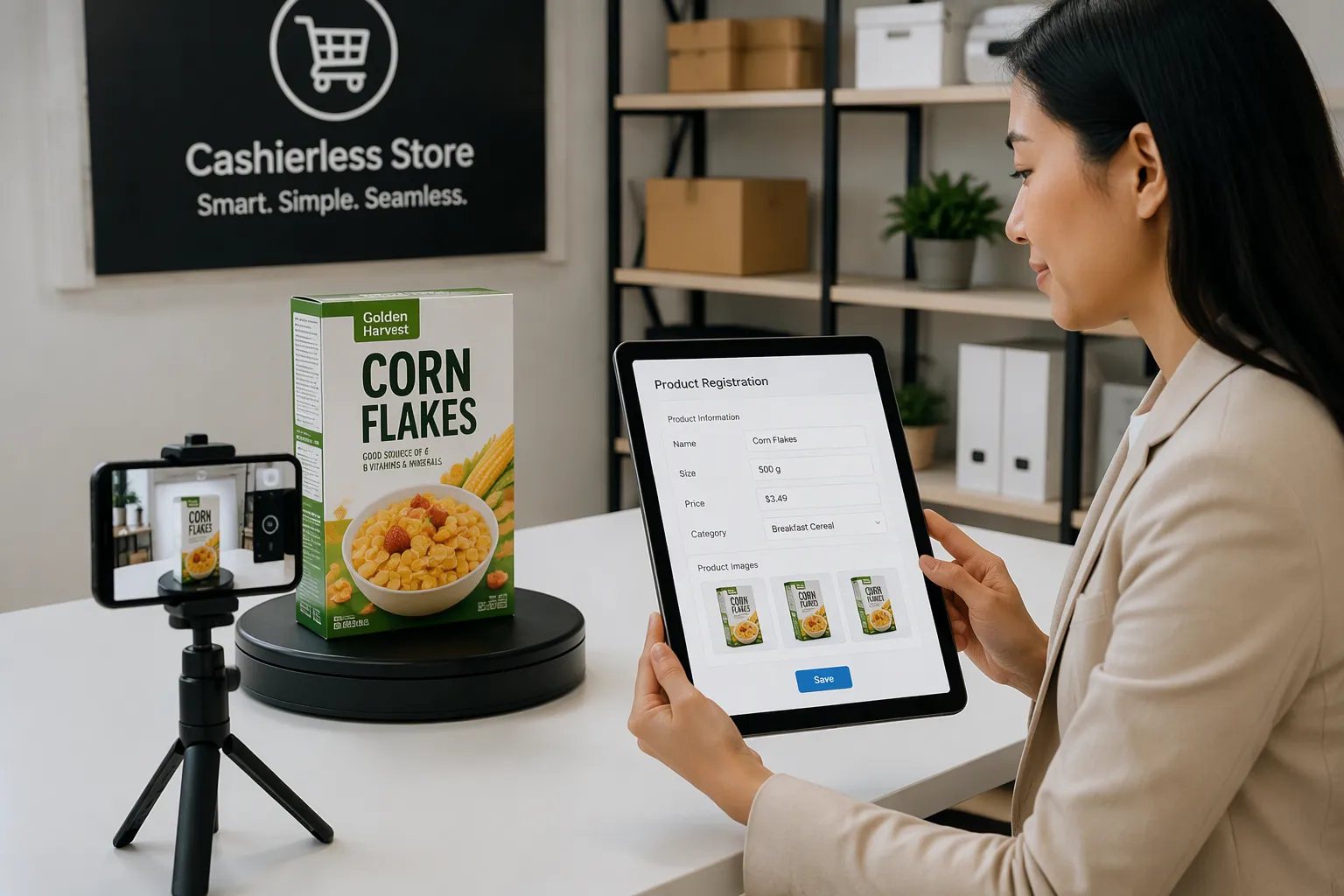
Entering Product Data
Registration starts with the product data itself. You open the Smart Store Management System and type in the item's name, size, price, and category. These four fields are the base of every record. The name tells staff and shoppers what the item is. The size helps the system judge how much shelf space the product needs. The price sets up automatic billing at checkout. The category groups the item with similar products for reporting and search.
Next, you take pictures of the product from many angles. One photo leaves blind spots. Several angles show the front, sides, top, and base, so the vision model learns the item's full shape. You also photograph the packaging the way a shopper would see it on the shelf. Clear, bright images give the model the best chance to recognize the product later.
Cloudpick's platform takes these images right in the same workflow. You do not send files to a separate team or tool. The record and the images move together from the start.
Building the Database Record
The system then builds a database record for the product. This record holds more than the basic fields. It links the item to its shelf location and to a sensor profile. The shelf location tells the digital twin where the product sits in the virtual store. The sensor profile describes which weight sensors and IoT devices watch that spot. A digital twin is a software copy of the physical store, and it keeps every product mapped to its real position.
This link matters at pickup. When a shopper lifts the item, the weight sensor notices a change. The vision model confirms the object. The database record ties both signals to one product, so the virtual cart updates the right way.
Cloudpick's consumer data adds another layer over time. Purchase patterns show which products sell together and which shelves draw attention. You can use that insight to adjust layout and product mix. A slow-moving item might move to a busier spot. A popular pairing might sit side by side. The record you build at registration becomes a building block for those decisions.
The database record also keeps the product consistent across formats. A Coolbinet in a transit hub and a Moby Mart outdoors both use the same record. You register once, and the item carries its data, images, shelf link, and sensor profile into every deployment.
Training the AI to Recognize the Item
Updating Computer Vision Models
After your images and sample data reach the system, Cloudpick sends them into its computer vision models. The model looks at each new angle and learns what your product looks like. It checks shape, color, and packaging details against what it already knows. Training happens in the same platform where you registered the item, so no separate request or handoff slows you down.
Cloudpick combines vision with multi-dimensional sensors to confirm each identification. Weight sensors measure how much mass leaves the shelf. Vision tracks which object moved. Related signals add context. The system blends these inputs into one decision, so one weak signal never decides the sale alone. This blending is the heart of Cloudpick's approach across the AI-Powered Unmanned Store, the Computer Vision Coolbinet, and the Moby Mart.
Other cashierless systems take different routes. RFID tags suit high-value goods and bulk inventory tracking, where a tag on every unit pays off. Barcode scanning fits packaged products with clear, flat labels. Each method has a natural home. Cloudpick's vision-plus-sensor blending fits stores where shoppers grab items freely and expect no scan at all.
Checking Recognition Accuracy
Validation comes next. Cloudpick tests the updated model against your new images and sample pickup data. The system checks whether it identifies the item correctly from every captured angle and under different lighting. You review the results before the product goes live.
Watch for weak spots during this check. A shiny wrapper can reflect light and confuse the camera. A product that looks like a neighbor on the shelf can cause a mismatch. Add more sample images when you spot either issue, and retrain. Cloudpick's platform makes each round fast, because the record, the images, and the model stay linked in one place.
A product that passes validation is ready for the shelf. The next step covers physical placement and sensor calibration.
Placing the Product and Calibrating Sensors
Shelf Placement and Planograms
Physical placement comes next. You put the product on its assigned shelf spot, following the planogram. A planogram is a map of where each product sits on the shelf. You update that map in the Smart Store Management System, and the digital twin shows the new position right away. The virtual store and the real shelf stay in sync.
Placement choices affect recognition. Give the item enough visible shelf space, so the camera sees its full face. Keep look-alike products apart, and the vision model has an easier job. A clear spot also helps shoppers find the item fast.
Sensor and Weight Calibration
Each shelf spot has a sensor profile. Weight sensors watch the mass on the shelf. When a shopper lifts the item, the sensor notices the change. IoT devices report shelf status and confirm the pickup. You calibrate these sensors against the product's known weight, so the system links the mass change to the right item.
Cloudpick's multi-dimensional approach blends weight, vision, and related signals into one decision. No single signal decides the sale alone. This blending keeps recognition reliable across the AI-Powered Unmanned Store, the Computer Vision Coolbinet, and the Moby Mart.
After placement, the Smart Store Management System lets you monitor shelf and sensor status remotely. You can check sensor health and shelf conditions from anywhere, without visiting the store. A sensor that drifts out of calibration shows up in the dashboard, and you fix it before it affects a sale. This remote view keeps every deployment running smoothly, whether the store sits in a transit hub or an outdoor venue.
Testing New Products Added to the Shelf
Live Store Testing
You now run a live test in the real store. Pick up the new item the way a shopper would. Watch the virtual cart on the app. The cart should show the correct product and price within moments. Then walk to the exit and confirm the automatic charge. Cashierless stores bill through the app or a linked card, so the exit gate and the payment step must both work.
Repeat the test several times. Try different angles of pickup and different times of day. Ask a colleague to grab the item while you watch the cart. This catches problems that a single test misses. Cloudpick's integrated platform keeps this step fast, because the record, the model, and the sensor profile all live in one system.
Confirming Checkout Accuracy
Checkout accuracy is the final gate. Confirm that the cart total matches the shelf price and that the receipt lists the right item. Then check inventory counts. The system should deduct one unit for each pickup. A mismatch points to a sensor or record issue you can fix before launch.
Cloudpick serves over 100 clients across 30 countries, and its platform supports rapid deployment, often within days. That speed comes from this connected workflow. You test, adjust, and relaunch without switching tools. Once the item passes, it joins the live assortment. The four steps for New Products Added — registration, training, placement, and testing — form one continuous path. Retailers can keep their assortment fresh with little effort, and shoppers enjoy a smooth, scan-free experience.
You now have the full picture. Registration, training, placement, and testing form one continuous workflow for New Products Added, and each step feeds the next without a handoff. Cloudpick's integrated platform keeps that path short. You register once, the models learn, and the shelf goes live — often within days, as the company's work with over 100 clients across 30 countries shows. That simplicity changes how you plan your assortment. You can rotate seasonal items, test a new brand, or swap a slow seller without rebuilding your store setup. Keeping your shelves fresh becomes a routine task, not a project.
FAQ
How long does it take to add a new product?
Cloudpick's connected workflow keeps onboarding short. You register the item, the vision models update, and you calibrate the shelf in one platform. Cloudpick supports rapid deployment, often within days. A single item usually moves faster than a full store launch.
Do I register a product separately for each store format?
No. You register once in the Smart Store Management System. The digital twin then maps the item to every deployment, from a Computer Vision Coolbinet to a Moby Mart. One record carries the data, images, and sensor profile across all your locations.
What happens if the system misidentifies an item?
Add more sample images from the angles that failed, then retrain. Cloudpick blends weight, vision, and related signals, so one weak reading rarely decides a sale. You can also check sensor calibration remotely in the Smart Store Management System before you relaunch.
Do I need RFID tags or barcodes?
Not with Cloudpick's approach. Vision plus multi-dimensional sensors identifies items as shoppers grab them, with no scan required. RFID suits high-value goods and bulk tracking. Barcodes fit flat, clearly labeled packaging. Each method has a natural home.
Who monitors sensors after a product goes live?
You do, from anywhere. Cloudpick's Smart Store Management System shows shelf and sensor status remotely. A sensor that drifts out of calibration appears in the dashboard. You fix it before it affects a sale, without visiting the store.
See Also
Discover How Cloudpick Delivers Cashierless Shopping Convenience To Your Store
Walmart Self-Checkout Access Updates: What Changes Are Coming In 2025
Micromarkets Versus Smart Stores: How Automated Convenience Retail Operates Globally
Examining Walgreens Self-Checkout: Retail Convenience And Challenges Explored
How Smart Technology Is Revolutionizing Retail Through Electronics Vending Machines
