Your Store How to Prevent Shrinkage with Computer Vision

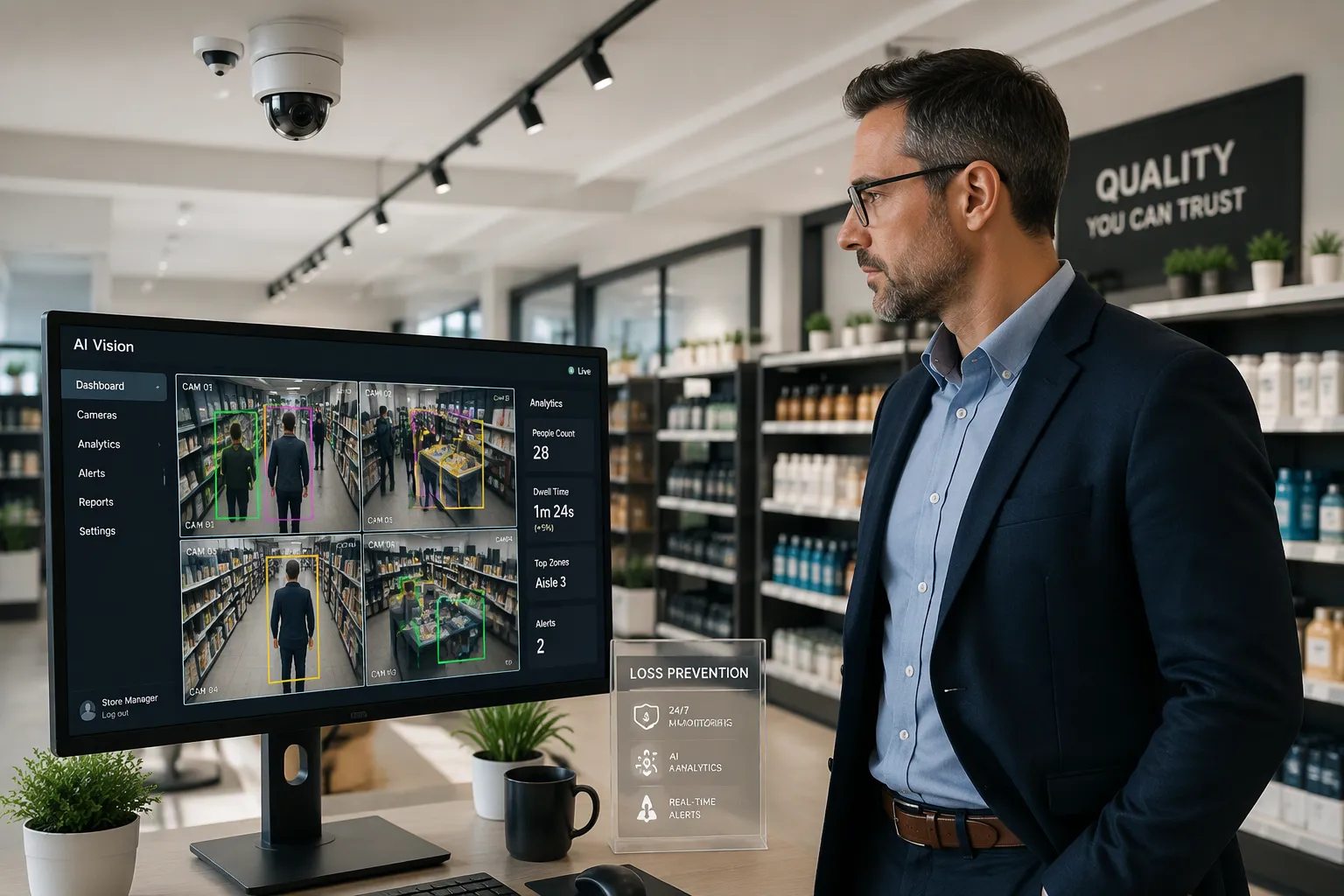
Computer vision helps stop shrinkage by turning the cameras you already have into a system that watches all the time. It spots theft, fraud, and process mistakes right away, so you can act before the loss grows.
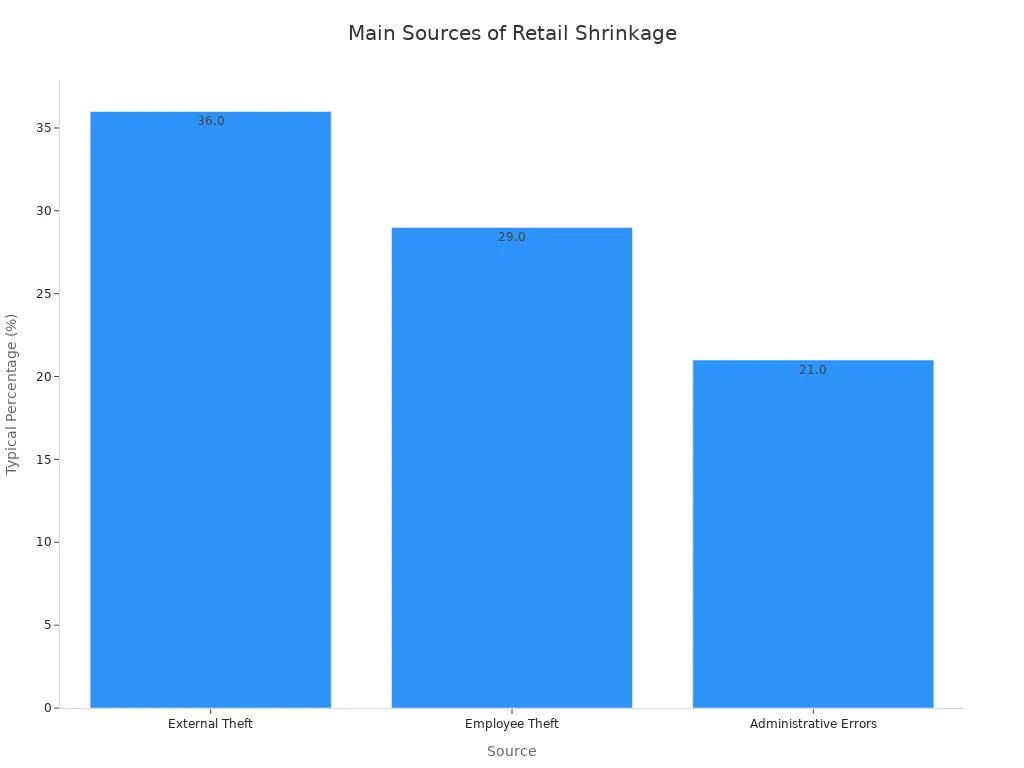
Three sources cause most retail loss. The National Retail Federation reports external theft at about 36%, employee theft at about 29%, and administrative errors at about 21%.
Source | Typical Percentage |
|---|---|
External Theft (Shoplifting & ORC) | ~36% |
Employee Theft (Internal Fraud) | ~29% |
Administrative Errors (Miscounts & data entry) | ~21% |
This guide gives you 10 practical tips on cost, integration, performance, compliance, and solution fit. Cloudpick uses AI-powered computer vision in 200+ stores across 13 countries, and its smart store management system shows how these tips work in real life. You will also see how to prevent shrinkage with computer vision – scenario 12 in a later section.
Key Takeaways
Find your biggest loss spots and put a dollar amount on each one.
Set clear goals for shrink rate and alert response time.
Use AI to watch cameras and alert staff right away.
Link sales data to video to catch fraud at checkout.
Train employees and protect customer privacy to make the system work.
Assess Shrinkage Sources
Map Loss Hotspots
Begin on the sales floor. Walk each department at different times and note where items sit out in the open, where you can't see well, and where customers gather with no staff nearby. Then check incident logs for places and times that repeat. End with short staff talks, because workers often know which aisles and shifts lose stock. These three inputs give you a real picture of loss.
Focusing on the highest-loss areas first gives you the best early ROI. A camera or alert rule aimed at your worst hotspot brings back value fast, and that early win pays for the next phase. Spreading a small budget evenly across the whole store weakens the impact.
Make a simple loss map by department and shift before you buy any technology. List each zone, the loss type you think is happening, and the shifts where it peaks. Cloudpick's smart store management system can bring this data together once sensors and cameras are running, giving you one view of where loss builds up.
Quantify Each Source
Put a dollar amount on every hotspot on your map. Pull inventory counts, POS voids and refunds, and known incident values. Keep external theft, internal theft, and process error apart, because each one needs a different fix. A miscount problem will not respond to a theft alert.
Quantification turns opinions into priorities. You can rank hotspots by yearly loss and back up each purchase with a number. It also sets your baseline, so later results can be measured instead of just talked about.
Keep the method simple. Estimate on the low side where records are thin, and mark those figures as estimates. A rough, honest number beats a precise guess, and you can improve it after the first review cycle.
Set Measurable Goals
Define Success Metrics
Choose a few key numbers you can check every week. Shrink rate percentage is the most important one. The National Retail Federation says the average shrinkage rate was 1.6% in 2023, so you have a benchmark to compare with. Figure out your own rate using a simple formula.
Shrinkage percentage = (value of lost stock / total sales in the same period) x 100, per Toucan Toco.
Add two more numbers about daily operations. Alert response time shows how quickly staff act when an event is flagged. Case resolution rate tracks how many alerts end with a confirmed finding. Together, these three numbers show if the system really works, not just if it is running.
Align Goals to Priorities
Set goals that fit your store's size and setup. A single store can aim for a tight shrink target and a fast response time, since one manager runs the whole floor. A chain with many locations needs targets for each store plus a chain-wide average, so one weak store cannot hide inside a good total.
Connect each goal to a loss source. Statista notes that shrinkage comes from internal and external theft, process mistakes, and systemic errors. A theft hotspot deserves an alert response goal. A miscount problem deserves an inventory accuracy goal.
Cloudpick's smart store management system helps with this work at scale. It offers remote store control and one view across locations, so you can set targets for each site and compare results in one place. Cloudpick has used this system in 200+ stores across 13 countries, which shows the approach works beyond a single pilot site.
Write down every goal with an owner and a review date. Clear targets turn your loss map into a scorecard, and the scorecard guides every choice that follows.
Choose the Right Cameras
Resolution and Coverage
Begin with picture quality. Pick cameras that record 1080p HD or better, so faces and small items stay sharp, per IS3 Tech. Wide dynamic range handles bright and shaded spots in one view, and low light performance keeps recording at night. Add motion detection, tamper detection, and remote access, since a blocked or moved camera must send an alert right away.
Coverage counts more than the number of cameras. IS3 Tech notes that analytics give wider, smarter coverage with fewer cameras, and video search speeds up reviews. Cloudpick builds this into its computer vision smart coolers, which work as mini AI unmanned stores for purchases within the last 10 meters. Each unit has sensors and cameras, so you get shelf coverage without wiring a whole aisle.
Placement and Cost
Put cameras where loss happens most. The Loss Prevention Research Council reports a 37% drop in crime in parking lots and vehicle staging areas, and lists entry doors, cash wraps, and high-value displays as next in line. Internal fraud makes up 29% to 35% of shrinkage, according to OpenEye, so areas facing employees need coverage too.
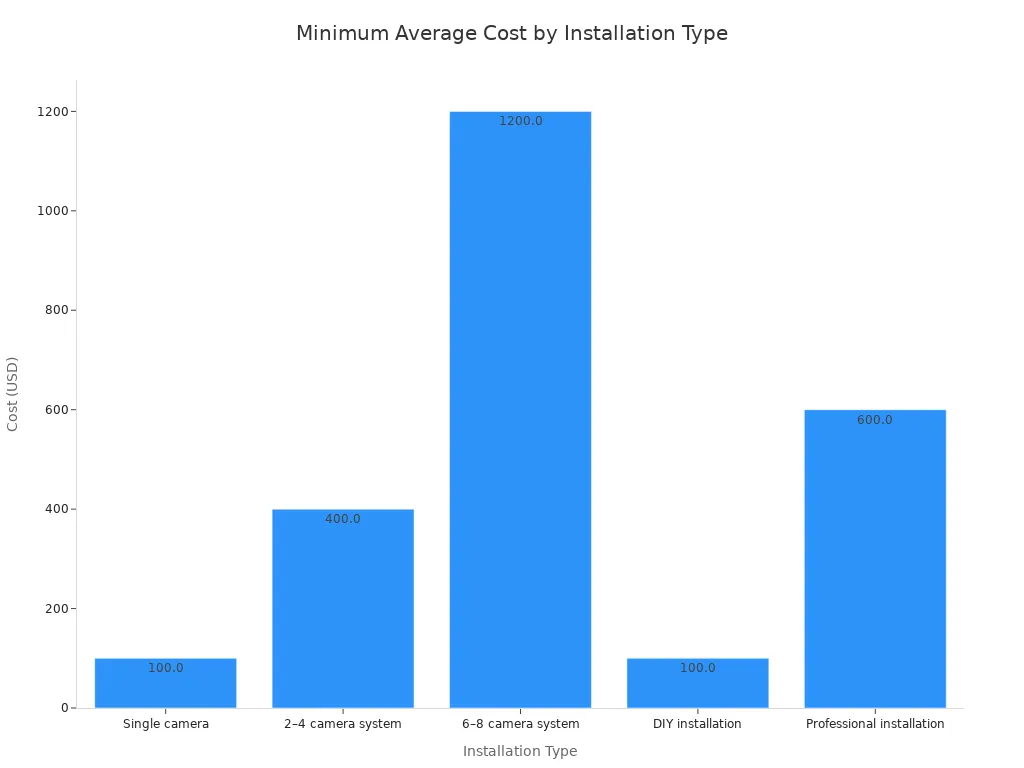
Plan your budget with real numbers. Geeks On Site lists single camera installation at $100 to $400 and a 6–8 camera system at $1,200 to $4,000.
Installation Type | Average Cost (2025) |
|---|---|
Single camera installation | $100 – $400 |
2–4 camera system | $400 – $1,500 |
6–8 camera system | $1,200 – $4,000 |
DIY installation (equipment only) | $100 – $1,000 |
Professional installation | $600 – $2,500+ |
Reuse cameras you already have if they still meet these standards. That cuts upfront cost and speeds up setup. Cloudpick's smart store management system then links new and old devices into one remote view, which keeps your spending on your worst hotspots.
Leverage AI Analytics
Detection vs. Recording
A recording system saves video so you can look at it later. An AI analytics layer watches every feed at the same time and acts right away. Scylla reports that computer vision and behavioral analytics can watch many areas at once. They can also tell normal customer activity apart from possible theft. Staff then respond to a flagged event instead of scrubbing through hours of video.
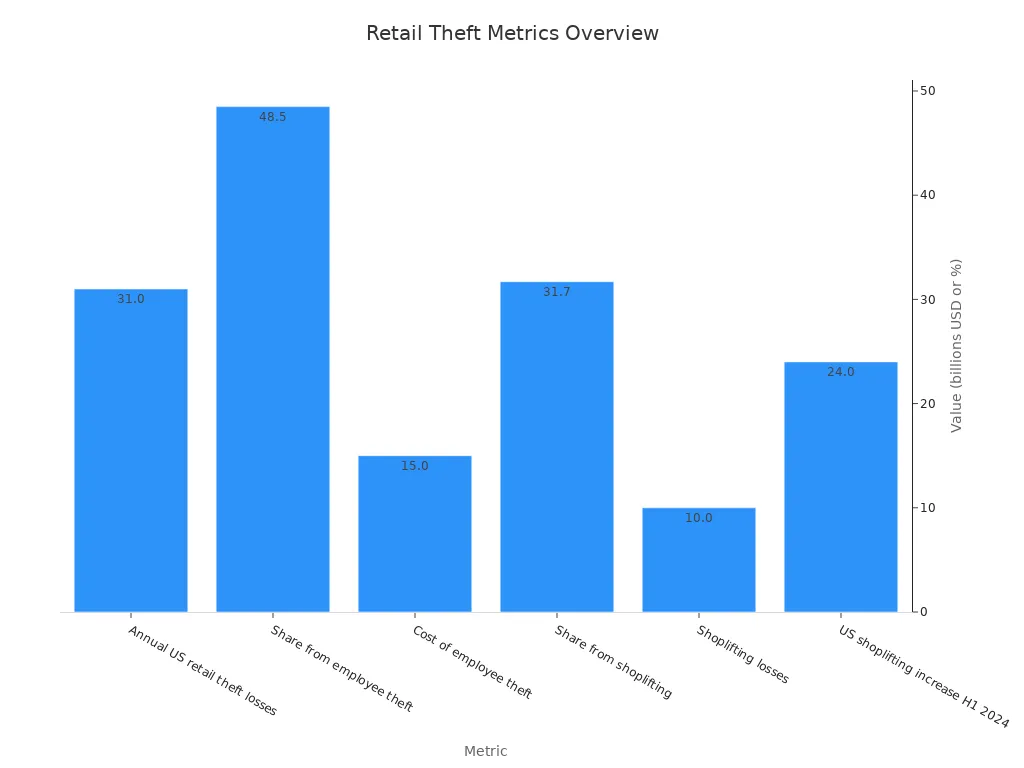
The payoff is real. Retailers using AI detection systems can cut shrink in half and boost profits by 33%, according to LinkedIn's retail content hub. Scylla also reports that yearly US retail theft losses top $31 billion a year, with employee theft at more than 48.5 percent of losses. Those figures explain why detection beats passive recording.
Cloudpick puts this detection layer to work in its smart store management system. The platform combines multi-dimensional sensors with computer vision to rebuild the store digitally. This way you see events as they happen and control stores remotely. Cloudpick has deployed 200+ smart stores in 13 countries, which gives you a proven path rather than an untested pilot.
Accuracy and Fit
Accuracy depends on the data behind the model. Teams should expect dataset balancing and fine-tuning models such as EfficientNet or ResNet. They should also try SWIN over ViT when datasets are small. Feature pyramid networks help detect small items on crowded shelves, and conditional augmentation stretches limited training data. Model pruning then makes models faster and smaller for edge devices.
Plan for the challenges Agrexai and Tblocks list: privacy compliance, large video data volumes, complex setup, and false alarms. Cloudpick's computer vision smart coolers show how to fit the technology to a real use case. Each unit works as a mini AI unmanned store for purchases within the last 10 meters, with sensors and cameras built in.
Integrate with POS
Link Transactions to Video
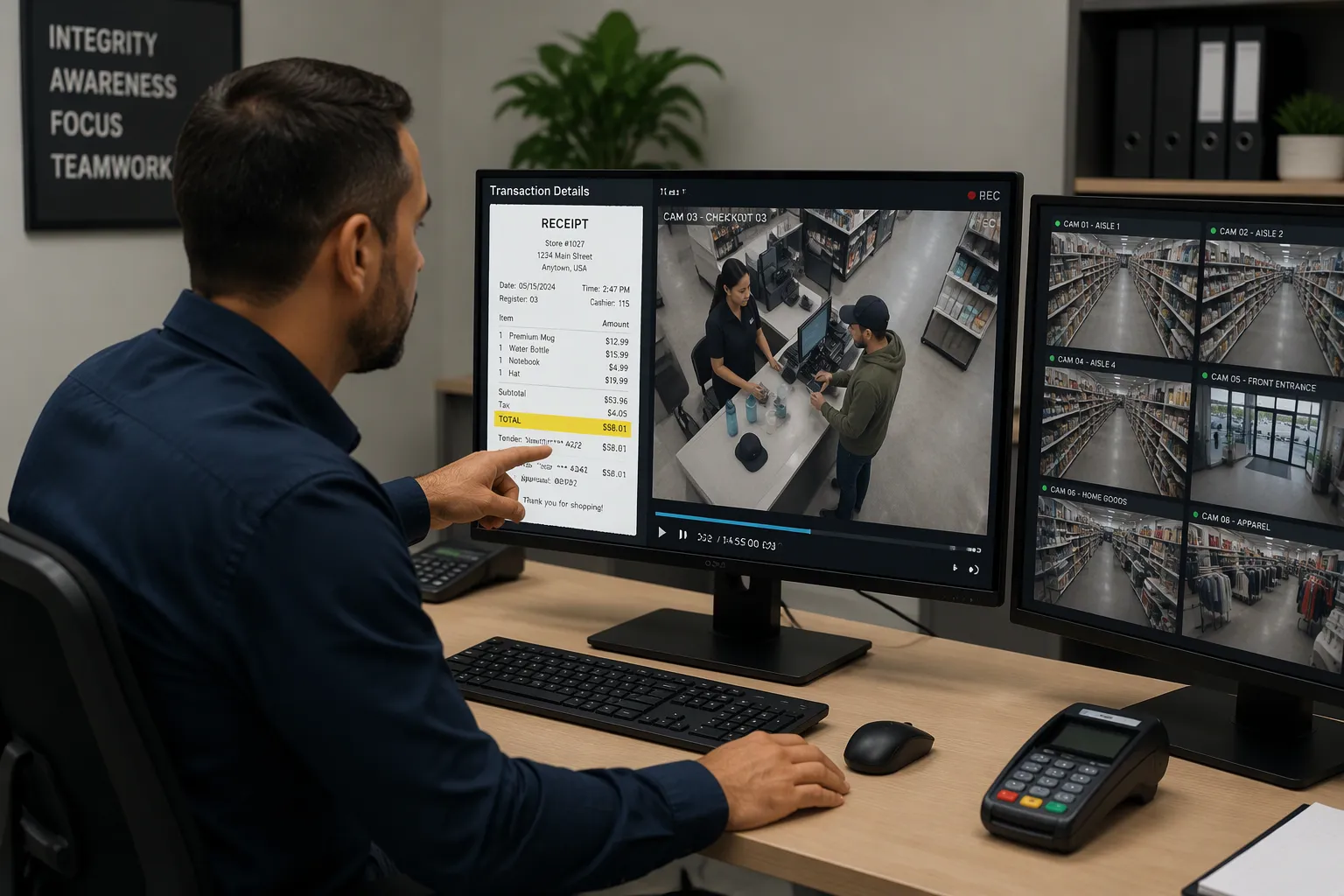
A POS integration matches each transaction event with the right video clip. The system takes in scans, voids, no-sales, and returns in real time. It time-stamps each event and links it to the overhead camera feed. Analysts can then click a line item on a digital receipt and watch that item get scanned, or not scanned, right away. Spot.ai reports that this workflow lets loss prevention teams audit hundreds of exceptions in minutes instead of hours.
The pairing cuts false positives and speeds up investigations. Spot.ai documents cash shrink falling from roughly 6% to 1%, an 83% reduction, and merchandise shrink dropping from 10–15% to 6%. Resolution time fell from hours to minutes, and many retailers see full ROI within 12 to 18 months through shrink reduction alone. The same source flags sweethearting, self-checkout missed scans, and fraudulent returns, noting CBS News data that as many as one in nine returns are fraudulent. At a fashion retailer cited by icape.io, the team moved from sampled checks at five stores each month to focused checks at 45 stores, with full deployment across 130 stores planned by the end of 2026.
Cloudpick builds this link into its smart store management system. The platform connects POS transactions to multi-dimensional sensor and camera data, so you see each sale, void, and refund against its video record. Remote store control lets you review flagged events across locations from one screen. Cloudpick has deployed 200+ smart stores in 13 countries, which shows the integration holds up beyond a single site.
Plan Integration Scope
Compare integration options on four points: technical performance, application fit, regulatory compliance, and cost. A camera-agnostic platform that uses your existing IP cameras lowers total cost of ownership, per Spot.ai. Match the scope to your loss map, and start with the checkout lanes and service desks where transaction fraud concentrates.
Cloudpick fits stores that want one system for transactions, sensors, and remote control. Its computer vision smart coolers extend the same logic to shelf-level purchases within the last 10 meters. Confirm data retention limits and access controls before you connect systems, then pilot one high-loss zone and expand from there.
Enable Real-Time Alerts
Configure Actionable Alerts
Set a limit for each rule you turn on. A limit defines the exact event that should trigger a notification. Examples include a void after a scan, a no-sale at the register, or movement in a stockroom after closing. Write each rule with a clear trigger and a named owner. Then send the alert to the right staff role. The floor lead gets shelf events, and the manager gets refund exceptions. Cloudpick's smart store management system supports this routing across locations. Its remote store control lets you adjust rules from one screen.
A fast response stops theft and catches errors before loss grows. A cashier who knows a void triggers a review stops the practice early. A mislabeled shelf gets fixed the same shift instead of drifting for weeks. Cloudpick has deployed this model in 200+ smart stores across 13 countries. This shows the workflow holds up at scale.
Avoid Alert Fatigue
Too many alerts teach your team to ignore them. Amarok recommends several practical controls for reducing alert fatigue in surveillance systems:
Pair cameras with remote and mobile monitoring, so staff check threats in real time and false alarms drop.
Add alarm-based lighting that turns on only when a zone triggers, which cuts constant monitoring.
Run regular system maintenance to find and fix the faults that cause false alarms.
Train personnel on managing alerts and spotting genuine threats, which improves response times.
Consider professional monitoring services to absorb alert volume and free your internal team.
Tune limits monthly using your case resolution data. Raise a rule that keeps firing without a confirmed finding, and lower one that misses real events. Cloudpick's smart store management system gives you the event history to make these adjustments with evidence rather than guesswork.
Train Your Employees
Build Role-Based Training
Keep each session short and focused on one job. A cashier needs to know what a void alert looks like and who to call. A floor lead needs the shelf-event queue and the steps for a confirmed find. A manager needs the refund exception review and the weekly report. Run these sessions in small blocks during slow hours, and write the escalation steps on one card per role. Cloudpick's smart store management system supports this split, because remote store control lets each role see only the events that belong to them.
Clear escalation steps matter as much as the alert itself. Name the first responder, the backup, and the point where a case goes to the manager. Test the chain with a practice event, so staff act from memory instead of hunting for a policy. Cloudpick deploys this model in 200+ smart stores across 13 countries, which shows a role-based path works beyond one pilot site.
Reinforce Adoption
Buy-in decides whether the system gets used or ignored. Staff who helped shape the rollout treat alerts as their tool, not a watchdog over their work. The Gallup American Job Quality Study finds that involving employees in new technology adoption can strengthen job satisfaction for the benefit of both workers and employers. Gallup also suggests several ways to build that voice:
Set up feedback channels such as pulse surveys and employee groups.
Link employee input to real decisions.
Put frontline workers on planning teams when new tools arrive.
Add periodic refreshers every quarter, and review alert data with the team. Cloudpick's smart store management system gives you the event history for these reviews, so feedback rests on evidence. Staff then see their own suggestions change the rules, and adoption holds.
Stay Privacy Compliant
Know Applicable Rules
Privacy law decides what your cameras can record. Ogletree says the Federal Wiretap Act covers audio recording, not video-only recording. Eleven states, like California, Florida, Illinois, and Washington, need everyone's consent to record audio. Other states allow one-party consent. Video without audio is usually fine in retail spaces, but bathrooms and dressing rooms are not allowed.
Facial recognition makes the rules stricter. California, Illinois, Texas, and Washington limit biometric data collection without notice and consent. In 2024, the Federal Trade Commission settled a case against a pharmacy retailer, and the court blocked that retailer from using facial recognition for security for five years. Put up signs, add onboarding paperwork, and update employee handbooks to disclose recording and any facial recognition use.
Build Privacy In
Build privacy into the system from the start. Novacloud suggests following GDPR, CCPA, and internal data-handling policies, and writing clear rules for retention, privacy, and compliance. Privacy-preserving computer vision can track shelf conditions without facial recognition. Non-biometric tracking keeps checkout smooth while limiting personal data.
Cloudpick builds its smart store management system on this principle. The platform combines multi-dimensional sensors with computer vision to rebuild the store digitally, so you monitor stock and events without using biometric identification. Remote store control and the computer vision smart coolers bring the same approach to shelf-level purchases within the last 10 meters. Cloudpick has deployed 200+ smart stores in 13 countries, which shows the privacy-first model works at scale.
Compare compliance approaches on four points: technical performance, application fit, regulatory compliance, and cost. Confirm retention limits and access controls before you connect systems, then pilot one zone.
Run a Cost-Benefit Analysis
Total Cost of Ownership
Price the whole system, not just the first bill. Abbacus Technologies lists the full cost of ownership as development, cameras, edge hardware, cloud computing, video storage, networking, integration maintenance, model retraining, data labeling, support, monitoring, security, employee training, and hardware replacement. A five-year financial model gives you a much more realistic picture than a one-year quote.
Cameras and edge hardware
Cloud computing and video storage
Networking and integration maintenance
Model retraining and data labeling
Support, monitoring, and security
Employee training and hardware replacement
Cloudpick lowers several of these costs at once. Its smart store management system runs multi-dimensional sensors and computer vision on one platform, so you don't pay for separate analytics, storage, and control tools. Remote store control also cuts the travel and site visits that quietly raise support costs. Cloudpick has deployed 200+ smart stores in 13 countries, which gives you a tested cost structure to model against.
Measure Return
Measure return against your own shrink baseline, as Nexora Automation puts it. Techprixo lays out a simple three-step method. First, add your yearly benefits: recovered margin, labor savings, and shrink savings. Second, subtract yearly running costs such as software fees, support, connectivity, and the labor to act on alerts. Third, compare the net yearly gain with your upfront cost. Payback in months = upfront cost ÷ (net yearly gain ÷ 12).
Track the inputs that feed this math. Techprixo names out-of-stock rate, sales in covered categories, gross margin, manual audit hours, shrink as a share of sales, and time to restock. For loss prevention, the main measure stays simple: shrink as a percent of sales.
Cloudpick supports this review with one dashboard across locations. Its remote store control lets you compare stores and move budget to the sites that return the most. Watch the traps Techprixo flags: detection is not recovery, ignored alerts bring no benefit, and false alerts wear down trust.
Commit to Continuous Improvement
Review and Tune
Treat your first configuration as a starting point, not a final answer. Pull the event history every month and compare it with confirmed cases. Raise a rule that fires often but rarely ends in a real finding. Lower a rule that misses events your team catches by hand. Retune the detection model on the same cycle, using fresh footage from your own aisles and shelves.
Cloudpick's smart store management system gives you the data for this work in one place. Its remote store control lets you adjust rules across locations from a single screen, so a fix in one store reaches the rest without a site visit. Cloudpick has deployed 200+ smart stores in 13 countries, which means the tuning workflow has already run at scale.
Scale What Works
Prove the system in one high-loss area before you spend on the next. Spot.ai lays out a phased path you can follow. The table below shows the sequence.
Phase | Timeline | Focus |
|---|---|---|
1. Baseline | Days 1 to 60 | Measure shrink by store, category, and cause; audit camera coverage and guard spend |
2. Pilot | Days 60 to 120 | Connect video AI and POS data at 5 to 10 representative stores, not the flagship |
3. Optimize | Days 120 to 150 | Tighten alert thresholds; measure shrink and ROI per store against the baseline |
4. Scale | Days 150 to 180 | Present results to leadership and roll out in quarterly waves |
Agilence notes that cloud-based solutions let loss prevention teams monitor data across all locations and uncover the root cause of shrink. Spot.ai adds that a camera-agnostic platform using ONVIF and RTSP works with existing cameras, deploys in under a week, and scales across locations without new headcount.
Cloudpick fits this expansion model well. Its smart store management system runs sensors and computer vision on one platform, and remote store control extends coverage to each new site from the same dashboard. Start with your worst hotspot, document the result, and add the next location on evidence rather than hope.
How to Prevent Shrinkage with Computer Vision – Scenario 12
Apply the 10 Tips in Sequence
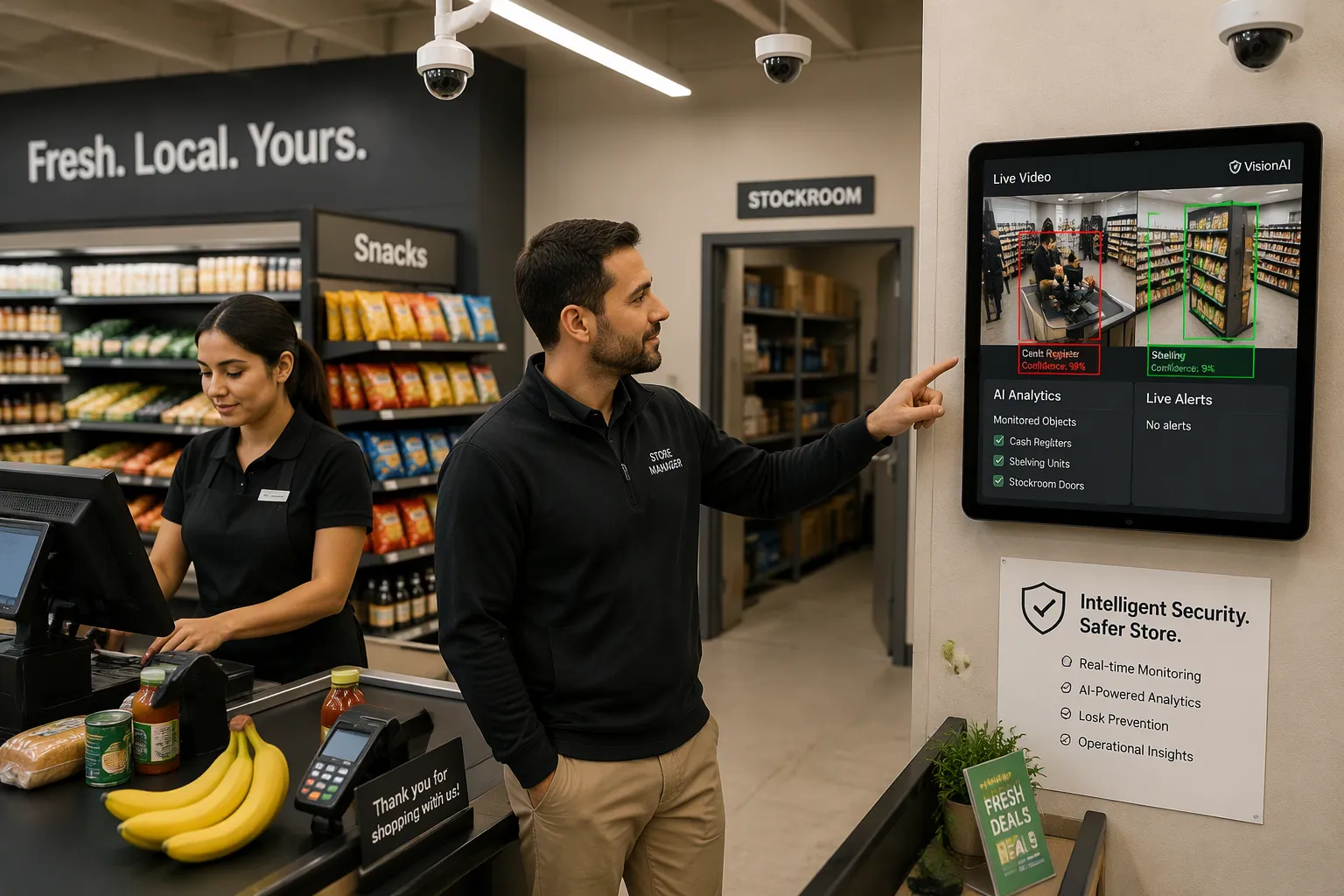
Imagine a grocery store losing a lot of money at one checkout lane and in the back stockroom. The owner wants to know how to prevent shrinkage with computer vision – scenario 12 shows the whole order of steps in action.
Map the two hotspots and put a dollar amount on each loss source.
Set a shrink rate target and a goal for how fast alerts get answered.
Reuse the cameras you already have and add coverage at the lane and stockroom door.
Add AI analytics on top of plain recording.
Link POS voids and refunds to video.
Send alerts to the shift lead and the manager.
Train each role in short sessions.
Add signs and set limits on how long video is kept.
Compare total cost with the margin you get back.
Review every month and expand to the next hotspot.
Cloudpick's smart store management system handles steps four through six on one platform. Its remote store control lets the owner adjust rules across sites from a single screen. Cloudpick has deployed 200+ smart stores in 13 countries, so this path is proven. That is how to prevent shrinkage with computer vision – scenario 12 goes from a map to a result you can measure.
Avoid Common Pitfalls
Privacy is the first trap. BizTech Magazine reports that retailers must build privacy controls into system design from day one, with video anonymization, strict retention windows, and role-based access. Treat compliance as a basic building block, not legal overhead.
Relia Software lists other pitfalls you should plan for:
Lighting, reflections, and blocked shelves limit what you can see, and one camera angle often falls short.
Older POS and inventory systems are hard to connect, and mismatched data creates confusion.
Video volumes grow fast and put a strain on storage.
Cloudpick addresses these points through multi-dimensional sensors and computer vision on one platform. Its computer vision smart coolers cover shelf-level purchases within the last 10 meters. Teams that follow how to prevent shrinkage with computer vision – scenario 12 avoid these traps early. Review your setup every quarter, and the question of how to prevent shrinkage with computer vision – scenario 12 becomes a routine you can repeat.
Follow these ten steps in order:
Map your loss hotspots and quantify each source.
Set shrink rate and alert response goals.
Choose cameras for resolution, coverage, and placement.
Add AI analytics on top of recording.
Link POS transactions to video.
Route real-time alerts to the right role.
Train each role and reinforce adoption.
Build privacy compliance in from day one.
Run a total cost of ownership and return analysis.
Review monthly and scale what works.
Start with assessment and clear goals. Every later choice — cameras, analytics, integration, compliance — then becomes easier and cheaper. Cloudpick's smart store management system carries steps four through six on one platform.
Pick your single worst hotspot this week. Measure it, deploy there, and expand once the numbers prove the gain.
FAQ
How fast can you deploy computer vision in an existing store?
You can often reuse the IP cameras you already have, so setup goes fast. Cloudpick's smart store management system runs sensors and computer vision on one platform. Remote store control lets you change rules across sites from a single screen. Cloudpick has deployed 200+ smart stores in 13 countries, which shows the rollout path works beyond one pilot.
Which shrinkage source should you target first?
Start with the source that costs you the most money. External theft sits near 36%, employee theft near 29%, and administrative errors near 21%, per the National Retail Federation. Your own loss map may rank them differently. Target the top hotspot first, because an early win pays for the next phase.
Does Cloudpick work for a small chain or only large retailers?
Cloudpick fits both. Its smart store management system gives you one dashboard across locations, so a small chain compares stores without extra headcount. The computer vision smart coolers work as mini AI unmanned stores for purchases within the last 10 meters, which suits compact sites. Cloudpick serves 100+ clients across 30 countries.
What should you check before connecting cameras to your POS?
Confirm data retention limits and access controls first. Then match the integration scope to your loss map. Start with checkout lanes and service desks, where transaction fraud concentrates. Cloudpick links POS events to sensor and camera data on one platform, so you review each sale, void, and refund against its video record.
How do you know the system is paying for itself?
Track shrink as a percent of sales against your baseline. The National Retail Federation put the average shrinkage rate at 1.6% in 2023, which gives you a benchmark. Spot.ai reports many retailers reach full ROI within 12 to 18 months through shrink reduction alone. Cloudpick's dashboard lets you compare stores and move budget to the sites that return the most.
See Also
Smart Tech In Electronic Vending Machines Is Transforming Retail Industry
AI-Driven E-Commerce Tools Are Revolutionizing Online Store Management Today
Walmart Self-Checkout Access Changes: What To Expect In 2025
Self-Checkout Cash Errors: Causes And Fixes For Seamless Transactions
Walgreens Self-Checkout: Exploring Convenience And Challenges In Retail
