When Is an Autonomous Micro Store a Better Fit Than Vending Machines?

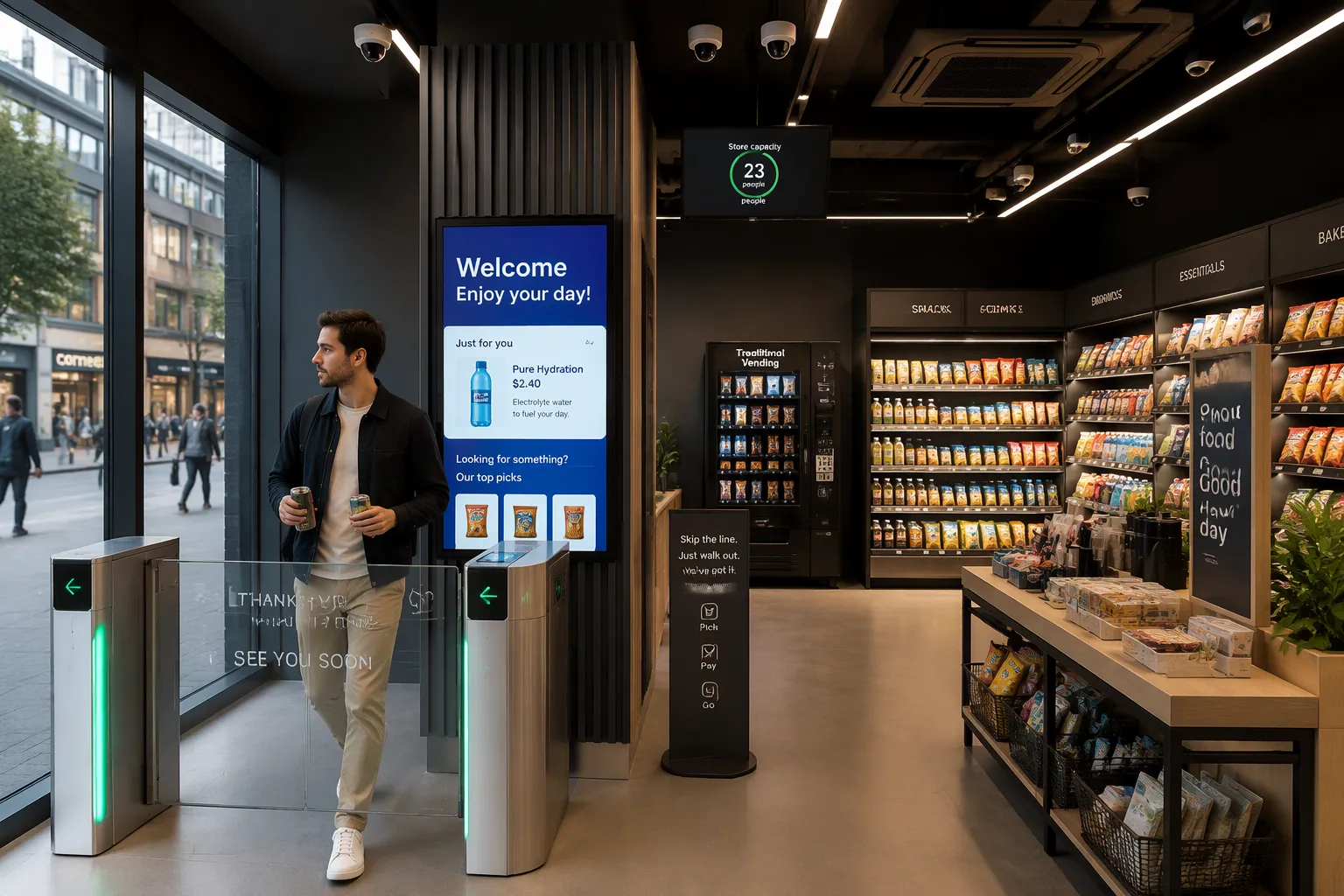
An autonomous micro store works best when your site is a closed-loop space with at least 150–200 people. It also helps if the site needs more products and fresher options, and has room for a small self-checkout kiosk. Compare the two formats on location, foot traffic, product variety, cost, and operational efficiency, and you can match the format to the site with confidence. Vending machines still have their place, so the right answer depends on your specific location, not on one format being better for everyone. cloudpick powers both formats on a single platform, which makes mixed setups practical.
Key Takeaways
Pick an autonomous micro store for busy, closed-loop sites with 150–200+ people that need fresh food.
Choose vending machines for places with few customers, a risk of theft, or little space that only need packaged goods.
Use both formats on one platform like cloudpick to make inventory, payments, and remote monitoring easier.
Begin with a test location, track sales and labor, then grow the format that matches your data.
Pick the right format for each location's special conditions to get the best results.
The Short Answer
Four Conditions for a Micro Store
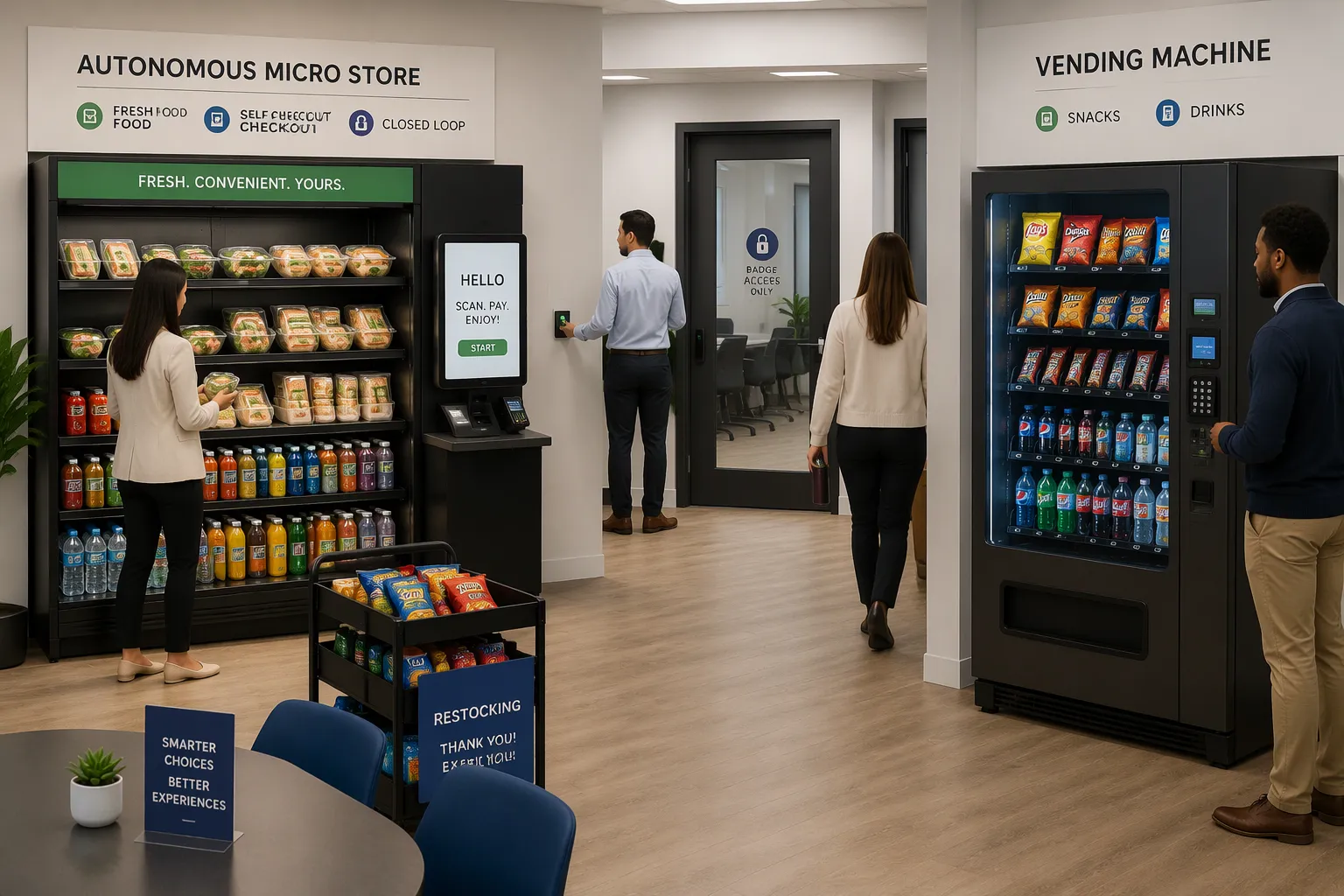
An autonomous micro store fits a specific set of site conditions. First, the site must be a closed-loop environment. The same group of people comes back day after day, such as employees in one building or students on one campus. Check the entrance pattern before you commit. A single badge-controlled door signals a closed loop. Multiple public entrances signal an open site. Second, that group needs at least 150–200 people. Below that headcount, daily sales rarely justify the shelf space and restocking effort. Count the people who pass the space on a normal weekday. Ask whether they stay for a full shift or leave at lunch. Third, the site needs a broader inventory with fresher food and drinks. Sandwiches, salads, and produce spoil on a vending coil, yet they sell well in an open cooler. Fourth, you need room for a compact self-checkout kiosk. A small alcove or a spare wall often works, provided you have power and a network drop. A kiosk needs a clear path for customers and a spot for restocking carts. Meet all four conditions, and autonomous retail works best for your site. cloudpick supplies the checkout, inventory tracking, and remote monitoring behind such a store, so you can open small and grow later.
Three Conditions for Vending
A different set of conditions favors vending. Low traffic is the first. A site with a handful of visitors each day cannot support a micro store. Theft-prone locations are the second. A sealed vending machine protects stock in a way an open shelf cannot. Assess theft risk with a simple walk-through. Ask who uses the space and whether anyone supervises it. A locked cabinet also lowers shrinkage at a site with no staff on duty. Quick passerby spots are the third. A hallway, a transit stop, or a lobby corner serves people who want one item fast. Smart vending machines also suit sites where space is tight. cloudpick runs these units on the same platform as a full store, so a mixed fleet stays simple to manage. Vending suits less busy areas, while a micro store suits busy offices and campuses.
The Knowledge-Input Angle
Off-hours access, footprint efficiency, and staffing economics often matter more than full-service human interaction. Shift workers arrive before dawn or leave after midnight. A format that serves them without a clerk earns its space. A compact footprint lets you place a format in a corner or an alcove. Compare the shelf run of a micro store with the cabinet of a vending unit. The store holds more, yet it needs a wider wall. Labor cost for a staffed shop rarely pays back at small sites. The machine needs no attendant at all. A micro store trims staffing to restocking and maintenance visits. Neither format requires full removal of on-site labor for cleaning and repairs, yet both remove the cashier role. cloudpick's remote monitoring lets one operator watch many sites, so headcount stays low as you scale. Micro markets sit between the two formats, and they show how far self-service can go. Run the numbers for your own site before you pick a format. The right choice depends on your site data, not on a general rule.
What Is an Autonomous Micro Store?
The Largest Vending Machine, the Smallest Store
Picture an autonomous micro store as both the biggest vending machine and the smallest convenience store with no workers. It looks like a tiny shop. Shelves and coolers hold the products. A kiosk takes the payment. But no one works the floor. You go in, grab what you want, and pay at a screen or with an app. This format gives you the ease of a vending machine plus the selection of a corner store.
cloudpick runs the whole setup. The platform handles the fully self-service checkout at the kiosk. It keeps track of every item taken from a shelf, so your stock counts stay correct without counting by hand. It also sends info to a remote monitoring dashboard. You can check sales, low stock, and equipment status right from your phone. That clear view is the money side of this format: one person can watch many sites without hiring more staff.
Micro Markets as the Bridge
Micro markets fall between the vending machine and the full store. They have open shelves and coolers, a lot like a small shop, but they still use the self-service model of a vending unit. This open format lets customers pick up fresh food and look at a product before they buy. That step matters for sandwiches, salads, and drinks.
You can see this bridge role in how operators use each format. A busy office might begin with smart vending, add micro markets as more people arrive, and later open a store with zero employees. cloudpick supports every step on one account. The same dashboard covers a smart vending machine in a hallway and a bigger automated retail site across campus. Computer vision and shelf sensors keep inventory accurate in both. For operators getting into unattended retail, this shared layer means you don't have to learn a new system at each stage. You grow the format to fit the site, and the software keeps up.
When Are Vending Machines the Better Fit?
Low-Traffic and Passerby Sites
Some places just don't have enough people to support an open store. A small office with a dozen workers, a quiet waiting room, or a back hallway sees too few visitors each day. Vending machines work well in these spots. One unit holds a focused mix of products, and it sells steadily without needing a wide shelf run. You also skip the restocking work that a larger format requires.
Quick passerby spots also favor a cabinet format. A transit stop, a lobby corner, or a corridor serves people who want one drink or snack and keep moving. They don't browse. A vending machine matches that behavior. Vending fits less busy areas, while micro markets fit busy offices and campuses. cloudpick lets you run these units on the same platform as a full store, so a quiet site still reports into one dashboard.
Theft-Prone and Space-Tight Spots
A sealed cabinet protects stock in ways an open shelf cannot. At a site with no staff on duty, or a space anyone can enter, that protection matters. You keep shrinkage low and avoid losses on high-value items. Space is the other constraint. A narrow alcove or a short wall may not fit a kiosk and coolers. A vending machine needs only a power outlet and a small footprint.
The economics of traditional vending stay simple at these sites. One unit, one restock route, and no cashier labor. cloudpick adds remote monitoring and inventory tracking to each unit, so you see sales and stock levels without a visit. That visibility cuts labor on route planning and helps you spot a machine that underperforms. Smart vending machines also fit where autonomous retail would crowd the space. Compare both formats on your own site data before you decide.
Autonomous Retail and Vending: Head-to-Head
Performance and Product Variety
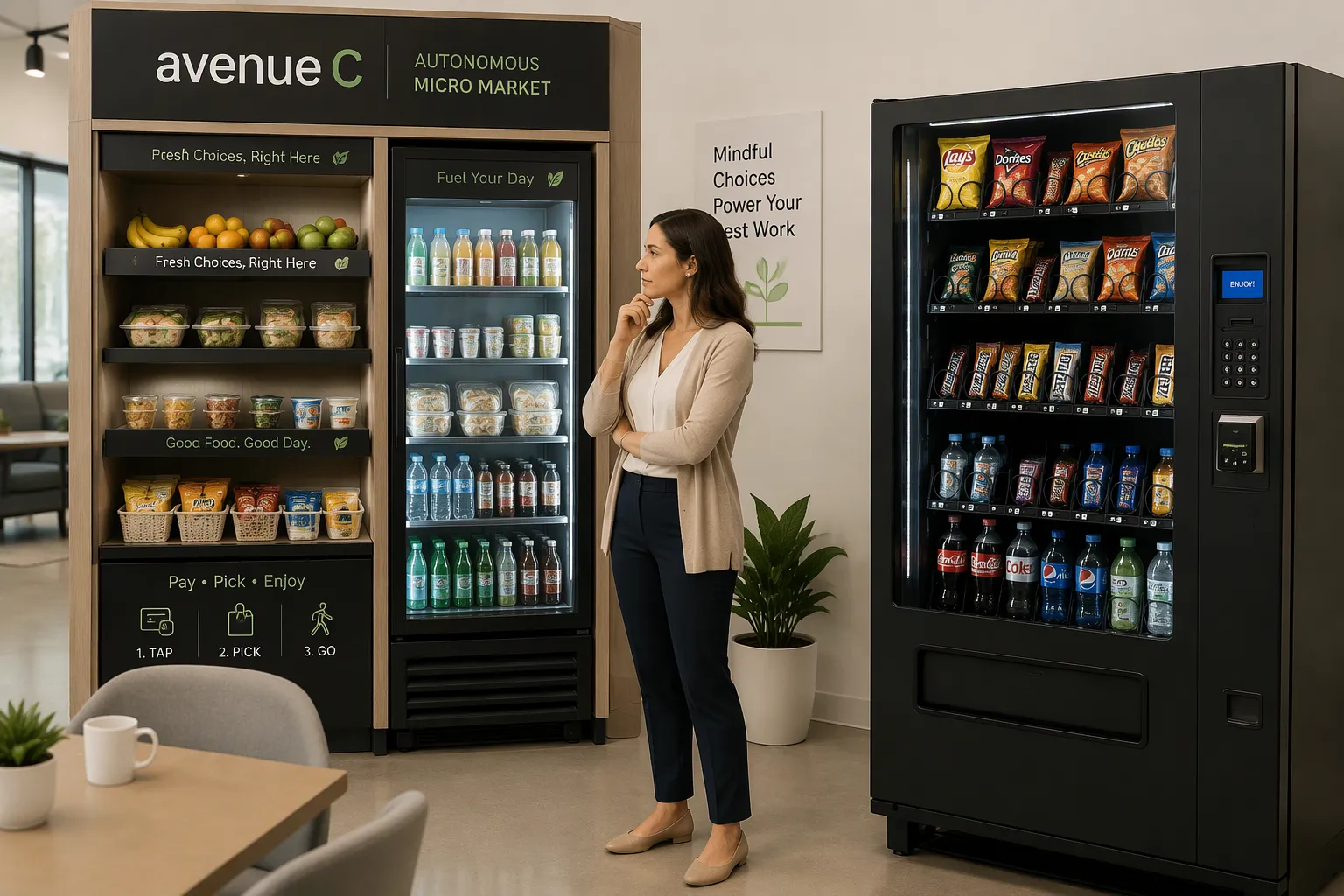
Technical performance clearly shows the differences between the two formats. An autonomous micro store uses computer vision and shelf sensors to track each item a customer picks up. This tracking allows for a wider sku range, including fresh food, produce, and chilled drinks. A vending machine depends on coils or trays, so it works well for packaged goods but poorly for fresh goods. The multi-sku footprint of a store also beats a cabinet. One wall of shelving and a cooler holds much more variety than a single unit.
Application fit follows the same logic. A busy office or campus benefits from the store's selection. A quiet hallway benefits from the cabinet's focus. Micro markets sit between the two and let you test open shelving before you commit to a full store. cloudpick powers checkout and inventory tracking across all three, so you compare formats on one dashboard instead of three.
Compliance and Cost of Ownership
Regulatory compliance is different for each format. An open store that sells food must follow local food-safety rules for temperature control and labeling. A vending machine that sells sealed snacks has a lighter burden. Check your local rules before you choose, and confirm what your insurer requires for unattended sites.
Total cost of ownership tells a more complex story. A vending machine has a lower upfront price and a small footprint. An autonomous micro store costs more to build, but it earns more per square foot at a busy site. The unit economics change with traffic. At 150–200 daily users, the store's sales volume usually covers its higher build cost. Below that level, the cabinet wins on operating economics. Labor cost also differs. The store needs restocking and cleaning visits, while the cabinet needs only route service. cloudpick's remote monitoring cuts labor on both sides by showing stock and sales without a site visit.
The table below sums up the trade-offs.
Factor | Autonomous Micro Store | Vending Machine |
|---|---|---|
Product range | Fresh and packaged goods, wide variety | Packaged goods, focused mix |
Best site | Busy closed-loop locations | Low-traffic or theft-prone spots |
Upfront cost | Higher | Lower |
Revenue per square foot | Higher at busy sites | Steady at quiet sites |
Compliance load | Food-safety rules apply | Lighter for sealed goods |
Neither format wins on every row. Match the row that matters most to your site. A smart vending machine still earns its place in a mixed fleet, and smart vending keeps a quiet corner profitable. cloudpick supports automated retail and traditional vending on one platform, so your economics improve as you learn from real site data.
Running Both on One Platform
Unified Inventory and Remote Monitoring
You do not have to pick one format for your whole business. cloudpick runs autonomous retail and vending machines on a single account. One dashboard shows every site, whether it holds an open store or a sealed cabinet. That shared view removes the guesswork from a mixed fleet.
Inventory works the same way across formats. In a micro store, computer vision and shelf sensors log each item a customer takes. In a cabinet, the platform tracks sales by slot and SKU. Both data streams land in one stock record. You see what sold, what ran low, and what needs a restock visit. Payments also run through one system, so a customer pays the same way at a kiosk or a machine. Remote inventory visibility then lets you plan routes from your desk instead of driving to each site.
Maximizing Profit Across a Mixed Fleet
A mixed fleet lets you match the format to each location. Put a micro store in the busy break room. Put smart vending machines in the quiet hallway. cloudpick reports sales per site, so you see which format earns its space. That data drives your economics: you move stock toward the sites that sell it and cut visits to the ones that don't.
Scaling gets easier with real site data. Start with one automated retail site and one cabinet. Compare their numbers after a few weeks. Add micro markets where traffic grows. Add smart vending where space is tight. The platform tracks labor across the fleet, so you see where self-service retail cuts hours and where it doesn't. cloudpick keeps every format on one software layer, and that layer lets you grow without rebuilding your operation.
A Practical Decision Checklist
Questions to Ask First
Walk your site and answer six questions before you pick a format. Count the headcount first. Does the space serve at least 150–200 people on a normal weekday? Check access hours next. Do people arrive outside standard shifts? Then review the product mix. Do they want fresh food, or will packaged snacks sell? Measure the space and confirm power and network access. Finally, assess shrinkage risk. Does anyone supervise the area?
Your answers point to a format. A busy office or warehouse break room with badge access and steady traffic favors an open store. A quiet corridor with no supervision favors a cabinet. Write the answers down. You will compare them against real sales later.
Pilot, Measure, and Scale
Start with one site instead of a full rollout. Airports, campuses, offices, and EV charging plazas all work as test beds. Install a single unit and let it run for a few weeks. Track sales per day, stock turns, and restock visits. cloudpick reports all three from one dashboard, so you read results without driving to the site.
Then compare the numbers against your checklist. Strong sales and low labor cost per visit justify a larger format. Weak traffic points to smart vending instead. Many operators run micro markets in busy rooms and vending machines in quiet halls, and the platform tracks both. That mix lets you scale self-service retail locations one site at a time. Review the economics after each addition. cloudpick keeps autonomous retail and vending machine data in one place, so every new site builds on what the last one taught you.
A closed-loop site with 150–200 or more people that needs more products and fresher options points to an autonomous micro store. A spot with low traffic, theft risk, or tight space points to vending machines.
The two formats work well together. Many operators put micro markets in busy rooms and cabinets in quiet halls. Some even grow a site into a store with no employees over time.
cloudpick gives you one software layer to set up, watch, and grow either format or a mix. You see inventory, payments, and site economics in one place. That view cuts labor across the fleet.
Start small with smart vending or a single autonomous retail site. Measure real results, then expand into more autonomous retail locations as the data supports it.
FAQ
How many people does a site need for a micro store?
Plan for at least 150–200 people on a normal weekday. Below that level, daily sales rarely cover the shelf space and restocking effort. Count the people who use the space, not the people who walk past it.
Can you run micro stores and vending machines together?
Yes. Many operators mix the two formats. cloudpick tracks inventory, payments, and sales for both on one dashboard. You put a store in the busy room and a cabinet in the quiet hall, then compare results from one screen.
Do vending machines handle fresh food well?
No. Coils and trays suit packaged goods. Fresh sandwiches, salads, and produce need open shelving and temperature control. That is why autonomous retail fits sites with demand for fresh options, while smart vending fits packaged snacks and drinks.
What does cloudpick actually control?
cloudpick runs the self-checkout kiosk, logs each item taken through computer vision and shelf sensors, and sends stock and sales data to a remote dashboard. The same platform serves smart vending units, so one operator can watch many sites.
How do you test which format fits a site?
Install one unit and let it run for a few weeks. Track sales per day, stock turns, and restock visits. cloudpick reports all three from one dashboard. Strong numbers justify a larger format; weak traffic points to a cabinet instead.
See Also
Automated Convenience Retail Worldwide: Micromarkets Versus Smart Stores Explained
Find Top Micro Market And Vending Solutions For Your Business Needs
Exploring Top Micro Market And Vending Solutions In USA For Business
AI-Powered Combo Vending Machines: Key Features And Benefits For Modern Retail
Boosting Employee Productivity Using Smart Vending Solutions In Small Offices
